Final Supernatural Camp in Singapore: Spirit on Wheels

Zhuo Chengsheng • October 13, 2026

Share this article

Spirit on Wheels (1996)

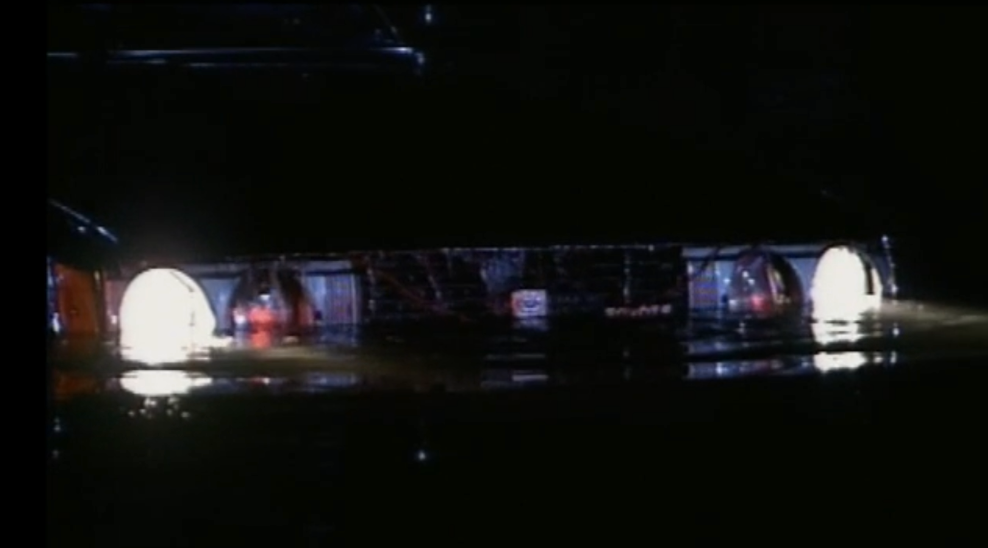
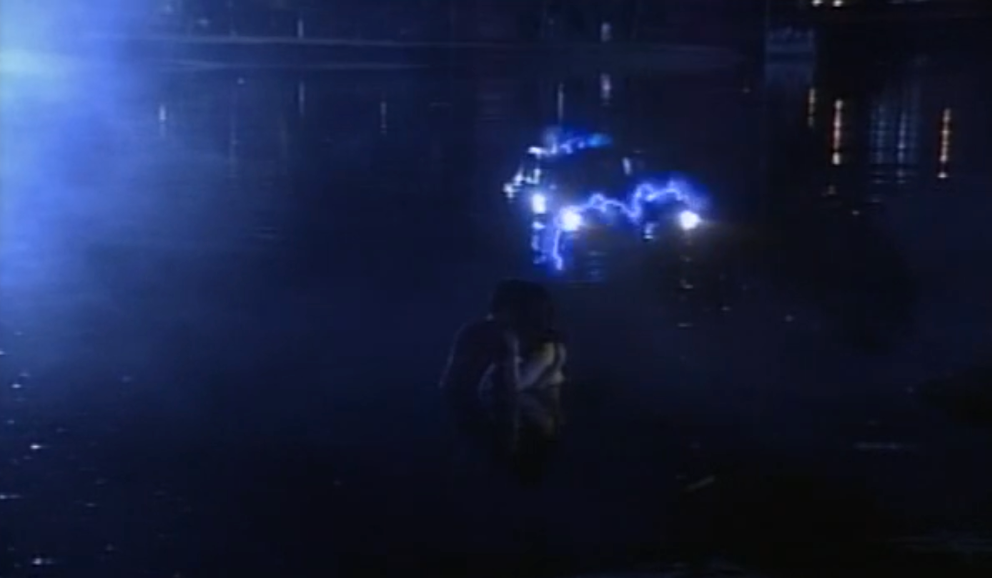
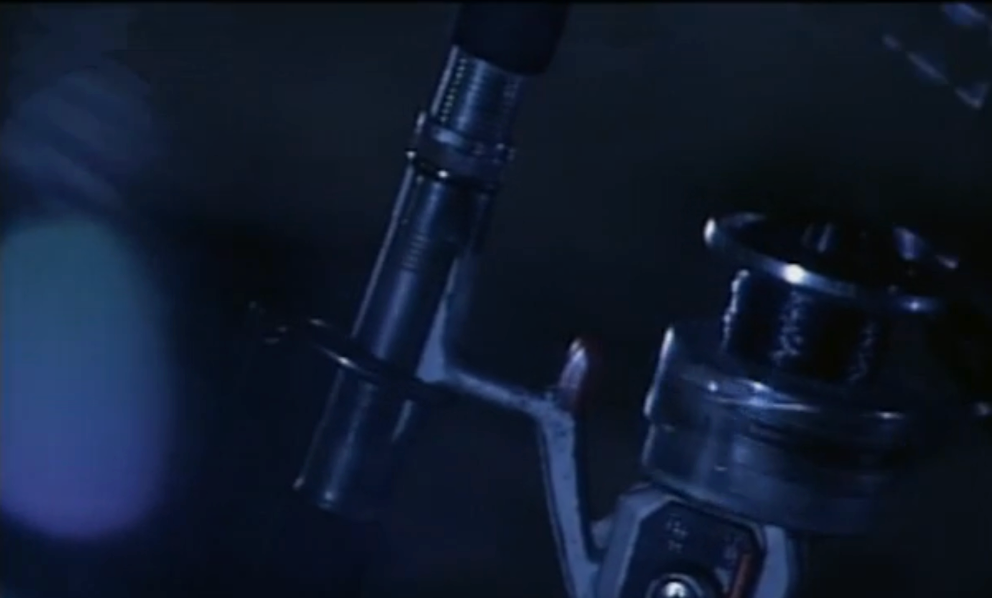
I was invited to the Singapore Chinese Cultural Centre (SCCC) by my friend's sister to watch Spirit on Wheels (1996). I will be honest – my first impression, knowing nothing about the movie, was that it would be a cheesy melodrama about a sandwich-class family. Colour me shocked when the first scene hit: a young couple is fooling around on a beach. Suddenly, a taxicab,  drenched both in seawater and in an eerie blue tint, rises from the water. Fishing rods jutting out of the dunes nearby begin to reel rapidly. Lightning strikes the car as it comes to life and begins to chase the young couple. The opening credits then begin to roll. 

 Fig 1 Opening Scene of Spirit on Wheels. a) Taxicab rising out of the water. b) Taxicab struck by lightning. c) Fishing reel spinning.

Source: meWatch

Spirit on Wheels centres on two protagonists; the main character Dahua (Ix Shen) is haunted by a woman (Jacelyn Tay) who met an untimely end from a bout of unrequited love. This woman almost always appears in close proximity to the taxicab for reasons one will discover by the end of the film.


In no circumstance was I expecting Mediacorp (or more specifically, its predecessor Television Corporation of Singapore) to produce and direct a horror film on our waters (no pun intended). Compared to our neighbours, Malaysia and Indonesia, I unfortunately struggle to name local horror movies that have captured our cultural zeitgeist, so seeing this was extremely refreshing. 


The opening scene itself is wonderfully constructed. It does a unique spin on the iconic car swamp scenes from Psycho (1960). While Hitchcock’s image is more polished and controlled, director Sampson Yuen’s shots have striking, dramatic and clearly fantastical lighting. His editing is fast-paced and more symbolic. For example, the change in depth of focus between the fishing rods and the car gives the impression that they spontaneously begin reeling the car out of the water. 


My strongest impression, though, was the campiness! What do I mean by this? I think cultural critic Susan Sontag defines it best as “love of the unnatural: of artifice and exaggeration”¹. For example, while in the end credits of Psycho, a pulley slowly draws the car out of the swamp, in this movie, the same kind of scene is reworked by Yuen. He uses lighting, practical effects, and editing in this scene that exaggerate the emotion and intensity past the basic implication. These elements also remind the audience that they are watching a film, a product of deliberate camera positions, strategically placed lights and the cutting together of images to create new associations and meanings. 


Sontag goes on to say, “The pure examples of camp are unintentional; they are dead serious”². Part of what makes this film so enjoyable and even more campy is that I can sense the genuine honesty of the artifice – it is perfectly natural with respect to the plot, the background of the director, and the economics of the film. 


Plot-wise, there is a consistency to how the horror and drama are separated temporally in the film. Daytime consists of domestic scenes where Dahua and his fiancée discuss their relationship as she desires to get married. This is shot and edited in a ‘standard’ way. When night rolls in, the filmic language shifts gears, and we can consistently see new and refreshing ways that the director makes use of the haunted taxicab and lonely ghost motifs. A lot of thought is put into balancing between convention and novelty in the film's aesthetics. 


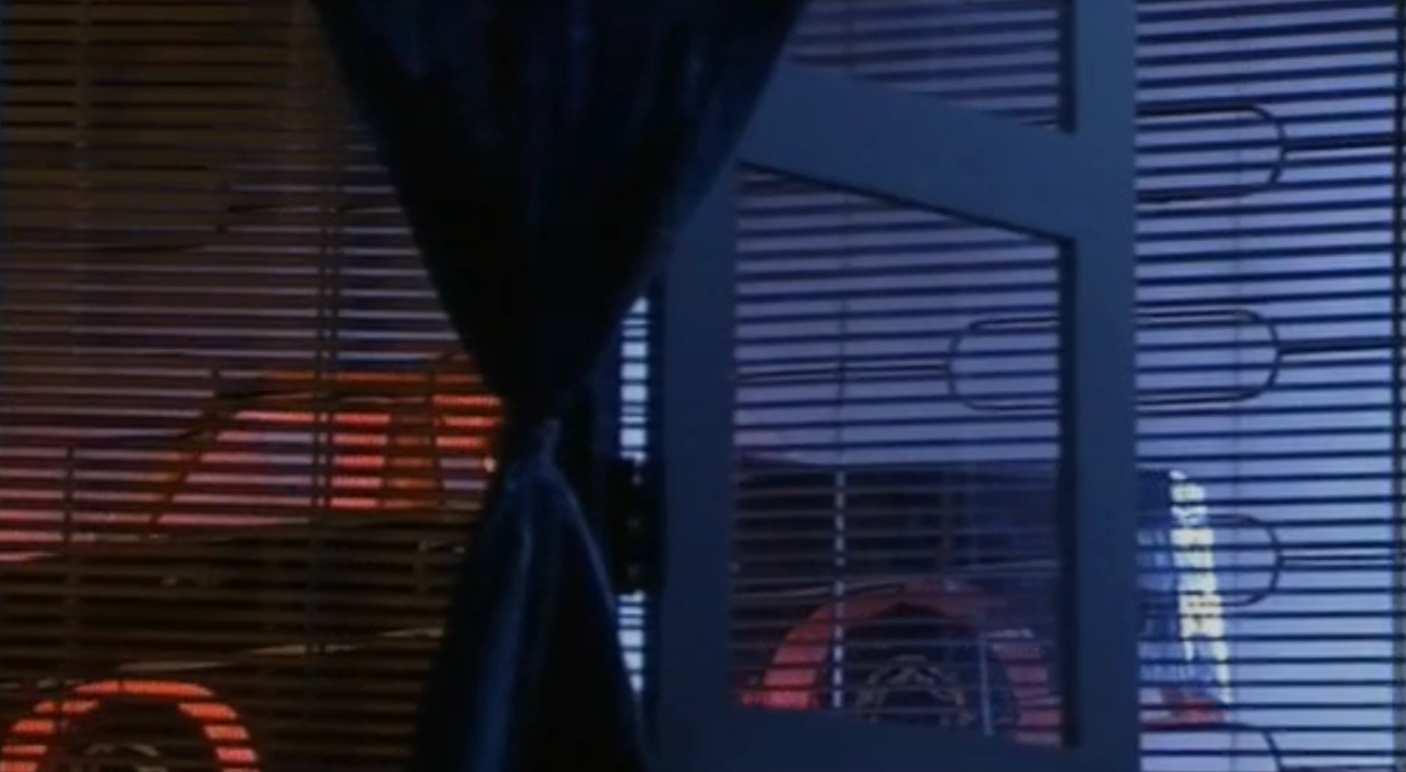
Secondly, the aesthetic of this film is very in line with Hong Kong supernatural horror films. I was most reminded of Mr. Vampire (1985) when watching this movie. This makes sense, for Yuen began his career in the Hong Kong TV industry, and Singapore TV always had a lot of collaboration with the Hong Kong media industry. The similarities do not end with the aesthetics and special effects, because Spirit on Wheels has plenty of slapstick comedy. One of my favourite scenes in the film has Dahua being flung around ridiculously as a joss paper taxicab floats across his bedroom window. 



Fig 2. The cursed joss paper taxicab! Source: meWatch 

This leads on to my last point. Obviously, the special effects in this film would pale in comparison to ‘90s horror from Hollywood. The joss paper taxicab, or the lightning striking it in the opening scene, looks dated through today’s lens. They are clearly a product of the budget one would expect a telemovie to have. But within these constraints, the director, cinematographer and special effects team have successfully managed to create an unpretentious and honest work of art that expertly fuses Hong Kong horror-slapstick aesthetics to a grounded Singapore story. 


All these elements work in elevating the campiness of this film – 30 years on, we can laugh in disbelief and amazement every time a horror sequence ensues. What once could have been termed disparagingly as ‘low-brow’ or ‘low-cost’ is now a testament to passion and craft as audiences form new connections and feel different emotions, away from what TV watchers must have felt when this first aired. Is this not what great cinema aspires to – the ability to have staying power and remain relevant to audiences in the future in unpredictable ways? 


While Spirit on Wheels is easily accessible on meWatch, I would recommend everyone to try catching a telemovie at the SCCC. The Telemovies of the 1990s programme is running until 10 January 2027 with each screening day featuring two telemovies. You can also pair this with a visit to the excellent temporary exhibition on the history of Singapore Chinese television dramas titled Singapore TV: From Local to Global. 


¹  Sontag, Susan. “Notes on ‘Camp.’” Susan Sontag: Essays of the 1960s & 70s, Library of America, New York City, New York, 2013, pp. 259

² Ibid. pp. 265


About the author: Chengsheng is a cinephile whose low attention span causes him to watch much too many short films (Kenneth Anger, Agnès Varda, or Vittorio de Seta are some favourites!). Other hobbies include reading continental philosophy or listening to classic rock on vinyl. Chengsheng is always looking forward to making new friends and can be found on both Letterboxd and Instagram as @arcyeus.

Recent Posts

By Jayden Lim • October 13, 2026
Pace《脚踏实地》 is a new homegrown Singaporean drama film, and the debut feature of writer-director Jonathan Choo.
By Zhuo Chengsheng • September 4, 2026
Ryuichi Sakamoto: A Visit to His Private Library
By Han Yiheng • August 17, 2026
What Singapore’s film industry can learn from the Oscars
By Ivan Chin • August 17, 2026
Oldboy: The Monster Within
By Fengyu Seah • August 8, 2026
Spike Lee's Still Got It
By Kaela Teh • August 6, 2026
On set with Christal Gallyot: inspirations and authenticity
By Elena Goh • August 1, 2026
Interview with Lara Czernecki on Your Choice To Leave
By Kaela Teh • July 27, 2026
Ghost in the Shell: adapting Japan for Hollywood
By Fengyu Seah • July 27, 2026
Memory is All We Have in Sophy Romvari’s Blue Heron
Show More