
On set with Christal Gallyot: inspirations and authenticity
On set with Christal Gallyot: inspirations and authenticity
Since her first short film,
Sometimes You Go Places (2023) premiered at the Beijing International Short Film Festival, Christal Gallyot has quietly built a growing presence within Singapore’s youth film scene, screening films at Short Circuit 7 and Singapore Shorts 2024. Her latest short film,
Balang Araw (2025) – a final year project for LASALLE’s Bachelor’s programme in Film – was selected for the 2026 Singapore Youth Film Festival (SYFF), earning nominations for Best Director, Screenplay, and Cinematography. I spoke with Gallyot a month ago about her background, the influences shaping the grounded, grim reality of
Balang Araw, and her unique voice in film. As SYFF concluded, the film went on to win the Student Best Short Film award.
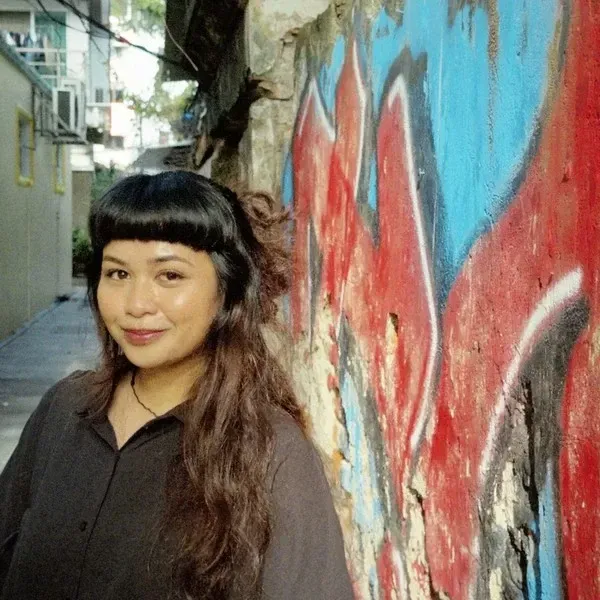
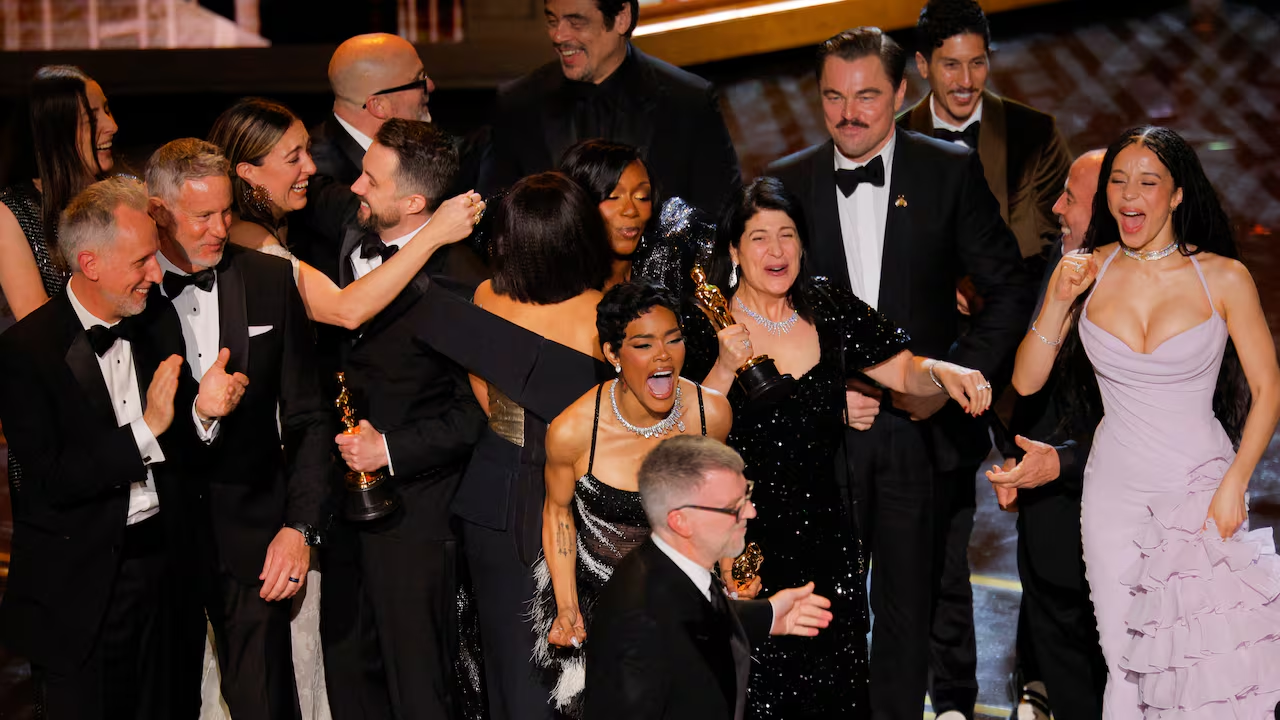
(Image credit: Christal Gallyot & SYFF)
This interview has been edited for length and clarity.
On
Balang Araw: Inspiration and representation
In Balang Araw, Martika is a Filipino domestic helper employed in Singapore, who is helping her employers adjust to parenthood. Back home, the ruthless drug war under the reign of the dictator Duterte rages on, taking the life of her son, Marcel. A grieving Martika wrestles with both the guilt she feels over her absence before her son’s death – one that spills into her responsibilities as a domestic helper – and the sheer suffocation of this loss that deters her from returning to the Philippines.
Gallyot’s Filipino-Eurasian background seems to have given her the “burden of representation” – the unspoken expectation that minority individuals must speak on behalf of their community – surfacing stories that most Singaporeans may not be well-positioned to tell.
Balang Araw does this gracefully, conveying the perspective of a Filipino helper – one which is rarely seen in the media despite the ubiquity of households that employ domestic helpers in Singapore. Yet, to Gallyot, it is not an obligation easily carried.
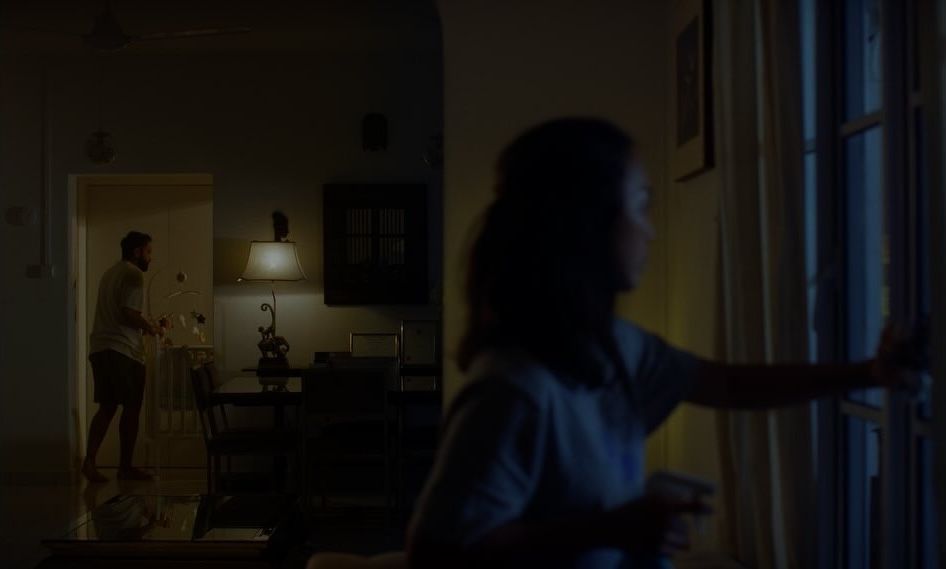
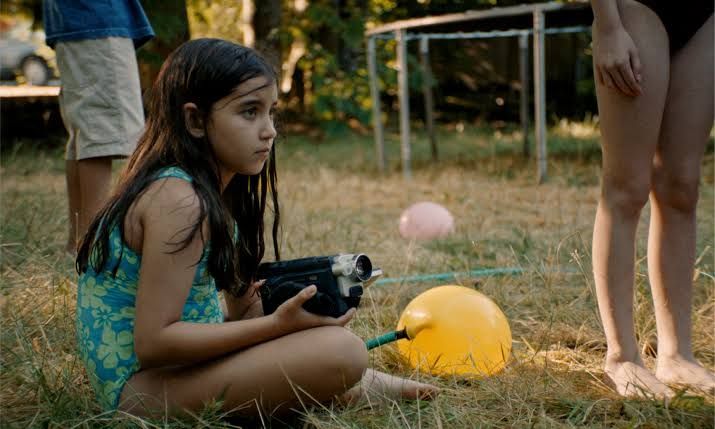
Martika and Monil in Balang Araw (Still credit: Christal Gallyot)
Kaela Teh (KT): I thought the perspective of a domestic helper was novel and personal. I was wondering where you got the inspiration for the film and how you developed the story with such care. Was it inspired by someone you know? Or maybe an experience you read about?
Christal Gallyot (CG): I was inspired by this case of Kian delos Santos, who was murdered by the police in 2017. This was during the period of Duterte’s rule [in the Philippines]. At the same time, my best friend got a call from the Philippines, saying that her uncle was shot by motorcyclists. For Kian, his mom was also a domestic helper in Saudi. I drew a lot of inspiration from that case. But with Martika's grief and her not wanting to go home, I was inspired by a conversation I overheard from a lady who might have been a domestic worker, but definitely a mother. She was on the phone, saying, "There's nothing left for me to come home to anyway. So, why should I go back? I don't care. Everything I work for, everything that I work so hard for, is gone." I think that was the foundation, or you could say the skeleton, of the character of Martika.
KT:
Could you tell me more about your background as a Filipino-Eurasian?
CG: So I was born in Malaysia, and I have family there, but I don't know what it means to be a Eurasian. When you tell someone, they usually think you’re white, which is not the case [for me]. I guess I'm more inclined toward the part where I was born in Malaysia.
I want to make a film in the Philippines. I recently went back after many years, and wow… it's just a different feeling. While I can't speak the language fluently, I somehow feel so at home. I think there's a part of you that will always recognise where you have your people.
KT:
Balang Araw
portrays the complexity of living abroad, caught between homes and responsibilities. As a Filipino-Eurasian living in Singapore, did your own experiences and identity influence how you shaped the story of
Balang Araw?
CG: Being half-Filipino, I still sometimes feel like I'm “not Filipino enough” myself, and whether I am in the right space to tell this story. I'm not someone who does domestic work, or even someone who knows what it's like to have a parent abroad. So I talked to a lot of people, and I auditioned a lot of domestic helpers. I asked them what it is like being [in Singapore] away from your kids, and if they can put themselves in Martika’s shoes and understand why she doesn't want to go home. A lot of them said they can relate to her pain; grief is not easy, and I get why some people can navigate that differently as well.
I also asked my cousins back in the Philippines what it was like during Duterte’s presidency, and they told me that they themselves felt safer […] I don’t know how to feel about that. Many, many people were encouraged to turn themselves in, but there are consequences to that, which is that many lives were lost.
Later in the conversation, Gallyot returned to our discussion of belonging and the uncertainty surrounding identity, to which she added, “It's been quite tough navigating who I am and whether I have the right to tell these stories.”
KT: Some of your audiences have pointed to a recurring focus on the moral challenges faced by marginalised working-class women in your work, and you mention being unsure whether you’re in the “right place” to tell these stories. How do you navigate responsibility to the communities and experiences you represent?
CG: I think for me, my stories and the films that I tell will always come from a place I'm very familiar with; it has to be personal to me so that I can tell it responsibly. I also do my research: I put myself out there to get to know people, not just for one day, or just interviewing them to see what they are like, but actually spending time with them and seeing their little quirks, how they move and how they feel. What I did for this film was also to cast real people. [We had casting calls], but it was not just an audition; it was also to get to know them outside of work.
I was pretty upset that I couldn't cast a real domestic helper, both because of the legality and [scheduling conflicts]. But since we couldn't include real domestic helpers, we tried to add their voices in. [For example, in the] call, Martika's mom was actually [a domestic worker who] voiced over.
She also shared anecdotes from her time spent with these communities.
CG: It's interesting because [domestic helpers] have entire communities – pageants, talent shows, even volleyball tournaments. If you go to Kallang MRT on Sundays, you’ll see a bunch of Filipinos or Indonesians playing volleyball together. They form teams [for volleyball] within the areas they work in, like a Telok Kurau team, for instance. It’s a whole world.
The cast and crew of Balang Araw
Balang Araw was crafted with an incredibly talented ensemble: Gallyot co-wrote the script with Muhammad Jaasir, collaborating with Renny Nadira on the cinematography, and Nurul Athirah, who headed art direction. The cast included lead actress Richel Hidalgo (Martika), Reese Daniel Servillon Hidalgo (Marcel), Shu Yi Ching (Rebecca), and Monil SJ (Monil). What had struck me, too, was the thought given to writing Martika’s employers, despite not being the story’s focus. I asked Gallyot to share more about how she developed this portion of the story.
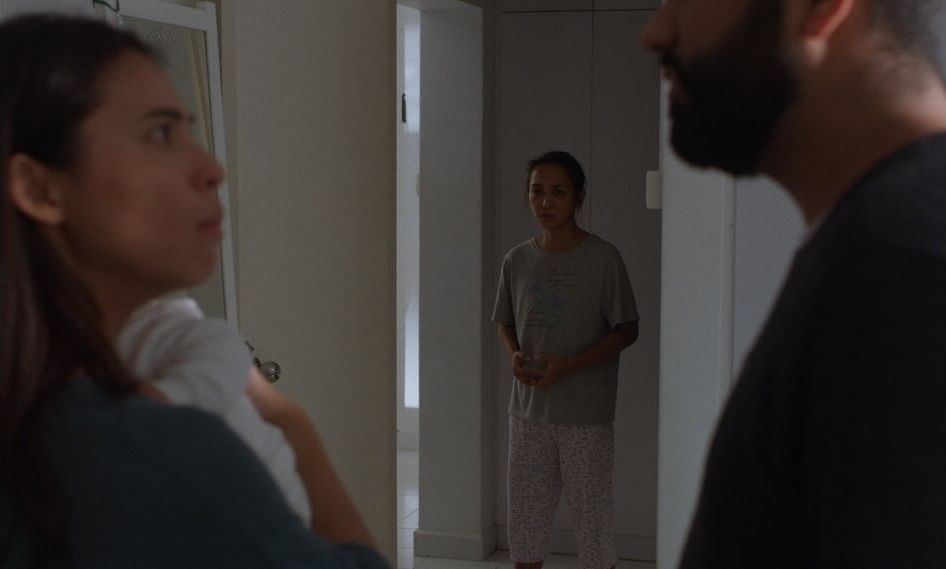
Martika and her employers in Balang Araw (Still credit: Christal Gallyot)
KT: What're the backgrounds of your other actors?
CG: Richel, who was playing Martika, said that she had a nephew [...] who is very new to Tagalog. Their dynamic really added to the whole mother-son bond, because I also asked him, “Are you close to your tita, your auntie (i.e. Richel)?” to which he replied “No, my sister is actually closer to her, so I guess this is also an opportunity for me to get to know her deeper and experience this love from my tita.”
KT:
What was the thought process that went into writing a multiracial family?
CG: Whenever I cast, I always open it up to all races because it gives me more options to discover new faces and interesting pairings. Not everyone has chemistry with one another, but after auditioning Monil and Shu Yi, I knew they were right as Martika’s employers. They portrayed their characters with such refreshing nuance and multi-dimensionality. During auditions, they saw Martika beyond her role as “helper”, acknowledging not only [their characters’] working relationship with her, but also Martika’s identity as a mother with her own responsibilities.
Interracial couples are also very common, and it reflects Singapore as a society. To me, it felt natural for the characters and the world of the story, and it mirrors the kind of diversity you see in everyday life here.
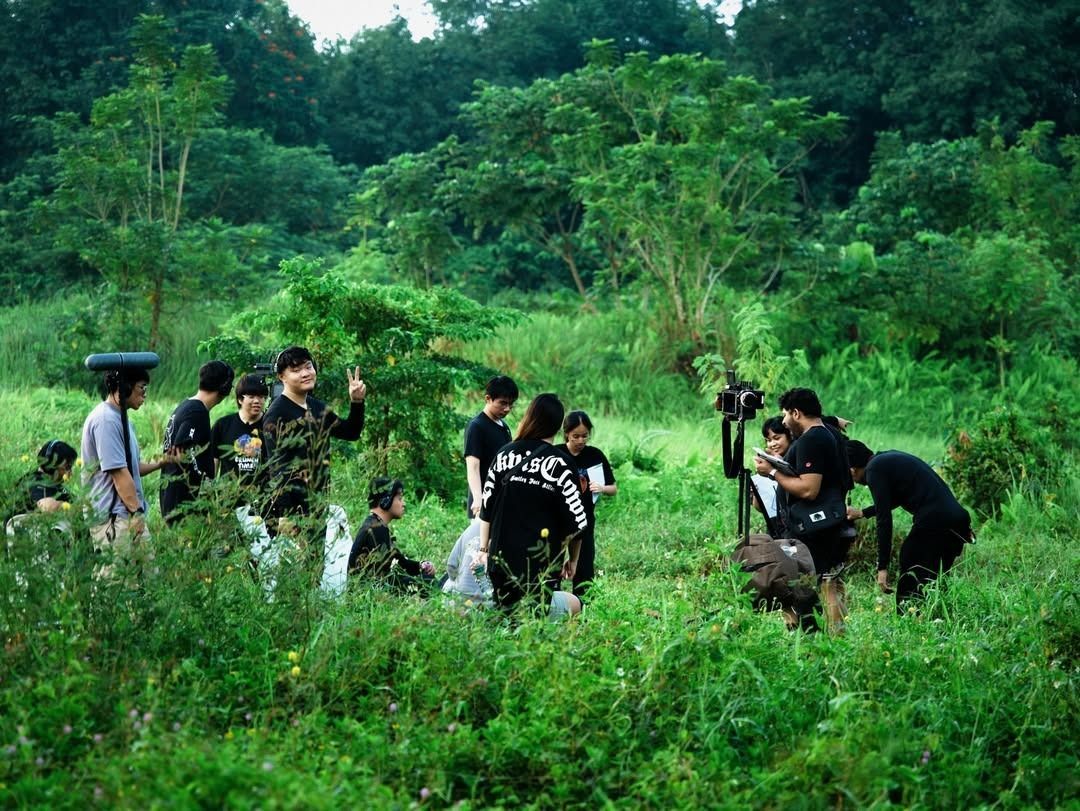
On the set of Balang Araw (Image credit: Christal Gallyot)
KT: I’ve noticed you’ve worked with Renny Nadira – your DOP – on many projects. What is it like working with a frequent collaborator, and how does she inspire your creative process?
CG: Since we are long time collaborators, it's very easy. We watch a lot of films together, and then we will point out parts of the films that we like, like a scene, or what the director is doing with that scene. We also talk a lot about visual language, other than what lens we want to use. We also talk about the perspective that we want to focus on. For example, if this scene is about Martika, then how do we visually frame it in a way where we show that she's looking at something?
KT:
You also co-wrote this with Muhammad Jaasir. Do you regularly co-write your films? How did the collaboration affect the writing process?
CG: This is the first time that I co-wrote something with another classmate. As the director, I wanted to bring on someone more focused on scriptwriting, so Jaasir had to pick up my story and write a full script for filming. I was lucky to have a scriptwriter around because there was a sense of accountability, and someone who had to keep me in check. Back when I was writing alone, I always felt like it was not good enough. This time around, we also collaborated with the actors, and we workshopped lines that were in Tagalog. Since I'm not really fluent in the language, I had a friend who came on board to make sure the lines were okay.
Crafting the world of Balang Araw
Working closely with her collaborators, Gallyot crafted a distinctive tone for Balang Araw. The camera utilises space throughout the film, experimenting with a stillness and voyeuristic framing, permeated by a steadily dark and unsettling tone. It tells Martika’s story with two storylines, combining a grim reality and a dream-like reality that conveys her psyche to paint a nuanced picture of her inner world.
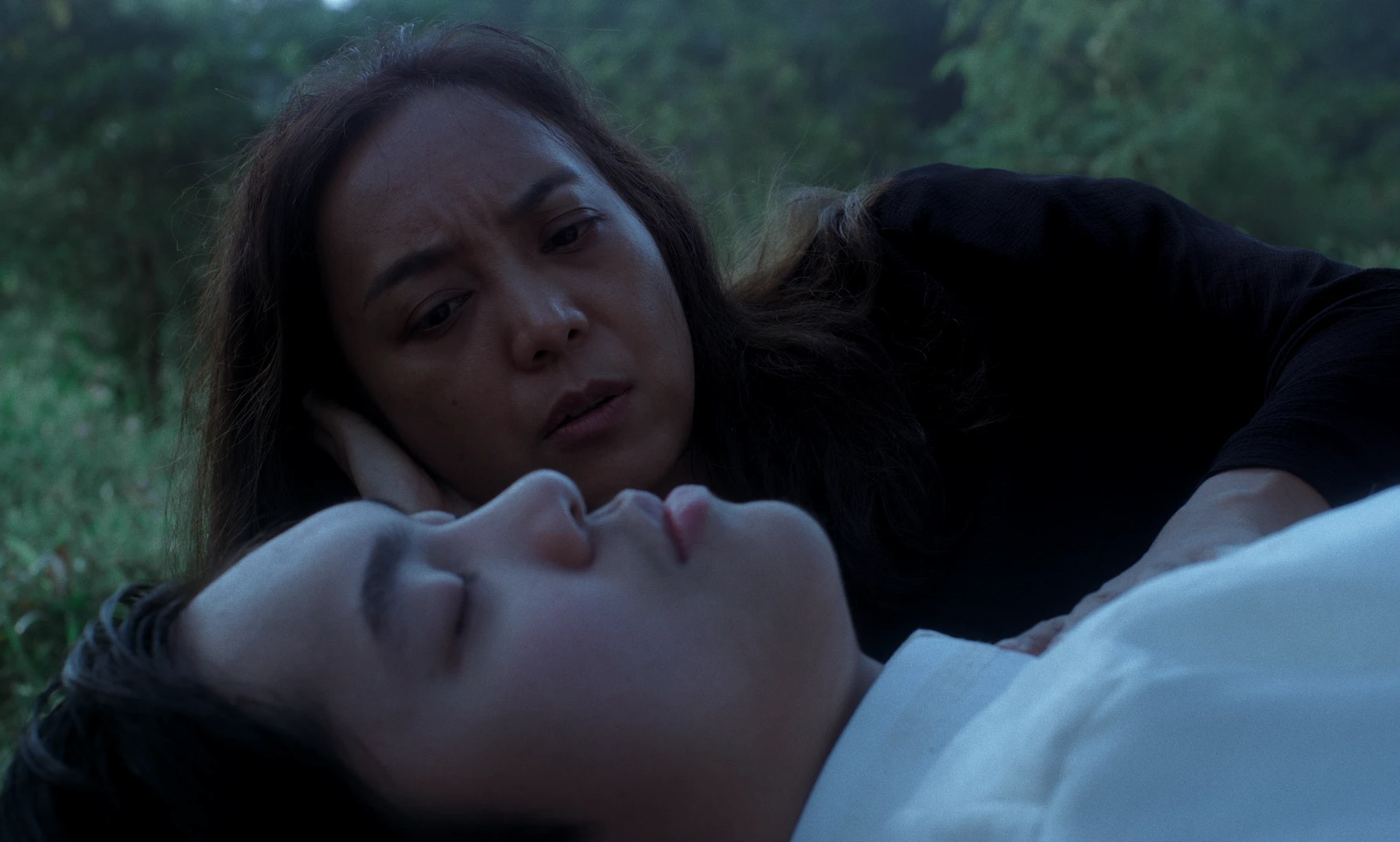
The opening shot of Balang Araw (Still credit: Christal Gallyot)
KT: What was striking to me about the style of the film was how dark and grounded it was, while a more dream-like storyline between Martika and her son ran parallel, adding a layer of surrealness above the film’s realism. What was this process like for you? Was it an idea from the start or something that came up later on?
CG: I wanted Martika’s guilt to haunt her, and I thought, I don't know what other way to show this than in dreams. Some of my favourite films are Mulholland Drive, Roma, and Rosetta. They are quite different in terms of style, so I wanted to combine these elements together. Though, instead of a very surreal approach, I wanted the dreams to feel familiar to her, and I wanted them to coexist in a space where it's not natural for them to exist, so it was more like realism. Together with that wooden structure – the unfinished house – it became a lot like unprocessed feelings that manifest as dreams that are forcing her to confront [her guilt].
Gallyot later added that she ultimately wanted Martika to have agency of her own life through these dream sequences.
KT:
Earlier, you mentioned collaborating with Renny on the visual choices in the film. Could you share more about your overall approach to framing and visual language this time around?
CG : For this film, we used a lot of sticks. The camera was always on the tripod, unlike my other films, where they were mostly handheld. I wanted to try something different and play with stillness. This time around, we told each other not to be afraid of close-ups because we need to feel a character's emotion at certain beats.
KT: I found that stillness incredibly haunting. I also noticed recurring imagery – particularly the moth that appears at several points in the film. Could you share more about the symbolism behind that choice?
CG:
People say, if you see a butterfly, it means it's your dead loved ones visiting. But this time round, we went for a moth instead, because it's more still, it doesn't flutter, and it's a bit more haunting. And it’s huge! I thought that was a very cool look.
Beyond Balang Araw
Freshly graduated from the Puttnam School of Film & Animation at LASALLE, Gallyot Gallyot has already built up a distinctive filmography. The Singapore Youth Film Festival, where Balang Araw was screened in January 2026, describes her work, which has explored profiles from food facility workers and victims of abusive households, as having “a specific focus on moral implications and challenges faced by marginalised working-class women through a realist lens” – a description that also pertains to Balang Araw.
Her consistently grave and grounded voice throughout her filmography invites the impression that behind her stories is a deliberate mission to tell these socially conscious stories throughout her career. Gallyot, however, seems less interested in prescribing herself a “place” in the industry than simply telling the stories that speak to her.
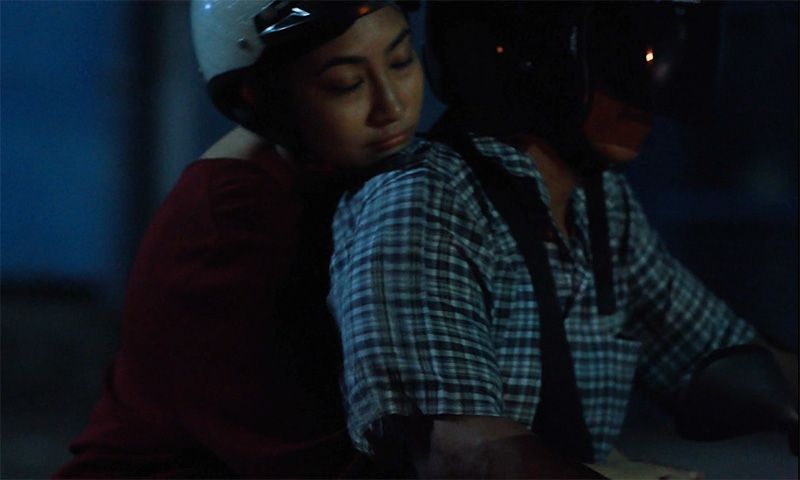
Full Shift (2023) (Still credit: Christal Gallyot)
KT: I want to talk about your creative journey and the different films you've directed. You’ve directed 4 short films – how has the experience working on each shaped your personal style, and maybe even how you approach stories?
CG: I don’t know if I can say I truly developed from it, but I definitely grew [in some ways, for instance] in the way I talk to my actors, or being sensitive to what they want and how they are like on set. This responsibility [I have] is not just for the script or the characters, but also for them off-screen. It's about taking care of the whole team and making sure the vibes are good, and the connection in real life. Story-wise, I think it's still pretty consistent throughout my filmmaker journey so far. I'm still focusing on women from marginalised backgrounds. But [for my next film], I think I want to move forward to something a bit more fun, whimsical, and young. [...] I want to focus on an overweight girl during the Trim and Fit (TAF) Club era, which we’re currently trying to pitch.
KT:
Your work is very personally tied to underrepresented communities in Singapore. How do you see yourself within the local film community, especially in relation to the stories you choose to tell?
Gallyot pauses, admitting she isn’t entirely sure how to answer the question.
CG: I don’t want to put myself in a box, and most of the time I don't want to be perceived in that way. I guess I just want to be the one telling more brown stories, and I hope it can inspire other brown people, especially those who identify as queer, to step up and get their voices heard.
KT:
Was creating films on social realism something you set out to do from the start, or did it develop organically as you started writing?
CG: Nowadays, people say that nobody wants to watch another social realism film because why would you go to a cinema to be more stressed out? But, I guess it's not my style yet, or even ever, to create something [that’s not realism]. Being a working-class woman myself, I don't know how to tell stories that are “dreamy” because life is difficult. [...] I never thought social realism was a genre.
Balang Araw was just a story that had a moral dilemma, and then I shot it. In my first film, I didn't know what was happening or how to talk to my actors. I think it's a lot of trial and error.
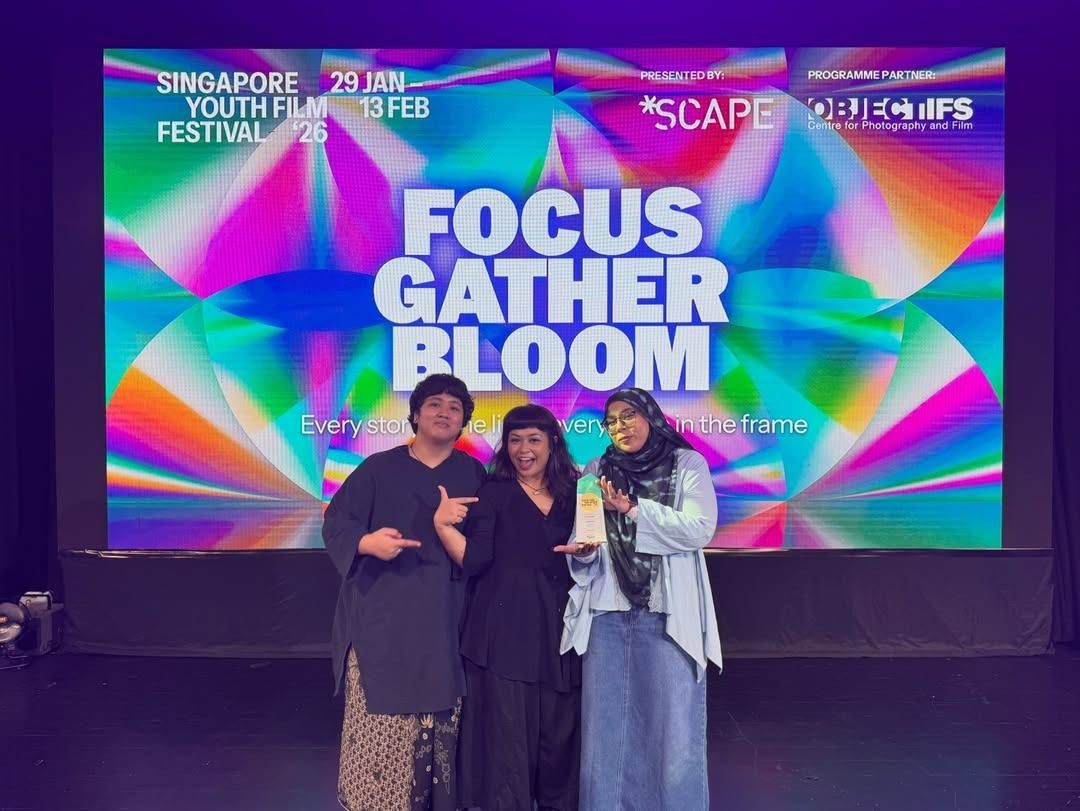
Balang Araw wins the SYFF Student Best Film award (Still credit: Christal Gallyot)
About the author: Kaela lives two lives – in one, she is on a constant quest to make and consume art, and can be found writing, reading, photographing, playing music, and documenting the world around her. In her second life, she enjoys advocating for social and environmental justice, and hopes to combine the two to bring about a little more understanding in the world.
This review is published as part of *SCAPE’s Film Critics Lab: A Writing Mentorship Programme, with support from Singapore Film Society.
Recent Posts