SCFF 2026 LINKA LINKA: A Bilingual Review and Interview with Dir. Kangdrun
SCFF 2026 LINKA LINKA Review
My earliest few memories of Tibetan New Wave cinema, like many others, came through the films of Pema Tseden. In his visual rendering of Tibet, the landscape is almost always bound up with barrenness and desolation. In many of the Tibetan films I encountered afterwards, the region was likewise packaged (in good and bad ways) through a set of familiar signifiers: prayer flags fluttering across the plateau, the uniquely harsh climate of the Tibetan highland, dust-laden roads, along which herds of yaks and sheep idly drift by. The thanatology of reincarnated life, the eternal motion of Dharma and ceaseless paying back of Karma…
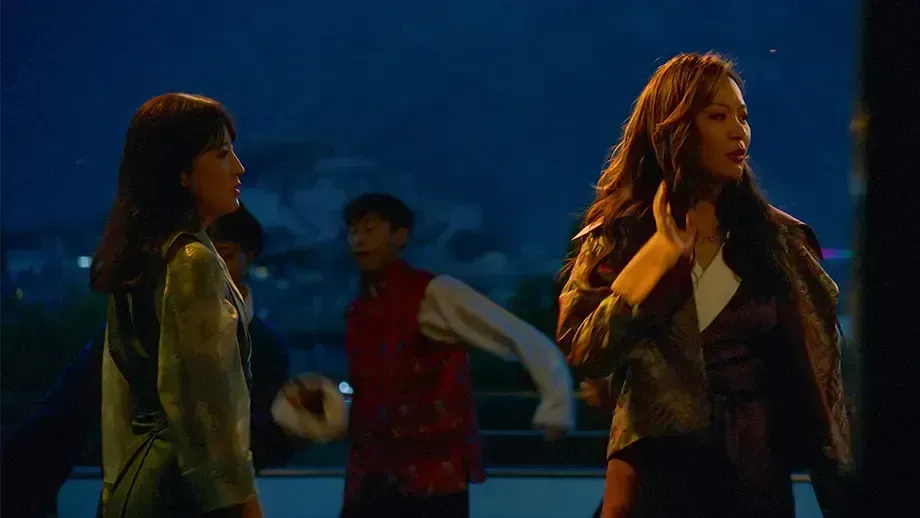
Yet in Kangdrun’s cinema, these visual conventions – those that have proven time and again effective in local and international markets and festivals – are conspicuously absent. They are immediately replaced by a Lhasa that is urbanism, a Lhasa that is globalism. As night falls, fashionable young men and women gather on an open-air dance floor swaying to EDMs, while in the near distance, the Potala Palace gradually lights up, one lamp after another. It is, without question, the single visual that most radically unsettled my prior perception of Tibetan cinema.
My initial impression of Linka Linka was that of an autobiographical work. In the story, the young Samgyi leaves Tibet to study inland, and returns to Lhasa as a filmmaker to make her own film – details that closely mirror Kangdrun’s own life trajectory. Yet such a straightforward correspondence risks collapsing into what literary criticism terms the “biographical fallacy”, the deadly misrecognition that a fictional work reflects the creator’s immediate lived experience. Kangdrun appears acutely aware of this danger and actively resists it. By introducing a film-within-the-film, she eradicates any simple dichotomy between cinematic narrative and lived reality.
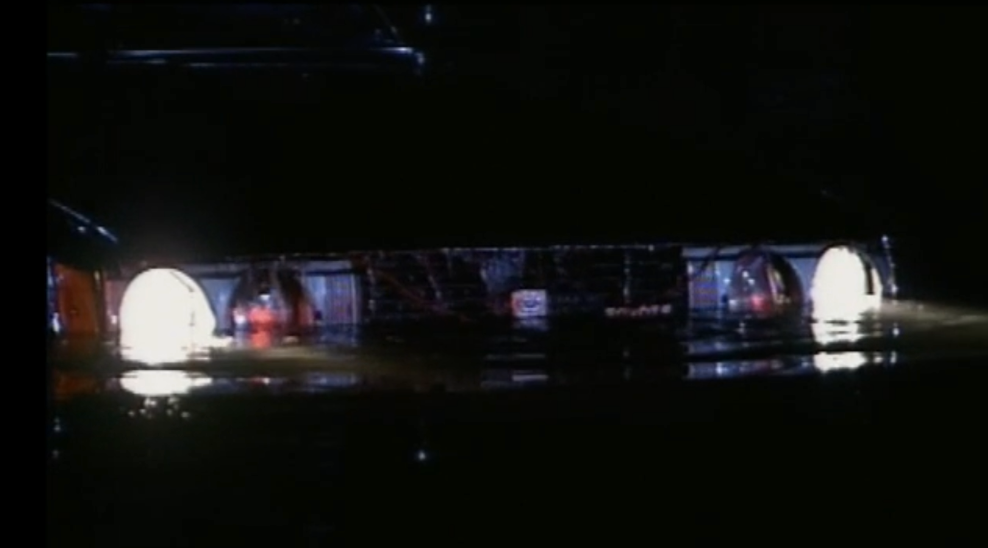
Memory here is no longer a single-trip vehicle for return. It is a problematic catalyst activating the exothermic reaction between past and present. Late at night, after the party, a small car carries adult Samgyi and Lhamo into a tunnel – a brief journey “home” charged with double meaning. The vehicle becomes the carriage of memory, where they traverse memories spanning three summers, returning to a fragile refuge that endures beyond the exhaustion of adult life. Within this space, memory is subjected to cross-interrogation – evasions and fabrication intermingle with the desire for confession, stirring what is already an unstable archive. What further complicates matters is that throughout the scene, we are repeatedly reminded that Samgyi is in the process of making a film about Lhamo. If all of this is merely one segment within a film – or even worse, within a film inside the film – then, regardless of its reliability, to whom do these memories eventually belong?
On April 13, Linka Linka walked away with the top Firebird Award and Fipresci Prize at the Hong Kong International Film Festival.
Linka is a Tibetan word that can be loosely translated as a garden or park.
What are your memories of Linka?
In the summer, we spend our time in the linka – playing cards, dancing, throwing dice, singing and dancing Nangma Stod-gzhas (ནང་མ་སྟོད་གཞས།). Every August, there’s the Shoton Festival. It is a really special occasion in Lhasa: people eat yoghurt and gather in the Norbulingka to watch Tibetan opera. By that time, every patch of shade in the park is filled with people.
When I was a child, all my memories of summer were in the linka. I always have this very specific image – whenever I think of summer, I’m wearing my plaid primary school skirt, and I’m always in the linka. For me, it carries something of a childhood fairyland. At the same time, it reflects a very chill state of mind that feels distinctly Lhasa.
Sometimes I think Lhasa’s culture is a bit overly chill—almost to the point of making you lose motivation. If you go to a café in Beijing, people are either working on their laptops or discussing business. But in Lhasa, young people just sit there, doing nothing, passing an entire afternoon like that. It’s quite a common thing in Lhasa.
Do you think you’re a chill person?
I think there is definitely a very “chill” side to my nature. But every time I go to a film festival, I will always be surprised by how accomplished everyone is, and how incredibly hard they work. Those are moments when I start to feel that maybe I’m not working hard enough. So I keep telling myself: if everyone else is putting in that much effort, then maybe I should push myself a bit more, too. My editor once came to Lhasa for a month and said I was the most diligent person in the whole city.
In the film, Soso asks Samgyi how she would explain linka to friends from inland China, and Samgyi says it’s just a picnic. Soso hesitates over Samgyi’s answer.
I think linka also carries a kind of cultural tradition. It’s not simply a picnic. It’s a Tibetan word—you can’t really translate it. It points to a very local, deeply rooted way of living.
Even now, I’m the kind of person who, the moment I see a stretch of grass, just wants to lie down on it. When I was in university in Beijing, there was this huge, beautiful lawn behind our campus. I told my friends, “Let’s go lie on the grass.” But their reaction was like: “You’re not supposed to step on it. No trampling on the grass.”
Most of the dialogue in the film is in Tibetan, with occasional shifts into Mandarin. What was the intention behind this choice?
That’s simply the reality we live in. Sometimes, when I’m talking to elders, the moment the conversation turns to something more complex or abstract, I’m forced to invoke terms from Mandarin. Sometimes I wonder if, had I not gone inland for school, my Tibetan might have been stronger.
I remember when I was in graduate school, I used to sleep-talk a lot. My roommates told me that in the month after I came back from Lhasa, everything I said in my sleep was in Tibetan—naturally, they couldn’t understand a word. But gradually, my sleep-talking shifted into Mandarin.
At the same time, culture itself is fluid. On one level, it’s a way of life; on another, it’s something that evolves through constant movement. I want to embrace that sense of fluidity.
But embracing it doesn’t mean becoming assimilated or speaking only Mandarin. I’ve been to Singapore and Kuala Lumpur, and I noticed that many Chinese people there speak fluent Mandarin, English, and even some Malay. That kind of ease in moving between languages—so long as you learn each one well—isn’t a bad thing at all.
I really like the Tibetan music in the film. Could you talk a bit about where it comes from?
The song Soso and Samgyi sing in the car near the beginning comes from a band I really love called Tianchu Band (གནམ་ལྕགས་རོལ་ཚོགས). When I was an undergraduate, I actually made a documentary about them. They were the first local band in Tibet, emerging in the late ’90s, around the time when rock music was booming across China. When we were growing up, Tibetan rock was hugely popular—it wasn’t even “indie,” really. It was everywhere in Tibet. You’d hear their songs playing in the streets; they were a household name.
The song featured in the film, “Life,” is my favourite track from their first album. It’s about time. Since the story itself deals so much with memory and growing up, I felt that using this song would really resonate. I can especially imagine that when this film is shown in Lhasa, everyone who’s had a similar upbringing to mine will be humming along.
Nowadays, younger people in Tibet have gravitated more toward hip-hop. That’s also why I chose a Tibetan hip-hop track for the ending credits.
How about the more traditional music?
There’s quite a bit of traditional music woven in in the linka scenes. For example, in the scene where Samgyi asks her father for the wallet, the song being sung is a form of Nangma Stod-gzhas . It’s different from Sgor-gzhas (སྒོར་གཞས།) : Sgor-gzhas is a more communal activity, with everyone dancing together in an open square, while Nangma Stod-gzhas takes place in wooded areas, with singing and instrumental accompaniment. The melodies are very refined, with both allegro and adagio variations, and the lyrics tend to be poetic, even a little melancholic.
When I was a child, every time I went to the linka, I would hear Nangma Stod-gzhas. Later, when I was studying in Beijing, every time I returned to Lhasa and passed by Longwang Pond, I could hear it faintly in the distance—and that’s how I knew summer had arrived.
As night falls, fashionable young men and women in Lhasa wear traditional Tibetan dress and sway freely to electronic music on an open-air dance floor, while in the distance, the lights of the Potala Palace gradually come on, one by one. Your film contains none of the familiar images of Tibetan cinema—prayer flags on the plateau, harsh polar-like conditions, dust-swept dirt roads, yaks and sheep moving across the landscape. It is, without question, the image that most radically overturns my prior understanding of Tibetan film.
Young people in Lhasa really love clubbing. When I take Han friends from inland China out to dance in Lhasa, they’re always shocked. They think Lhasa is incredibly trendy—sometimes even more fun than Beijing. That’s simply what my life is like.
In some so-called ethnic minority films, the central motif is often the clash between modernity and tradition, where tradition inevitably declines. But this film doesn’t specifically focus on that. I’m more drawn to hybrid contexts and different spaces because I myself grew up within a constantly shifting terrain. In that process, I’ve been shaped by Han culture, Western and European-American culture, Japanese and Korean culture, as well as Tibetan culture. The question of how one locates oneself, how one finds a path through such hybridity, is what I think young people today are actually confronting.
We actually go way harder and have way more fun partying in real life than what’s shown in the film. I now feel I didn’t even cast enough extras for that scene. If you ever have the chance to come to Lhasa, there’s a thing called Shengshan Linka in August, in a large forest. At night, everyone wears Tibetan traditional clothing and dances in the woods. I originally wanted to shoot it that way, but due to budget constraints, I ended up choosing the bar with a view of the Potala Palace—the same bar where I happened to meet that friend of mine in real life.
Maybe it was Buddha’s blessing—but at the exact moment when Soso pulls Samgyi in that scene, the lights behind the Potala Palace suddenly come on. That wasn’t planned. I remember the colourist saying, “That’s so damn crazy—you can even control when the Potala Palace lights up.” I told him I didn’t have that ability. It was simply the God of Cinema helping me along.
This is a film about memory. How do your views on memory and your views on cinema influence each other?
I think memory is, first of all, profoundly individual. Even though memory can create resonance or empathy between people who share similar experiences, it ultimately belongs to the self. Faced with the same event, each person’s memory will inevitably be different. We had a huge argument—you may remember me grabbing your hair, while I might remember that it started raining heavily after everything ended. And you might not remember the rain at all.
In a way, this is very similar to filmmaking. Cinema, too, expresses a singular personal experience, and in doing so, it inevitably reveals a particular way of seeing the world. I’m very drawn to this sense of cinematic “truth.” For example, in the Koker Trilogy, And Life Goes On (1994) feels almost like a documentary. But by the time you reach Through the Olive Trees (1997), you realise that a scene in And Life Goes On is actually the director shooting that very film. In that narrative, the director repeatedly asks for retakes, using repetition itself to insist that this is a film—so then what counts as real?
I find this question has influenced me a lot. What Abbas Kiarostami is exploring there is the so-called authenticity of cinema. What I’m trying to do is bring together the authenticity and the ambiguity of memory, and think through that relationship in my own work.
What are your plans next?
Two years ago, I made a short film called Orlo with Karma (2024). I’m now preparing to develop it into a feature film. It’s very different from Linka Linka. Linka Linka is more of a retrospective work about memory – the film language is relatively fixed, observational, and somewhat detached, almost “looking back” from a distance.
Orlo with Karma, on the other hand, is a story that takes place in the present. One day, I saw a girl in a Tibetan teahouse – she had a very strong sense of vitality, short hair, riding a bicycle through narrow alleyways. So I started building the story from that character.
我对藏地电影的最初印象来自万玛才旦导演。在他的镜头里,藏地风光总是伴随着贫瘠与荒芜。在之后接触到的藏地电影里,藏区总是(或好或坏地)被许多鲜明的藏族符号包装起来——轮回的生死观,高原上的经幡,恶劣的极地环境,黄沙飞扬的土路,牦牛与羊群。而在岗珍的电影里,这些早已建立的视觉传统——这些在本土或国际市场与影展屡试不爽的视觉传统——全部缺场。取而代之的是一个城市主义的拉萨,一个全球主义的拉萨。夜幕降临,拉萨的时髦青年男女在露天舞池随着电子舞曲尽情左右摇摆,背景不远处的布达拉宫一盏盏明灯亮起。这无疑是最颠覆我对藏区电影认知的一个画面。
《⼀个夜晚》给我的第⼀印象是⾃传性的——故事⾥⼩桑吉幼年进⼊内地求学,成年后作为⼀名电影学⽣回到拉萨拍摄电影,这些情节都与岗珍的⽣活经历⾼度相似。但同时我害怕这样简单的对⽐会陷⼊⽂学批判式的“传记谬误”——即,将虚构类创作误认为创作者⽣活的直接反映。在电影的结构上,岗珍引⼊电影中的电影,模糊电影故事和现实经验的简单⼆分。
在岗珍的电影里,记忆是一个很复杂的东西。除了在电影的故事结构上有意模糊化处理了电影/现实的分野,有一场戏让我印象深刻。在布达拉宫下的舞池派对后,成年桑吉与成年拉姆久别重逢。深夜,小轿车带着两人进入隧道——这是一场双重意义的“归家“的短途旅行——一个夜晚穿越过三个夏天的回忆,回到那个在筋疲力尽的成年生活后总能回返的安全港。在这里,记忆被交叉质询,谎言与掩饰混合着坦白的欲望,搅动着本就不可靠的记忆。让问题更复杂的是,整场戏里,观众不断被提醒,桑吉 正在 制作一部电影。如果这一切只是电影(与电影中的电影)其中的一个环节,那么无论可靠与否,它们又是属于谁的记忆呢?
林卡,藏语词汇,汉语译为园林。
《一个夜晚和三个夏天》的创作是怎样开始的?
很久之前,我在拍摄有关童年的一个故事的时候,在一个派对上遇到了我20多年没见的一个朋友,她就是童年故事中的一位原型人物,但是那个晚上我们一句话也没有说。我觉得很有意思,在那样的一个机缘巧合下,就以童年故事为基础,继续延展到我们这一代人特殊的成长历程,创作一个了跟她有关的故事,写成了一个短篇小说。
我们这一代,就是藏族的一批年轻人,在整个成长期都经历了一种候鸟式的生活。从小学毕业,然后去内地读初中读高中,每年只能在夏天回到拉萨。我记得我初中、高中跟朋友说的最多的一句话,就是我们下一个夏天再见——于是我对故乡的所有的记忆都是产生于很多碎片化的夏天。我特别想把这种感受放到作品当中,在电影里就是用一个夜晚和三个夏天的结构——一个夜晚指的是他们相见的那个夜晚,三个夏天是勾连着他们成长过程的三段碎片的夏天。
你对林卡的记忆是什么?
夏天的时候我们会在林卡里打牌,跳舞,玩骰子,唱朗玛堆谐。每年八月份有个雪顿节,在拉萨是一个特别的节日:所有人要吃酸奶,然后在罗布林卡里看藏戏。到那个时候,所有的树林里全是人。
我小时候对于夏天所有的记忆都是发生在林卡里的。我小时候有这种感觉,一说到夏天,我就是永远都穿着实验小学格子校裙,永远都在林卡里度过。林卡对我来说,有一种童年乐园的影子。同时我觉得它又是非常符合拉萨人非常松弛自在的精神状态。
有时候我觉得我们拉萨人的文化就是太松弛了,甚至有点不求上进。如果你在北京的咖啡厅,大家都是抱个电脑工作,或者谈谈事情。在拉萨的咖啡厅,年轻人可能就是坐着,啥也不干,无所事事地坐一个下午的非常多。
你觉得你松弛吗?
我觉得我的本性里还是有很松弛的那个部分。但是每次去电影节,我会觉得大家都很厉害,而且大家都特别特别地努力,这个时候,我就觉得其实我没有那么努力。于是我就会一直想,别人这么努力,那你也要努力一点。我的剪辑师刘新竹来了拉萨一个月,说我是拉萨最卷的那个人。
电影里索索问桑吉怎么向内地的朋友解释林卡,桑吉说林卡就是野餐。索索对桑吉的说法有些犹豫。
我觉得林卡还代表了一种文化传统。它不单单是野餐。林卡就是一个藏语的词,你没法对它做任何翻译。它就是一个非常本土的一种生活方式。
直到现在,我都是那种一看到草坪就想躺上去的人。在北京上本科的时候,我们学校后面有一个很大的草坪,很漂亮。我就跟我的朋友说,我们去草坪上躺着吧。他们反而会觉得,你不要随意踩踏草坪。
电影对白大部分时候使用藏语,偶尔又会有些汉语。这样的设计是出于什么目的?
这就是当下的现状。有时候跟一些长辈交流,一说到深奥的话题的时候,我不自地就会用到一些汉语。有些时候其我会有困扰,我会觉得假设我没有去过内地读书的话,我的藏语是不是可以更好。
我记得研究生的时候,我很喜欢说梦话。室友说,我每次放完假从拉萨回来的那一个月,我讲的梦话全是藏语,他们听不懂。然后慢慢地,我的梦话就会变成汉语。
但同时,文化本身是流动的。文化一是一种生活方式,它本身就是在流动中演变的。其实我也很希望拥抱这种流动吧。
但拥抱这种流动的过程当中,我不是说我要被全然汉化,或者变得只讲汉语。我去过新加坡和马来西亚,我发现那里的华人不仅会讲很流利的华语,还会讲英语,又会讲一点马来语。其实我觉得这种多种语言切换的环境,只要把每个都学好,也不是什么坏事。
我很喜欢电影里的藏语音乐。能讲讲这些音乐的来头吗?
电影开场不久,索索和桑吉在车上唱的这首歌来自我很喜欢的乐队,叫天杵乐队。我本科的时候拍过一个他们的纪录片,他们是我们西藏本土的第一个乐队,大概是90年代末期,就是中国摇滚乐很火的时期出来的。我们小时候非常喜欢藏语摇滚乐。那时候藏语摇滚乐甚至不能说独立,因为它很大众,大街小巷都会放天杵乐队的歌。他们在西藏是那种全民皆知的乐队。
电影里唱的那首《人生》,是他们第一张专辑里我最喜欢的一首歌,讲的是时间。因为这个故事本身是跟我们的记忆、跟我们的成长经历有关。我觉得如果用这首歌,当这部电影在拉萨放的话,跟我有过相似成长经历的所有人,都会跟着一起哼。
到现在,西藏的年轻人更喜欢嘻哈一点。这也是我为什么片尾曲选用了藏语嘻哈。
林卡的几场戏里,铺了很多林卡的音乐。比如说桑吉向爸爸要钱包的那场戏里,他们唱的那首歌其实是一种朗玛堆谐。它又和锅庄不太一样。锅庄是所有人一起在广场上跳舞,但是朗玛堆谐是在树林里,还要弹唱一些旋律。这些旋律很清雅,有快版和慢版,词也很优美、忧伤。
小时候每次去过林卡,我都会听到朗玛堆谐的声音。我上学时,每次从北京回拉萨,经过龙王潭后面的时候,远远的听到朗玛堆谐的声音,我就知道夏天来了。
夜幕降临,拉萨的时髦青年男女身穿藏装在露天舞池随着电子舞曲尽情左右摇摆,背景不远处的布达拉宫一盏盏明灯亮起。你的电影里面没有高原上的经幡,恶劣的极地环境,黄沙飞扬的土路,牦牛与羊群。这无疑是最颠覆我对藏区电影认知的一个画面。
拉萨的年轻人特别喜欢蹦迪。我带内地的汉族朋友在拉萨蹦迪,他们特别震惊。他们觉得拉萨特别潮,有人甚至说比北京好玩。这就是我的生活。
可能某些民族电影的母题,关注的是现代对于传统的冲击,传统的没落。但是我这部片子的主要话题不是这个。我更感兴趣的是混杂的语境和空间,因为我自己本身是在这样一个流动的土地里成长的。我在这个过程当中,受到了汉族文化或者是西方欧美文化、日韩文化,和藏文化的影响。在这种混杂的空间中,如何去寻找自己的身份,如何去寻找自己的路,我觉得这个是当下的年轻人在面临的问题。
我们现实里蹦迪其实比电影里蹦得更疯更尽兴,我现在觉得,拍摄时我用的群演还不够多。以后如果你有机会来拉萨的话,八月份有个圣山林卡,在一个大树林里,晚上所有人穿着藏装在树林里蹦迪。当时也想那样拍,可惜资金有限,最后选在了一个能看到布达拉宫的酒吧,就是我当时碰到现实生活中的朋友的那个酒吧。
可能佛祖保佑吧,电影里,当索索拉住桑吉的时候,布达拉宫后面的灯突然亮了。这其实是没有设计过的。我记得调色师说,你太厉害了,还能操控布达拉宫的灯。我说我说我没有这个本事,是电影之神帮助我的。
这是一部关于记忆的电影。你对记忆的看法和你对电影的看法是如何相互影响的?
我觉得记忆首先是非常个体的,虽然你可以通过记忆和跟你有相似记忆的人共鸣或者共情。但是其实记忆只属于你自己。我们面对同样一件事情,记住的东西一定是不一样的。我跟你吵了一大架,你可能记住的是我拉了你的头发,把你头发剪了;我可能记住的是那天结束之后下了一场大雨,但你可能完全忘了那天下过那场大雨。
这个其实跟拍电影特别像。我觉得电影也是这样的,它去表达一种独特的个人经验的时候,其实你也在表达一种独特的对于世界的看法。我特别喜欢这种电影真实。比如在阿巴斯的三部曲里,《生生流长》拍得特别像纪录片,但是直到《橄榄树下的情人》你会发现,《生生流长》里的一段对白实际上是《橄榄树下的情人》的导演正在拍这个电影。而且这个故事里的导演会NG很多次,他用这种反复NG的方式在跟你强调,这是一部电影,那什么才又是真实?我觉得这个对我影响挺大的。阿巴斯在那里探讨的是电影的所谓的真实性。我想结合记忆的这个真实性和模糊性在去探讨这个事情。
接下来有什么计划吗?
我之前有一个短片叫《甜茶馆女孩》。我现在筹备打算把它拍成长片。它跟《一个夜晚》不太一样。《一个夜晚》可能更多的是对于记忆的回望,它的电影语言是相对固定的、回望式的、观察式的、更客观的。但是《甜茶馆女孩》是一个发生在当下的故事。我有天在茶馆里看到一个女孩,她非常有生命力,留着短发,骑着单车穿梭在巷子里。我就基于这个人物去创作了这个故事。
Recent Posts