Film Review #196: I Think I’m Going to Die

Elena Goh • April 8, 2026

A Review of I Think I’m Going to Die:
Stop-Motion Animation and Womanhood


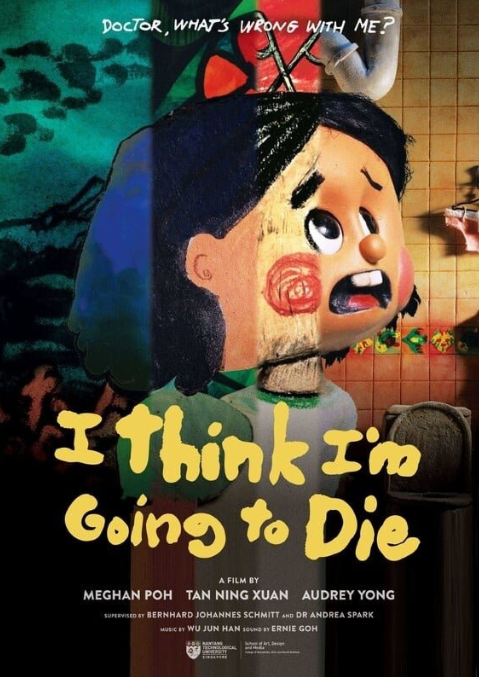
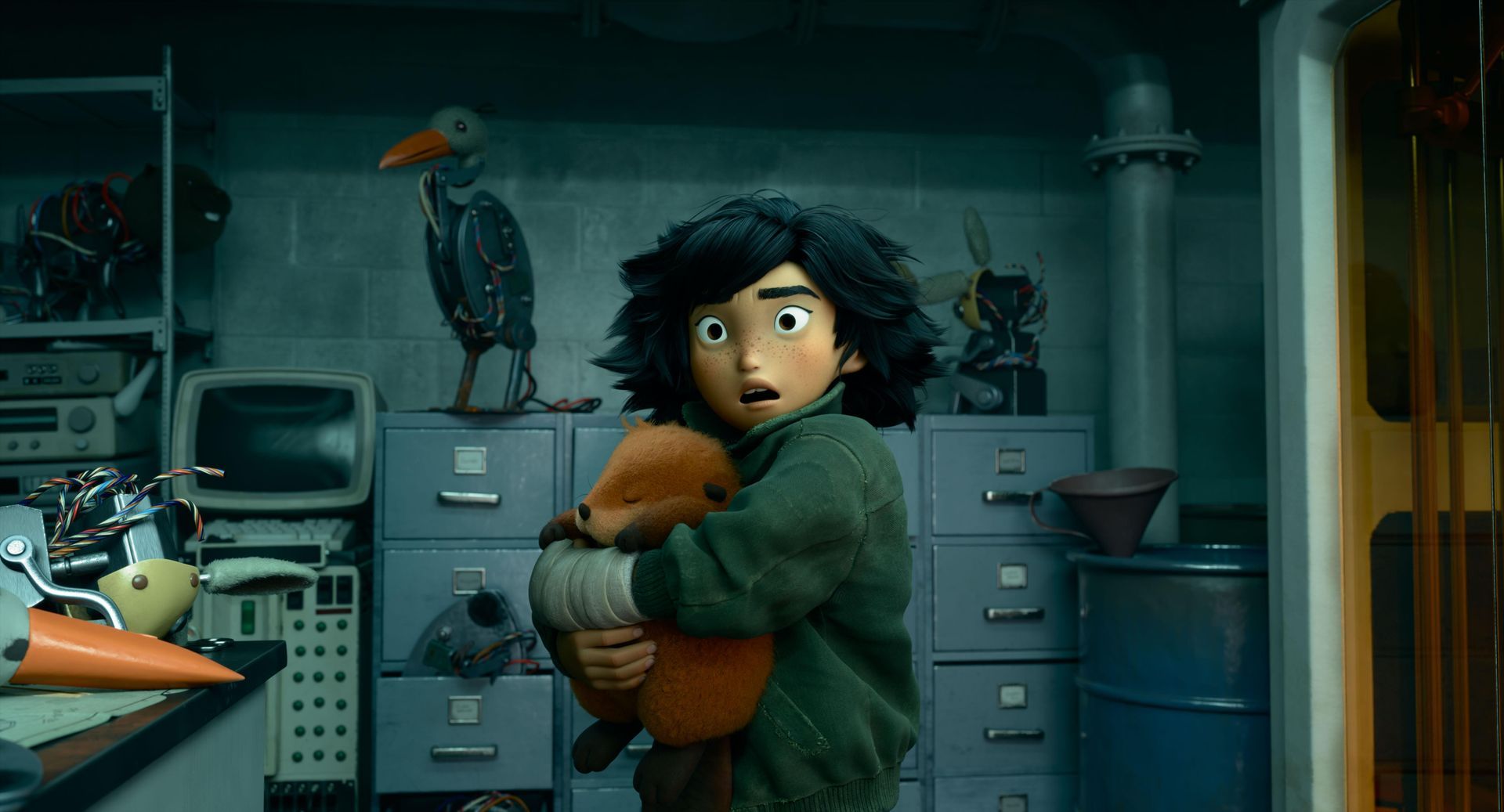
Directed and produced by Tan Ning Xuan, Meghan Poh, and Audrey Yong, I Think I’m Going to Die is a mixed media stop motion film in which a young girl finds her body afflicted with a mysterious condition. Panicked, she races through different fantastical worlds, searching for a ‘real’ doctor to diagnose her worsening condition. In its 5-minute runtime, the film makes sure to pack both heart and technical mastery in every single second.


At first glance, it is immediately evident how technically advanced
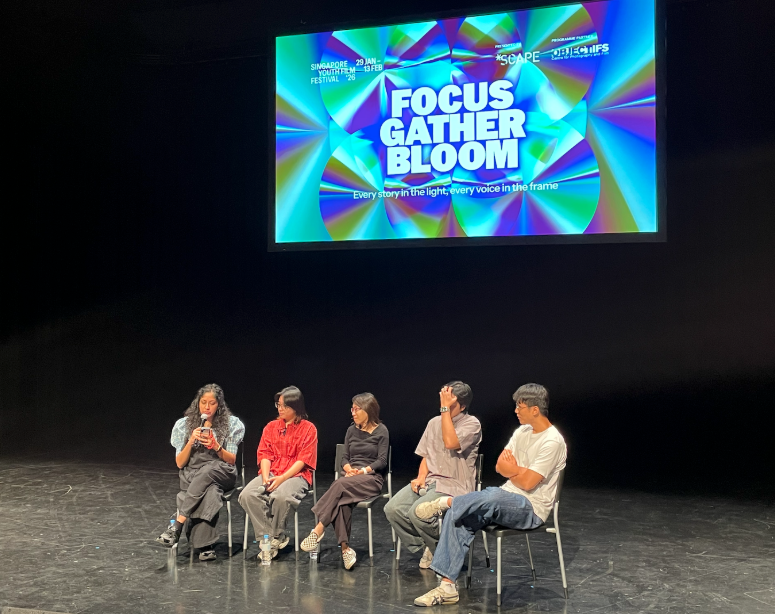
I Think I’m Going to Die is. Exploring coming-of-age struggles through magical realism is not a novel concept, but it is the film’s execution of this theme that truly stuns the viewer. During the post-screening Q&A, Audrey Yong shared that the short began as an experiment to cram as many stop-motion styles as possible into just five minutes. Each fantastical setting, with its unique tone and atmosphere, is matched to a corresponding medium. Felt, clay, and puppetry for an HDB flat, watercolour for the ocean, paper-cut light boxes for a mythical lair, coloured sand for a doctor’s examination room, and much more.


As hybrid animation rises, stop-motion animation increasingly struggles to compete with the slick polish of titles like
Arcane and Kpop Demon Hunters, which blend 3D animation with 2D graphics. This is true even as stop-motion films such as ParaNorman and Isle of Dogs continue to earn critical acclaim while struggling to compete commercially. I Think I’m Going to Die confronts this tension head-on with unabashed maximalism, pushing the medium to its fullest, most cacophonic potential. The result is a celebration of stop-motion’s unique textural depth, of its unrivalled physicality and the visual complexity that can be coaxed from painstaking craft. 

While the short’s technical aspects command attention, its thematic resonance give the riot of colour and texture its emotional weight. During the Q&A, Audrey Yong shared that I Think I’m Going to Die was always meant to be “a Girl’s Girl”. Female puberty is usually introduced in sombre conversation, she explained, particularly because the metamorphosis from ‘girl’ to ‘woman’ changes how others perceive you. It is a deeply social transition, and the film taps into the anxiety that comes with it to forge a connection with its female viewers. Hence, drawing from gendered beliefs ranging from 18th-century Victorian medical journals to Nepalese traditions, the film delivers a surreal exploration of this tumultuous, body horror-esque transitionary period. 


This gendered angle explains the film’s escalating sense of anxiety, as well as the darker subtext that becomes apparent in its later sequences. At the start of I Think I’m Going to Die, the girl’s titular catastrophising comes across as hyperbolic, and audiences are meant to be at least slightly amused at her Alice in Wonderland-esque quest to find a ‘real doctor’. However, as the film progresses, what becomes genuinely frightening are the reactions of the ‘doctors’ themselves — the way they seem increasingly disgusted by her body, increasingly willing to deceive and exploit her. As the girl’s source of anxiety shifts from her body to the threat that these ‘doctors’ pose, the film’s whimsical atmosphere slides into much darker territory. Notably, between the talking fish and mythical birds, the most predatory ‘doctor’ comes in the form of a man. A man with a smile, who promises to help her.


Both technically and thematically,
I Think I’m Going to Die feels much richer than one would expect possible in such a short piece of animation. It is a real joy to see such eclectic experimentation with stop-motion animation, and I am personally excited to see what its team will achieve next.


---------------------


About the author: Elena Goh is a postgraduate student based in Singapore. She is currently pursuing a Master’s in Creative Writing at the University of Cambridge, and her fiction and film reviews have been featured in Twin Flame Literary, The Writer's Block and the UCL Film & TV Society Journal. Her work explores the intersections of intergenerational memory, cultural identity, and Classical mythology.


This review is published as part of *SCAPE’s Film Critics Lab: A Writing Mentorship Programme, with support from Singapore Film Society.

BLOG

By Jun Sen May 22, 2026
Ikiru – To Live Or Not To Live? A narrative analysis by Jun Sen of Akira Kurosawa’s Ikiru (1952) – what it means to truly live. 
By Jun Sen May 14, 2026
In Conversation with Seth Cheong An interview with Seth Cheong on his unconventional filmmaking journey and process, hailing from a non-film school background. 
By Chinmaya May 7, 2026
Film Review #199 Film Critics Lab Resurrection
By Pan Wenbo April 20, 2026
SCFF 2026 LINKA LINKA Review
By Amadeus Yeo April 17, 2026
Review: Palimpsest: the Story of a Name (dir. Mary Stephen)
By Victoria Khine April 17, 2026
SCFF 2026 Animated Shorts 动画短片集
By Rachel Xia 夏仲静 April 15, 2026
Film Review: Beyond Reconciliation: Living On in Life of Luosang 藏地的生命诗篇:《洛桑的家事》
By Jarrett Yang April 13, 2026
SFS Review - NO OTHER CHOICE (2025)
Poor Taxi 辽河的士
By Jayden Lim Jie-En April 13, 2026
A Review of Poor Taxi 辽河的士 (2025) 
By Jun Sen March 11, 2026
SYFF - In Conversation with Jake Low 
More Posts