A Wicked Tale: Wolf in Sheep’s Clothing

Isabel Hah • November 16, 2026

Share this article

A Wicked Tale: Wolf in Sheep’s Clothing

Described by the Montreal Mirror as “a hallucinatory, atmospheric film drenched in lust and dread”, Tzang Merwyn Tong’s A Wicked Tale certainly delivers in that regard. The film draws inspiration from Little Red Riding Hood, but isn’t afraid to take audiences down an unsettling path, warping familiar characters so that they take on new meaning when desire and manipulation come into play. While watching the film, the following comes to mind — who’s the real wolf here?


The film starts off with an ominous monologue by the perpetrator, Louis Le Bon, who is supposed to symbolise the wolf character we know well. He implores the audience to remain open to his side of the story before casting judgement on him, which leads us to be sceptical of him because that’s fairly typical of what a villain would say when caught. Having already typecast him as the ‘bad guy’, it is easy to be more wary of him compared to Red Riding Hood at the beginning. However, as the narrative progresses, the lines blur, and it becomes more obvious that Louis Le Bon is just another piece in a game of chess.


It is interesting how A Wicked Tale deals with irony when it comes to their characters. The name ‘Louis Le Bon’, for example, can be literally translated to ‘the good, famous warrior’ from its French origins, but the character himself does not have any good intentions in the story as he seeks to prey on innocent girls. The Big Bad Wolf is also no ugly beast. Instead, he is portrayed as a relatively attractive and charming man. On the other hand, the Red Riding Hood, Beth, is doe-eyed and has a sweet demeanour. At first glance, you would be unlikely to think of her as capable of great violence. The characterisation challenges the preconceived notion of what we think we know and forces reflection on what kind of wolf we could be deep down, if the circumstances called for it.

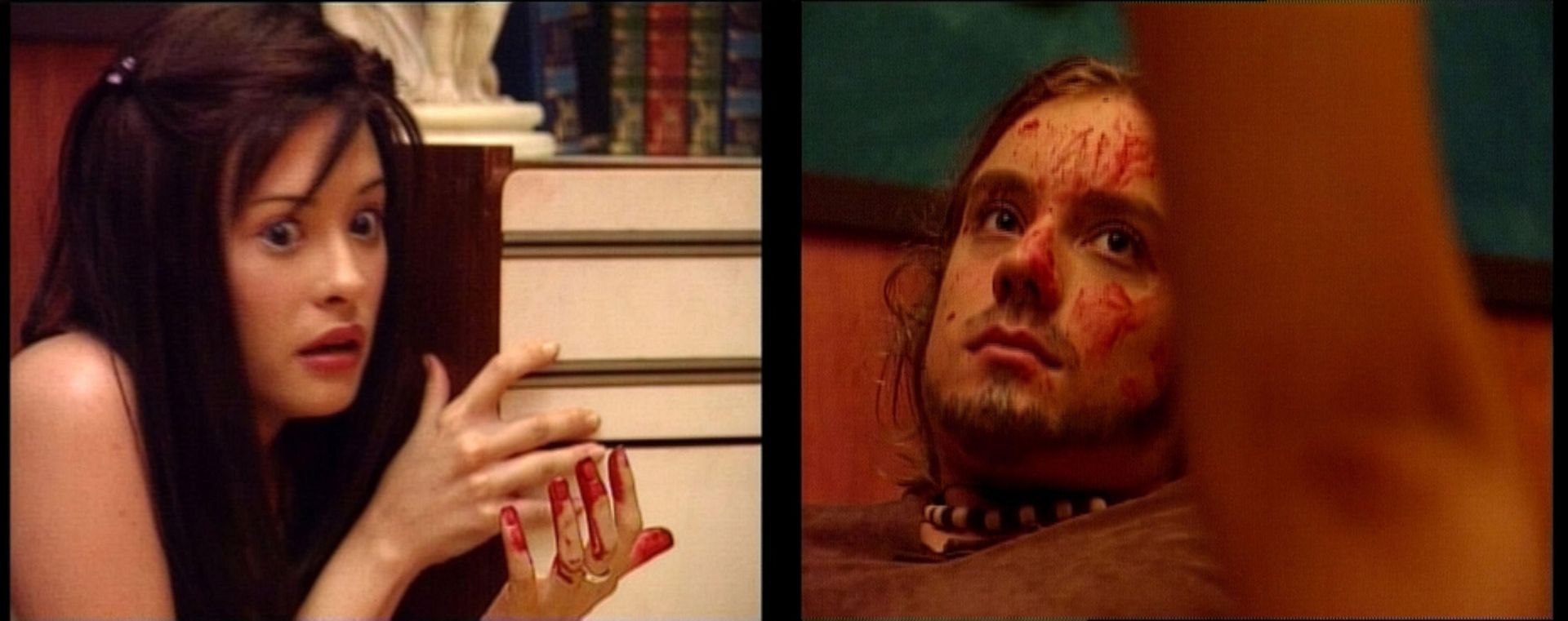
Stills from A Wicked Tale: Beth, the Little Red Riding Hood (left), and Louis Le Bon, the wolf (right)

(From left to right) Beth, the Little Red Riding Hood and Louis Le Bon, the wolf.

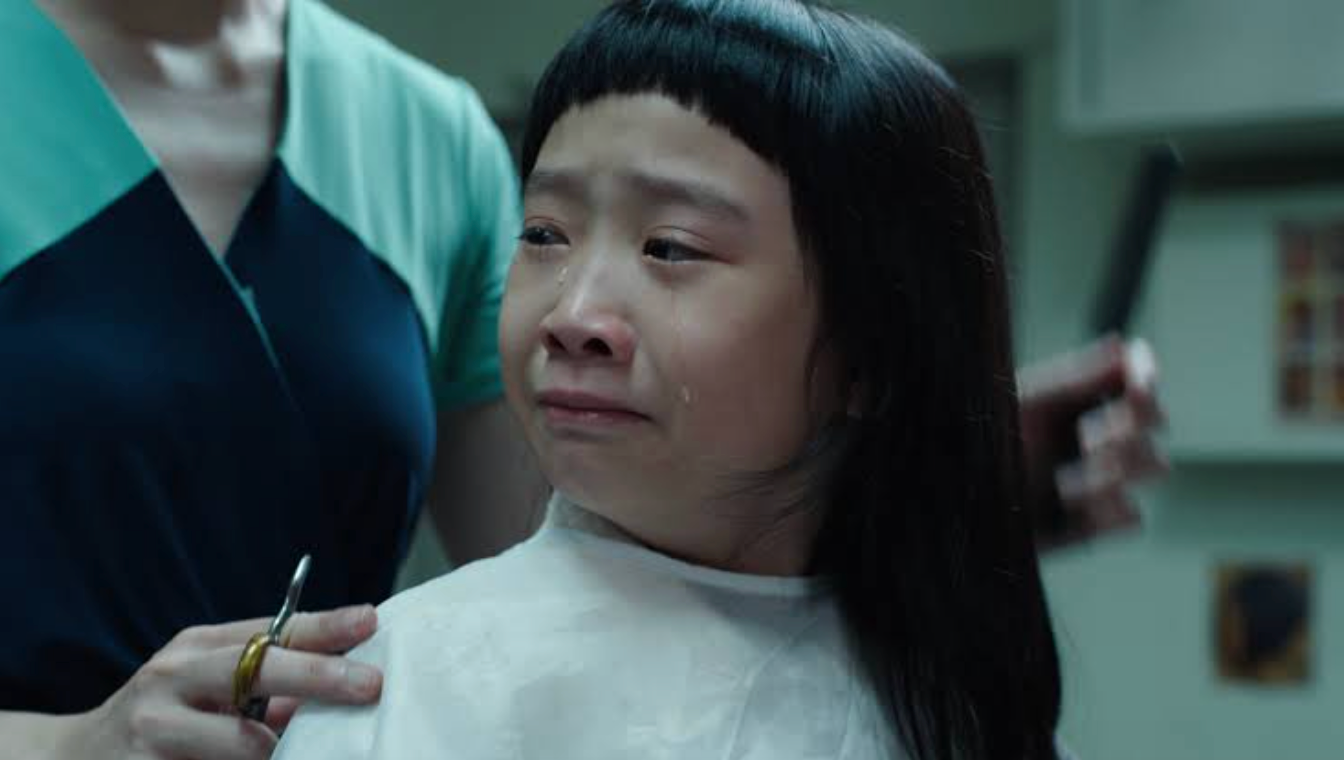
This is reminiscent of Byun Young-joo’s Queen Mantis, which is a Korean series exploring how women not being seen as threats by society can be used as an advantage for female serial killers to remain under the radar. In the show, the detectives track down different male suspects who are also guilty of their own respective crimes, missing out on the mastermind, who turns out to be a close female friend of the lead detective’s wife. While Queen Mantis has a more gendered focus compared to A Wicked Tale, both screenworks flip the script on what is expected of characters we deem as harmless.


This subversion of expectations extends beyond the characters to the way A Wicked Tale is filmed via misdirection. The fairytale portion has no spoken dialogue, so viewers must interpret the story through body language and deliberate camera shots, with speech appearing only in brief cards that remind one of silent-era intertitles. Combined with grainy, old-timey visuals, this creates a dreamlike distance that lulls audiences into watching a familiar tale unfold, until Red Riding Hood turns the tables in a shocking act of revenge. The film then jumps to a modern-day hospital, where spoken dialogue suddenly returns, and a casual conversation between two medical staff hints at how drastically the power dynamics between predator and prey have shifted. The change in style is jarring, almost like waking up, and it makes the audience question how much of the fairytale really happened. With the full story left unspoken, viewers are left to piece the truth together from what is only implied.


While certain characters, such as the huntsman and the grandmother, could have been reimagined more fully, A Wicked Tale excels at delving into darker themes and toying with its audience, culminating in a twist that lingers long after the credits roll. Its ambiguity is its greatest strength, raising the question of whether the dream of a fairy tale is more real than reality itself, and suggesting that the psyche may understand some truths better than the conscious self. That said, with its considerable gore, A Wicked Tale is not for the faint of heart, but for those who can stomach it, this twisted fairy tale may be worth the trip into the woods.


Catch A Wicked Tale at SFS Somerset (GV Cineleisure Hall 6):

Sat, Nov 21st, 7:30 PM

Fri, Dec 11th, 7:30 PM

Sat, Jan 16th, 7:30 PM

About the author: Isabel is an avid reader and writer who hopes to inspire greater connection and empathy in an increasingly isolated world. When she’s not crafting stories, she can sometimes be found going ps ps ps at her neighbourhood cats.


Connect with her on LinkedIn here: https://www.linkedin.com/in/isabel-hah-041751203/

Recent Posts

By Jarrett Yang • November 13, 2026
SGIFF Review - AH GIRL (2026) Written by: Jarrett Yang
By Jun Sen • November 4, 2026
The Art of Interdisciplinarity with Mediha Didem Türemen
By Ivan Chin • November 3, 2026
The Blade: Bloody Brutal Revenge
By Jayden Lim • October 13, 2026
Pace《脚踏实地》 is a new homegrown Singaporean drama film, and the debut feature of writer-director Jonathan Choo.
By Zhuo Chengsheng • October 13, 2026
Spirit on Wheels (1996)
By Zhuo Chengsheng • September 4, 2026
Ryuichi Sakamoto: A Visit to His Private Library
By Han Yiheng • August 17, 2026
What Singapore’s film industry can learn from the Oscars
By Ivan Chin • August 17, 2026
Oldboy: The Monster Within
By Fengyu Seah • August 8, 2026
Spike Lee's Still Got It
Show More