Film Review #183: Taste of Cherry

Stephanie • December 31, 2025

Feeling Death: Review of

Kiarostami’s Taste of Cherry (1997)

As Badii (Homayoun Ershadi) drives along winding dirt roads in Tehran that never seem to end, with chaotic scenes of people and machines flashing by the window beside him, he is framed in a profile mid-shot that accentuates his steely gaze – one fixed unwaveringly on the path ahead. Badii’s visual fixation parallels the figurative one forming the premise of Abbas Kiarostami’s Taste of Cherry (1997): a middle-aged man is determined to commit suicide, and searches for someone who As Badii (Homayoun Ershadi) drives along winding dirt roads in Tehran that never seem to end, with chaotic scenes of people and machines flashing by the window beside him, he is framed in a profile mid-shot that accentuates his steely gaze – one fixed unwaveringly on the path ahead. Badii’s visual fixation parallels the figurative one forming the premise of Abbas Kiarostami’s Taste of Cherry (1997): a middle-aged man is determined to commit suicide, and searches for someone who will aid him. In its 96-minute golden-brown haze, Taste of Cherry is an exploration of primal and socio-ethical responses to suicide – from fear, bewilderment, and disdain, to empathy and peace.


For a film fuelled by its protagonist’s desire to die, it is remarkably quiet and almost meditative. Ultimately, Kiarostami eschews depictions of death portrayed as a wild, thrashing beast. Instead, recognising film’s limitations in truly representing complex human realities, he opts for a poeticisation of this human condition which establishes fidelity through emotional impact over the visual literal.


Initially, our understanding of Badii’s mission is uncertain and, indeed, confuses the men he approaches too; a labourer, thinking Badii’s monetary offer is in exchange for sex, threatens to attack him. Even when he explains his offer to a horrified young Kurdish soldier (played by Afshin Khorshid Bakhtari), Badii’s demeanour subverts what we might expect of someone suicidal – he is logical, composed, and patient. In this particular scene, Badii is elevated – framed from a slightly lower angle, while the foreground is a wide, open desert scenery. The soldier is minimised – filmed from a higher angle – and his uneasy eyeline is cut by the top of the halfway-wound-down car window; the two compositions in this scene alone highlight the contrast between a sense of freedom and power in Badii, and claustrophobic smallness in the soldier, despite Badii being in a car and the soldier being in the cast dessert. The choice of framing in their shot-reverse-shot interaction thus mirrors Badii’s confidence and the soldier’s anxiety, subverting our expectations of their dynamic.


Similarly, Badii’s plan is surprisingly thought-out. He has already dug a grave for himself below a cherry tree, and plans to attempt suicide in the grave that night; all he asks of the soldier is to check on him in the morning – if he is alive, to help him out of the grave, and if he is dead, to bury him.


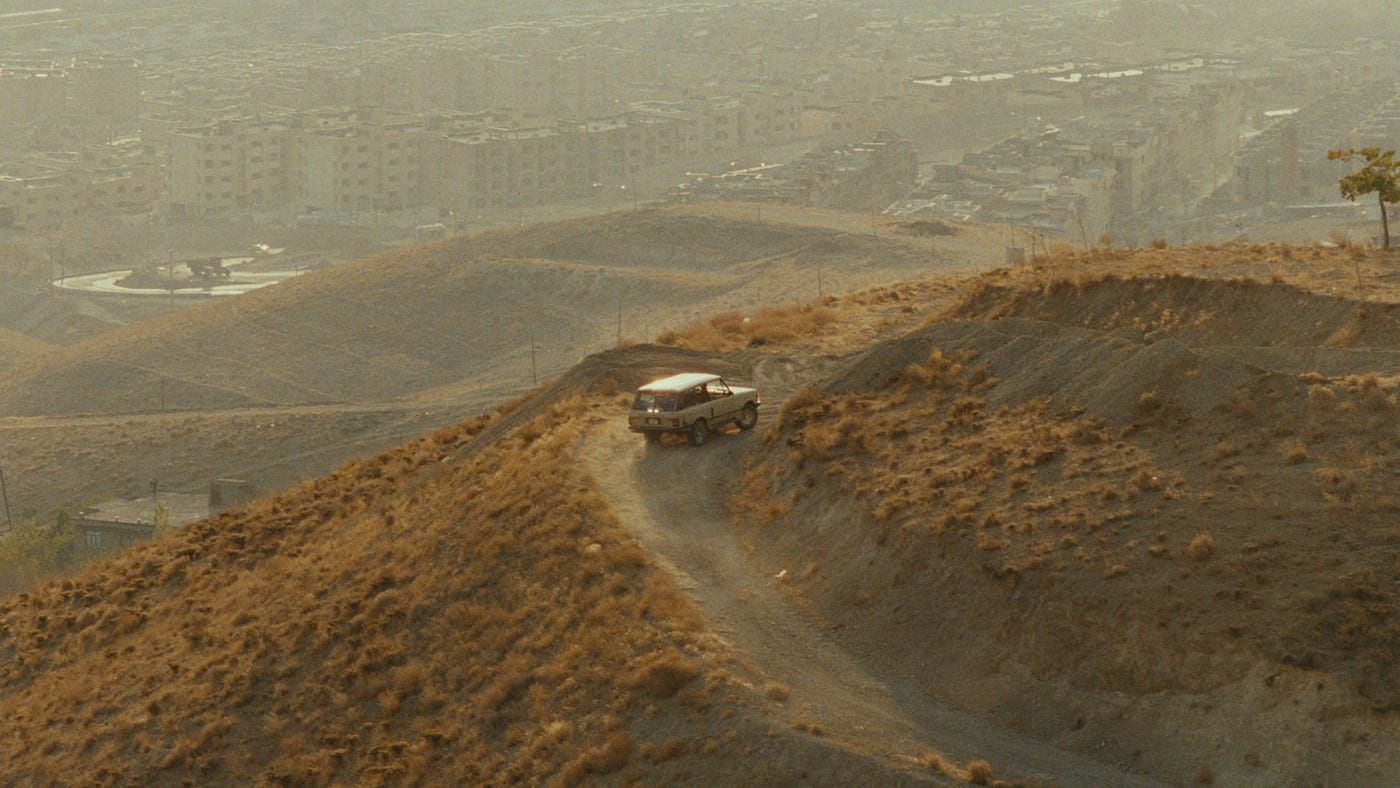
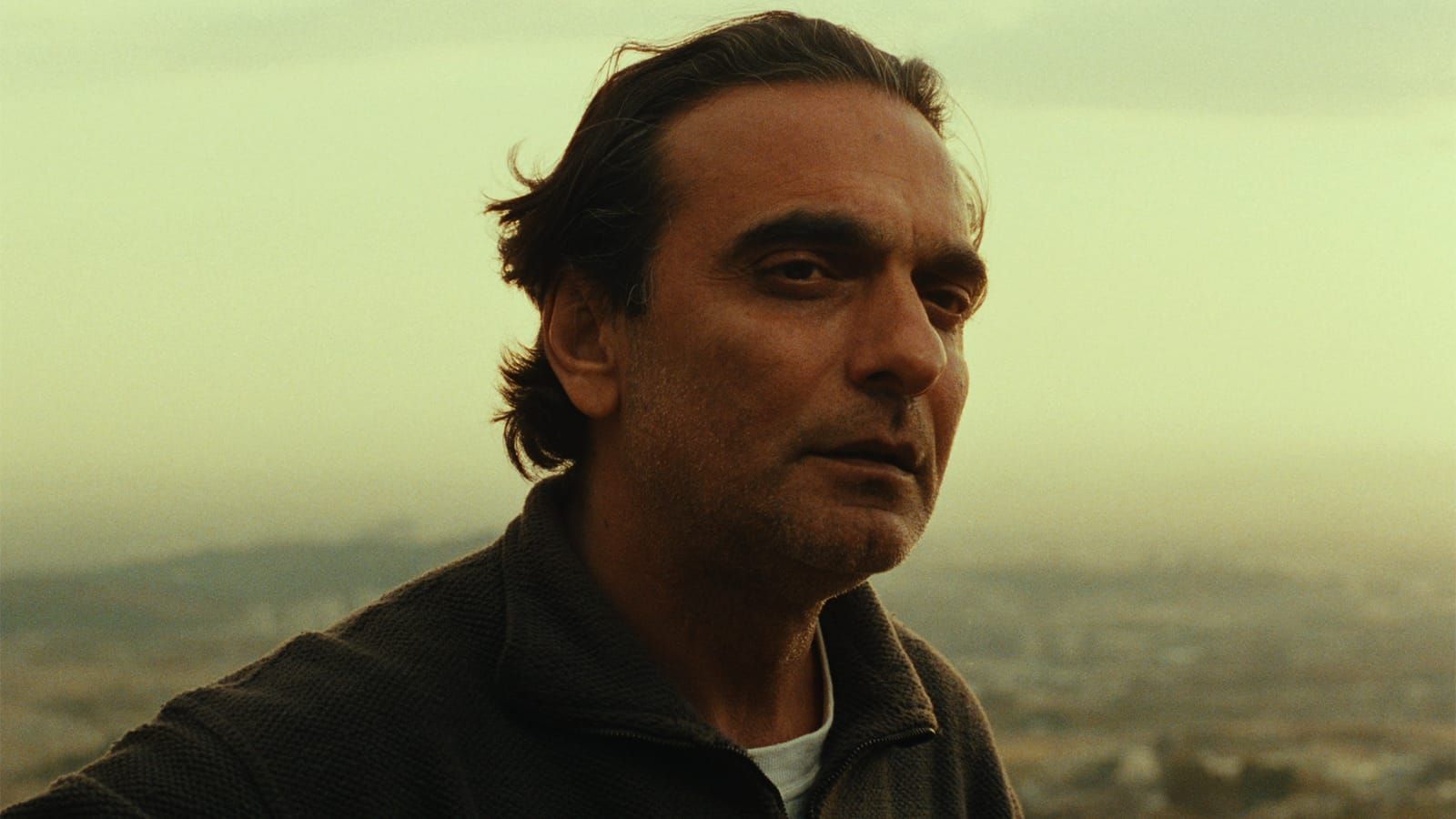
The film’s emotional arc relies on Badii’s startling confidence; its dialogue is subtle and its actions sparse, but it builds convincingly to an anxiety-ridden climax when (spoiler!) Badii finally finds an old man who will help with the suicide. The plan now in motion, Badii suddenly looks around, eyes wide and disbelieving, at a world he realises he might never see again. His fearful anxiety in the face of mortality is made especially palpable for viewers when, after helping a couple take a picture, Badii abruptly swings his car around to look for the old man at his taxidermy workshop. There, we have to endure an agonising 40-second long-take of Badii pacing back and forth, wringing his hands as he waits for the old man, before we find out what he needs to tell him: “When you come in the morning, bring two stones and throw them at me. I might just be asleep and still alive. [...] Shake my shoulders too. I might still be alive.” This emotionally climatic sequence is a marked difference from the aforementioned calmness with which Badii laid out the suicide plan; it is the first time Badii’s confidence falters, the first time he truly entertains the thought that he might survive the night, the first time we feel his fear of dying despite his desire to – a deeply nuanced emotional journey elucidated through careful pacing, writing, and mise-en-scène.


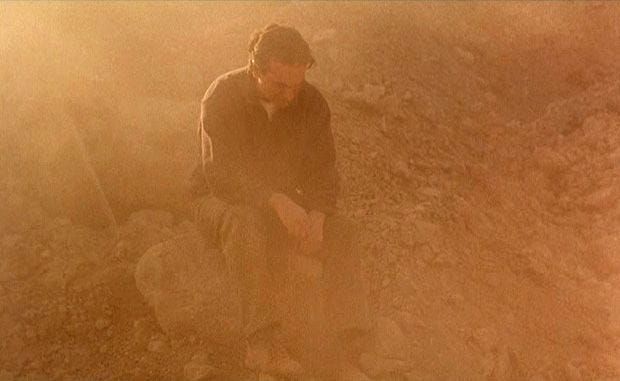
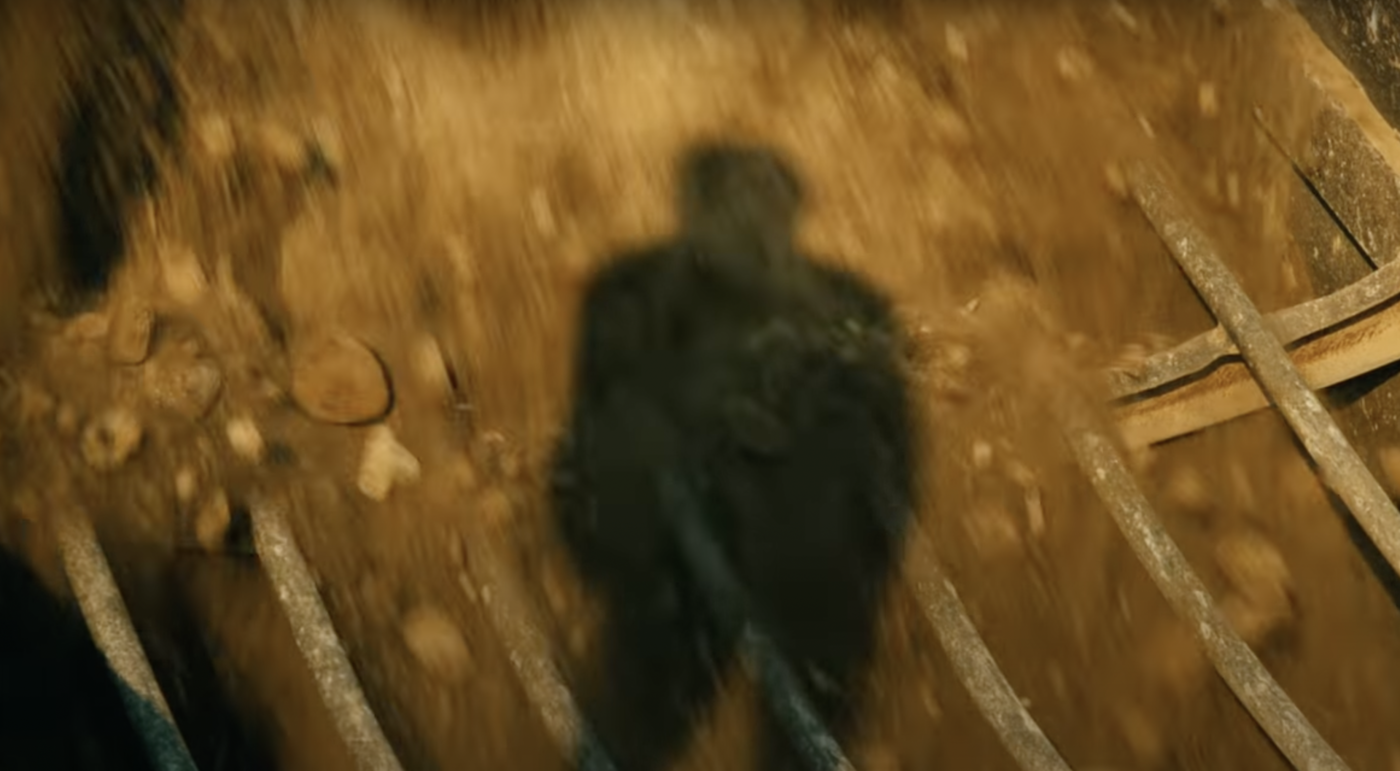
Kiarostami’s subversive emotional arc and characterisation are combined with a co-opting of viewers into its protagonists’ emotional state. Its chronology is constructed with few time-jumps and many long-takes – at one point, we watch for four minutes as Badii watches dirt excavated at a construction site, the ever-shifting texture of its flow distorting his shadow, the thickening dust enveloping his image. The metaphor is visual and beautiful: Badii has been silently consumed by things in life – small like dirt and dust, but, at great volume, powerful enough to obscure the shape of one’s self. The metaphor might be aural too, if we hear the subversive silence of Badii’s suicidal struggle compensated for by the deafening grinding of machinery and falling rocks; the construction site gnashes its teeth in Badii’s place. Kiarostami thus capitalises on filmic techniques – long takes, visual and aural metaphors – to offer viewers the experience of an emotionally complex tangle with suicidal feelings, as opposed to merely viewing a conventionally sensational depiction of the struggle. Again, I go back to how Kiarostami acknowledges the filmic medium’s limitations in literally depicting the human condition, opting instead to present the poetic.


A further testament to Taste of Cherry’s self-consciousness is found in the bizarre self-reflexivity of its ending. A flash of lightning, and, lying in his grave, Badii’s eyes close; in the darkness, a soundscape transition from thunderstorm to birdsong and a fade-in on grainy handheld footage of soldiers marching. Then, Badii walking up a hill to pass a cigarette to Kiarostami himself, who is in the middle of shooting what appears to be Taste of Cherry. At once a vulnerable display of the filmic medium in action and a break in fictional reality that seems to liberate our protagonist from his tormented fictional self, Kiarostami’s closing scene reflects Taste of Cherry’s underlying anxiety: a negotiation of the relationship between the sheer weight of life, death, emotions – the human condition – and the limitations of cinema.

---------------------


About the author: Stephanie is a writer and artist passionate about elevating traditionally untold stories through film, visual art, and theatre. She founded Poster Room, an arts collective dedicated to creating community spaces centred around film from Singapore and Southeast Asia. Alongside her work, she is currently reading a double major in English Literature and Art History at Nanyang Technological University.

BLOG

By Ivan Chin December 31, 2025
Film Review #182: YI YI
By Jing December 16, 2025
The Music of Memory: Form, Intimacy, and Musicality in Joachim Trier’s Sentimental Value
By Jarrett Yang December 16, 2025
SGIFF Film Review - Amoeba (2025) 
By Ivan Chin December 16, 2025
Film Review #179: RESURRECTION
By Deepagcharan Chandran October 6, 2025
JAPANESE FILM FESTIVAL 2025 Intentional and Instinctual: An Interview with Director Kazuhiro Soda
By Pan Wenbo August 12, 2025
香港邪典电影《红鬼仔》《蜈蚣咒》影评 Black Magic Horror Double Bill (Chinese Review)
By Amadeus Yeo August 12, 2025
SFS Restored Double Bill: HK Black Magic
By Jarrett Yang July 8, 2025
Commentary: A Decade with Anthony Chen 
By Chloe Loo June 9, 2025
Love is… Resilient: An Interview with Agnes Goh, Writer of Living & Remembering
By Mark Tan June 2, 2025
Film Review #175: THE WILD ROBOT The Triumph of the Last DreamWorks Animated Film (The Extended Review)
More Posts