What does Hoppers actually say about the environment?
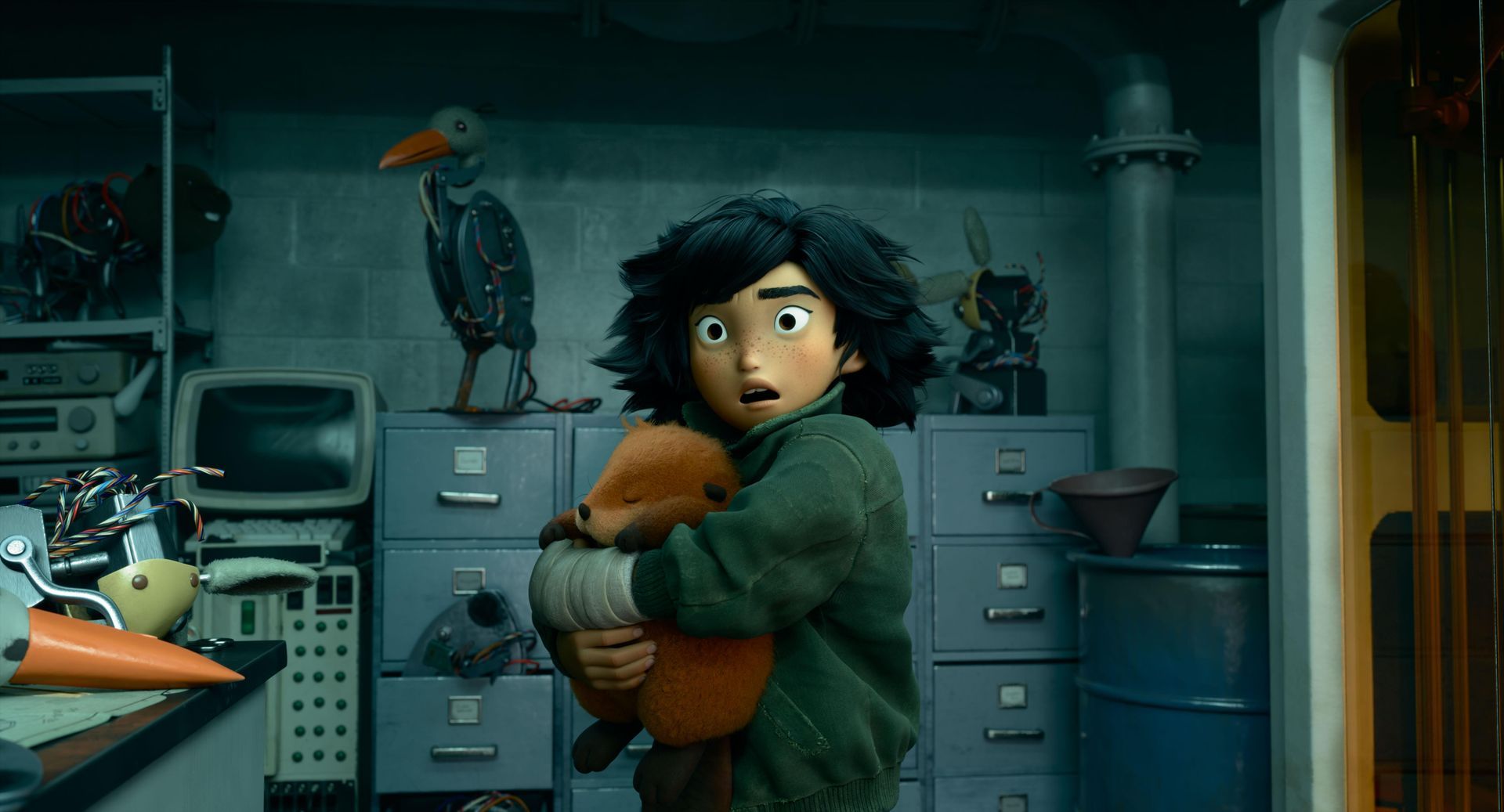
Hoppers is a good movie with bad messaging. In this newest offering from Pixar, scientists have figured out how to transfer human consciousness into robot animal bodies. Upon discovering this technology, young environmentalist Mabel hops into the body of a robot beaver, hoping to save her childhood lake from being demolished for a new freeway. The characters are cutely animated, the dialogue is funny, and one leaves the cinema feeling like they have just enjoyed an engaging and satisfying story. Yet, the film is founded on several strange equivocations that muddle its seemingly pro-environment sentiment.
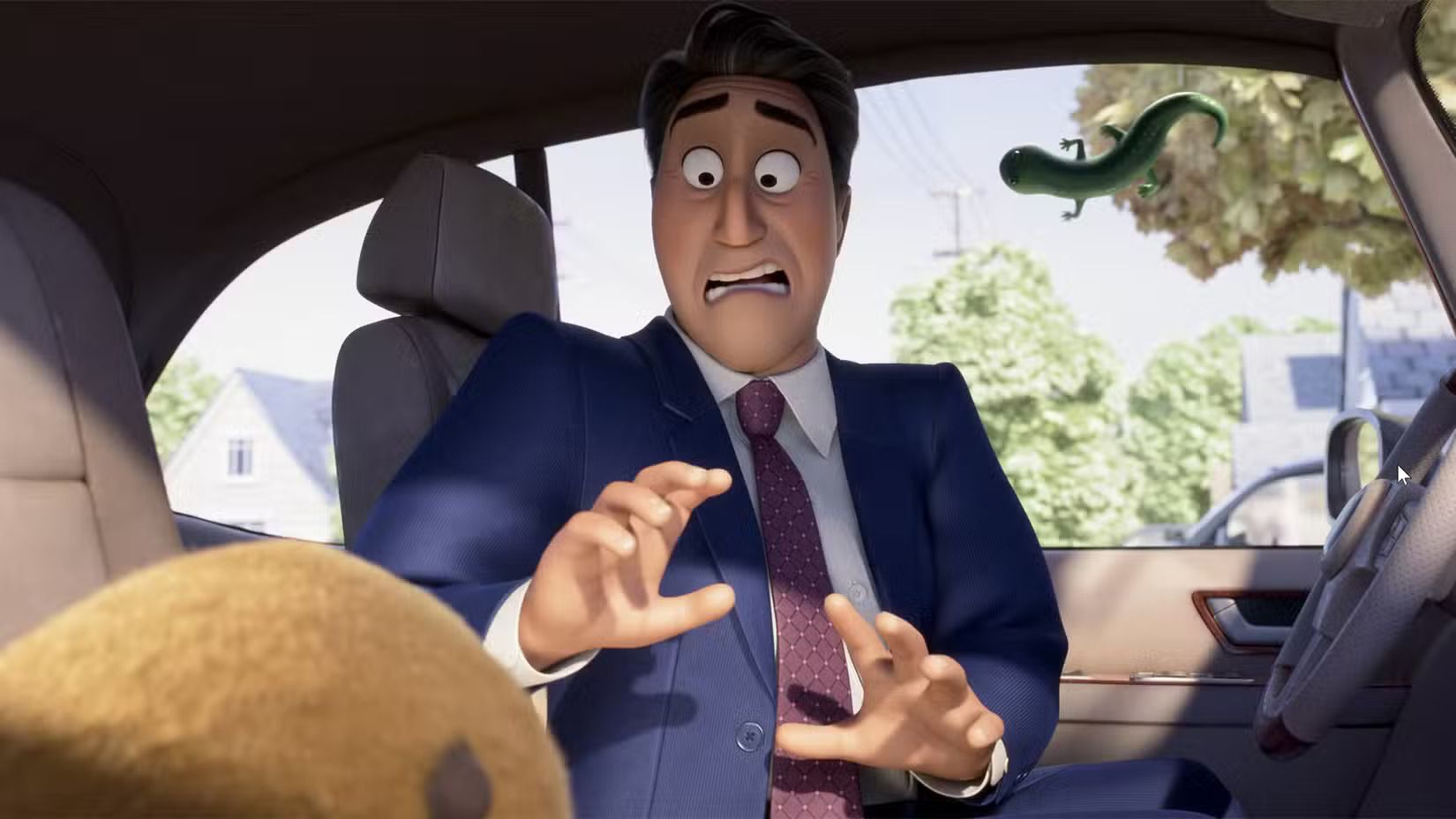
For one, the environmental activism of Mabel is paralleled by the environmentally destructive policies of Jerry, the city’s mayor. Early on, we get a montage of Mabel protesting Jerry’s construction projects. The two characters each occupy half of the screen, as if they are two sides of the same coin, their bickering blending into unintelligible noise. Their similarity is played for laughs — we are meant to be amused by how neither can look beyond their own narrow-minded views.
Surely, alarm bells are already going off. It goes without saying that Mabel and Jerry are not at all equal, because a mayor has substantially more power than a college student. We are falsely guided into thinking that Jerry is much weaker than he really is, and that Mabel’s activism is no more than angry shouting. Indeed, part of Mabel’s character arc hinges on her learning to manage her temper; the film suggests that her protesting stems as much from genuine political beliefs as it does from personal petulance. Consequently, Mabel’s attempt to stand up to Jerry seems pointless or even ridiculous.

The second equivocation is between the animal world and the human world. Once Mabel hops into the body of the beaver, she enters a nature that is just as malicious and hierarchical as human society, with each species having its own king or queen. At the halfway point, the actual villain is bizarrely revealed not to be Jerry but the Insect King, a caterpillar out for revenge against bug-crushing humans. The takeaway we are supposed to have is that both the animal and human world need to learn to live harmoniously, within their own communities and with each other.
But environmental degradation is a uniquely human problem, caused by humans, through an economic system built by humans. By dedicating most of its runtime to portraying evil insects and fish, the film deflects from this most fundamental point. Indeed, the second half of the film dilutes what political messaging was present in the first into a generic statement on the need for unity.
This is what the ending hammers in, showing beavers and construction workers working diligently to rebuild a dam together. What is ignored, of course, is that the dam was razed for a highway in the first place. Should the beavers bear the same obligation to clean up environmental problems as the humans who caused them? The movie’s answer is yes, because the moral of the story is teamwork rather than human responsibility.
(Credit: Walt Disney Pictures)
We might also ask why the film thinks that animals need to learn to live harmoniously. In many ways, the film values nature only insofar as it is palatable to humans. Much of Mabel’s backstory is predicated upon her ability to appreciate nature as a place of wonder. The start of the film shows how Mabel’s unique connection with nature is fostered by days spent at the lake with her grandmother, who reminds her that “it’s hard to be mad when you feel like you’re part of something big”.
What happens, then, when nature is not beautiful and wondrous? Is it not worth saving? For a brief and promising moment, when Mabel first infiltrates the pond as a beaver, the film seems to accept nature on its own terms, showing animals eating each other at random as part of “Pond Rules”. Yet, this seeming acceptance of nature’s unruliness is quickly shelved with the introduction of the animal monarchs. The film criticises their selfishness, and ends with the animals either being punished or reformed. Underlying the plot is a belief that the animal kingdom needs to be rescued from itself — needs, essentially, to be made less animal.
The film’s best moments, then, are when it leans into the grittier aspects of nature. There is a real sense of thrill when the animals band together in a show of force against human invasion. The insects summon an apex predator by forming an X over the moon. The birds stalk the mayor on his way to work before plunging ominously into the ocean. These arresting scenes imagine humanity finally being humbled for our greed.

(Credit: Walt Disney Pictures)
Perhaps though, tantalising as these scenarios are, they also function as wish fulfilment, as yet another way of offloading the blame onto nature. The idea is that, if what humans were doing was so bad, nature would fight back. Clearly, this is not the case, since environmental degradation persists all around the world. Throughout its runtime, the film strangely maintains that humans are less powerful, and less responsible, than we actually are.
Hoppers is a wasted opportunity for educating children about humans’ relationship with the environment. The film does a lot right, with a funny script that develops in surprising and exciting ways. Yet, for all the boldness of its narrative choices, the film is not quite so daring in what it actually has to say.
About the author: Yong Xiang is an undergraduate. Recently, he has enjoyed running, playing Fast Food Simulator and reading Garielle Lutz's short stories.
This review is published as part of *SCAPE’s Film Critics Lab: A Writing Mentorship Programme, with support from Singapore Film Society.