Film Critics Lab: Interview with Ben Tan Kai Xiang
Film Critics Lab: Interview with Ben Tan Kai Xiang
In February, I had the distinct pleasure of speaking with Ben Tan Kai Xiang, co-director, co-writer, and co-editor of
Mountain Mountain, my favorite film at SYFF 2026. Speaking to me surrounded by boxes and boxes of vinyl records, Ben struck me as an incredibly thoughtful artist, for whom the act of creation is an immensely personal act. Below is our conversation, edited for length and clarity.

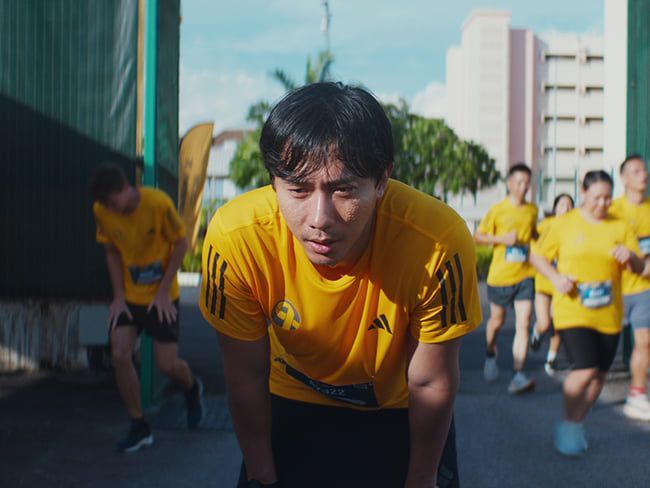
Photo of the artist doing the hard work of creativity
Fengyu (FY): This film, Mountain Mountain, was your Final Year Project (FYP) at NTU. Do you see it as a culmination of your work at NTU in any way?
Ben Tan (BT): I think so? Grace [Cheu Li Qing, Bryan’s co-director on Mountain Mountain] and I have been working together for quite a while, so it was a culmination of a few things we wanted to do, like experimenting with medium. We come from a traditional painting background, and we wanted to incorporate that into the art style. Also, we were trying to tell a very weird, non-linear, very Singaporean story—a story that felt both authentic and interesting to us.
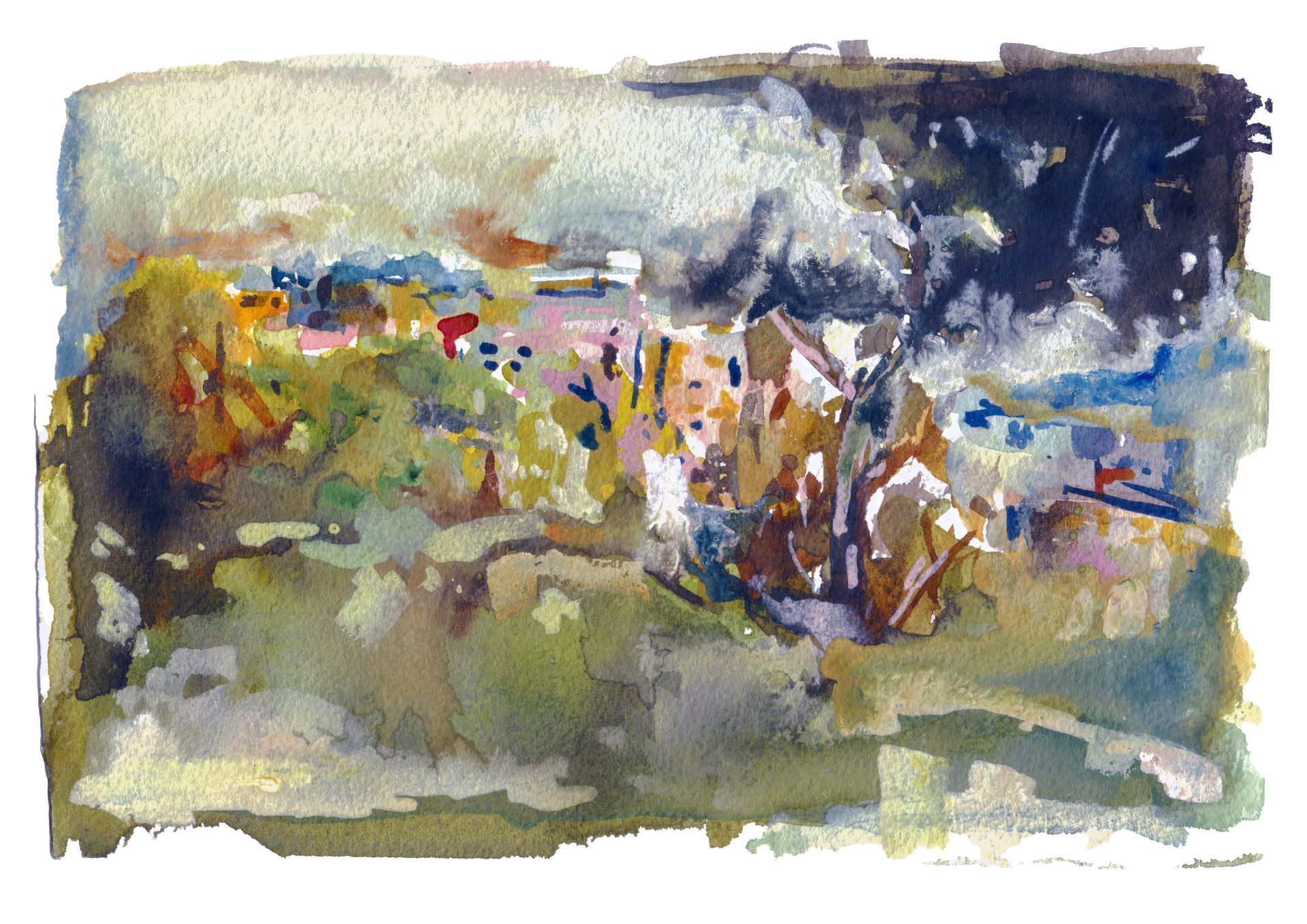
A painting by Ben Tan Kai Xiang
FY: As you said, this isn’t your first collaboration. You also made another film together called Goodbye Old Fish. How did you start working together? What does your collaborative process look like?
BT: Well, Grace and I used to date (laughs). We’ve also always liked each other’s work, and so we’d help each other with our separate projects, but
Goodbye Old Fish was the first time we actually produced a piece of work together, the first time we had to lay everything out there—our creative ideas, but also our egos, our pride—and get into the nitty-gritty of what’s important to us and figuring out the entire creative process.
FY: That sounds like a rewarding challenge. Has the collaboration gotten easier?
BT: It’s definitely been easier.
Goodbye Old Fish was pretty rough. Both Grace and I see ourselves more as directors than specialists. She knows what qualities the film needs to have to feel authentic to herself. It’s hard to have two people like that working together, especially for your first film! I was also a bit younger, and had a bit more of an ego and felt like I had to prove myself. So we butted heads a little. You always think everything’s at stake when honestly nothing is, and you should just have fun.
After all that I had some time to look at myself and go, “Yeah, I was a bit of an asshole.” And so things were a lot smoother on
Mountain Mountain. I think the biggest takeaway I had is to just let the person cook! She might show me something and even if it looks weird, I’d just let it be. It’s fermenting. The first draft might not necessarily be the final product; it’s about trusting the process and your partner. That’s very, very important.

Early concept art for Mountain Mountain
FY: I wonder if there’s maybe more space in indie animation for things that “look weird.” To me, what gets recognized in the broader public and at the most prestigious levels, say the Oscar for Best Animated Feature, sometimes lacks the vibrancy that’s at the heart of indie animation. At smaller indie animation screenings, I’m always inspired by how there are filmmakers who are really pushing the form. How does innovation or experimentation play a role in your own identity as an indie animator?
BT: My perspective has shifted a bit since I graduated.
Personally, I always want to push the medium forward, whether from a storytelling perspective or giving voice to issues that aren’t as prevalent. My pet peeve is that Singaporean films lack “Singaporeanness”. They’re either super “Singapore”, Jack Neo-esque, or not Singaporean at all, often fantastical or detached from a location. I feel like there’s a nice middle ground, for people to tell the stories they know and that they’ve lived themselves. My pet peeve is when people tell stories that they don’t “own”—as a director, lived and embodied experience is important in the stories I tell. Visually, too, experimenting with a mix of traditional and digital styles has been important to me.
But a business is very different from an independent animator. It’d be difficult to expect these big businesses to adopt something so niche. It’d be cool but a little unfair.
FY: That makes sense. Maybe it’s the idea that they have, justified or not, that they need to cater to as broad an audience as possible for commercial viability. Your point about Singaporeanness—I feel like it’s core to not just Mountain Mountain, but even one of your earlier animations,
Day Trippin’, which you made while on exchange in Brisbane. It’s recognizable to a fellow Singaporean, but it doesn’t feel like an outfit the film is trying on.
The line “There are no mountains in Singapore” in Mountain Mountain really moved me, as someone who is still trying to navigate my relationship with this country, having just moved back from four years of college overseas. What does Singapore mean to you, both personally and creatively? What are the mountains that you can’t find in this country?
BT: Singapore is home for me. No matter how you try and detach yourself, there’s a sense of familiarity and safety. It’s where my life is. It’s like family. Creatively, it’s also where I have my roots. I did a lot of work for Finding Pictures as an intern. The people I’m grateful for, who’ve shaped my thinking and my creative identity to some degree, are all here. And of course my friends are all here.
In terms of the mountains that aren’t here… honestly, I’m quite a simple person. I think Singapore has a very small art industry, so the opportunities are quite limited, especially for independent film, but I tend not to focus on what’s lacking. I guess it’s just a product of how I live my life. I focus on what I have and I make the most of it. As a culture, I think art has a long way to go in Singapore; the history is very, very brief, so we have a long way to go in terms of how the Singaporean identity can be distilled through the visual medium. I think the younger generation “gets it,” so maybe things are changing. I hope they are.

More early concept art for Mountain Mountain
FY: I hope so too. I also think it’s artists like you who are actively writing the legacy of the Singaporean art scene. Beyond Singaporeanness, a lot of your work also finds its beating heart in childhood memories; how do you think about nostalgia as a creative force? How much of your characters live within you, or vice versa?
BT: You could spend five years researching this (laughs). Mark, one of the founders of Finding Pictures, once said that nostalgia can be kind of clichéd, and you don’t want to overuse it. I don’t like using it for its own sake. I’m a very personal and intimate filmmaker, and also quite intuitive in my art, and naturally when you draw from your own past, nostalgia will be a part of it, but in a beautiful way that doesn’t need to show itself.
A lot of my characters are extensions of myself, or of people I know. In Mountain Mountain, for instance, Valerie is loosely based on someone we know from NTU, and Charlotte, the other main character, has elements of Grace herself. When we were writing the script, I just imagined what Grace would say and how she’d behave. A lot of the voice actors are my family and Grace’s friends—my mom and my sister are both in the film—so I would say a lot of myself, both literally and conceptually, are invested in the things I make. I don’t know any other way to do it; I’ve never done it any other way. And so far it’s been working pretty well. And I enjoy the work, which is what’s most important to me.
FY: I can feel it. Nuances and subtleties that slip in, not even consciously.
BT: It’s like watching an inside joke that you don’t understand. I love seeing something that feels authentic, even if it doesn't immediately make sense to me.
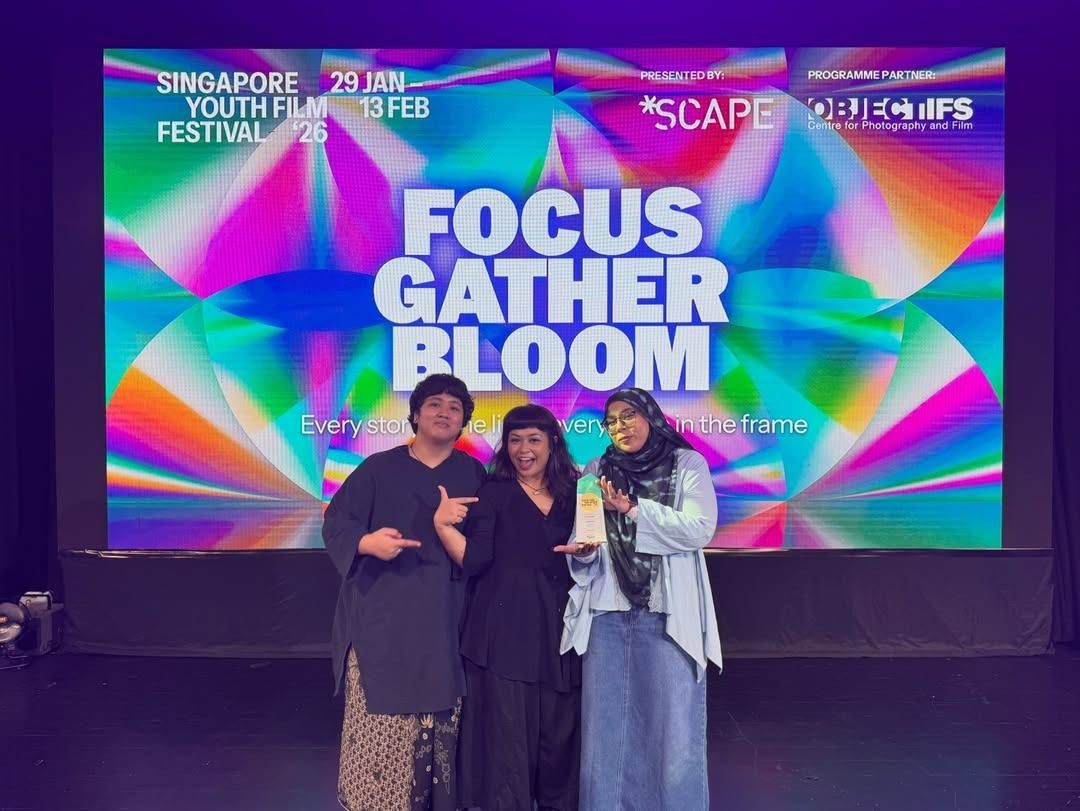
FY: Congratulations on winning
best editing
for Mountain Mountain at SYFF! It’s so well-deserved because the film accurately captures the disjunctiveness yet overall cohesion of childhood memories. What is your process in putting together a script like this? Do you write the script in its entirety first, or do certain images or scenes serve as launching pads to build the film around?
BT: You kind of nailed the description. Grace and I were inspired by Hayao Miyazaki, who has an intuitive approach to storytelling. The two of us go back and forth between writing the script and thinking of images, using the story as a thread to weave everything together. We don’t write in order, and when we land on something that feels key to the film we’ll find ways to put it in and tie it together. For instance, the scene with the gopher screaming below the mountain was initially a fun experiment, and then we found it worked as a good transition between scenes.
FY: Congratulations, too, on releasing
your first EP
as BenTan in December! I really love the art you made for the tracklist. You also made a visualizer for the song “I Don’t Care,” and, excitingly, a live-action lyric video for “Take A Walk.” How does it feel to bring your different passions and talents together in this way?

Cover and tracklist for Ben’s EP “Maybe Another Time!”
BT: I don’t really think about the difference! It’s all about the act of creation, and I used to call myself a polymath, but now I think about it as all part of my artistic practice. They all naturally grow out of what I’m interested in. For “Take A Walk,” Valecia, my girlfriend, is also an artist and does animation, and so we made that together, so that was even more personal for me.
FY: That’s so cute. Would you do more live-action? What’s next for you?
BT: Definitely applying for jobs (laughs). I’ve also been working on my
website. And yes, Valencia and I are possibly also going to work on a short film together.
FY: That’s so exciting! I can’t wait.
About the author: An avid consumer of all kinds of art, and an occasional dabbler in creating said art, Fengyu enjoys writing about film as a way to express their love of the medium through close attention. Having graduated last year from Brown University after double majoring in Film and Political Science, they are based in Singapore for the time being, attempting to find a way to balance their twin passions. You should bug them on Letterboxd at @fengyu33.
This review is published as part of *SCAPE’s Film Critics Lab: A Writing Mentorship Programme, with support from Singapore Film Society.
Recent Posts