
Film Review #6: THREE THOUSAND YEARS OF LONGING

March 1, 2023

Share this article


Film Review #6: THREE THOUSAND YEARS OF LONGING

*This film review may contain plot spoilers, reader discretion is advised.* *本篇影评含雷,请斟酌阅读。

Film still from Three  Thousand Years of Longing
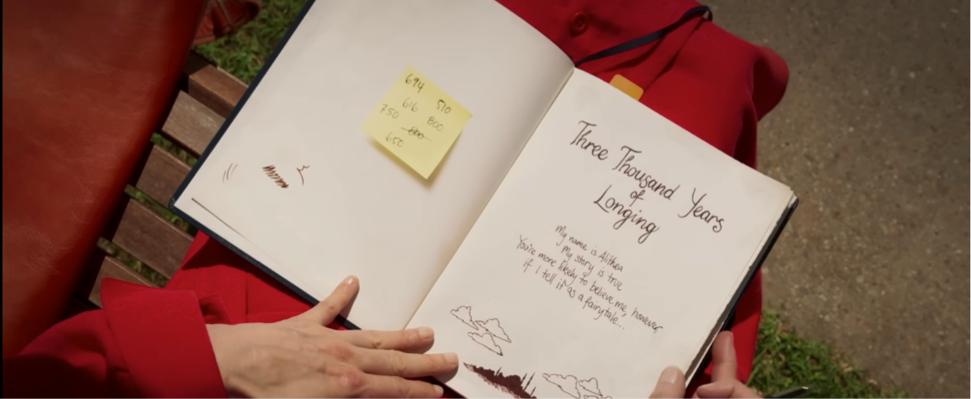
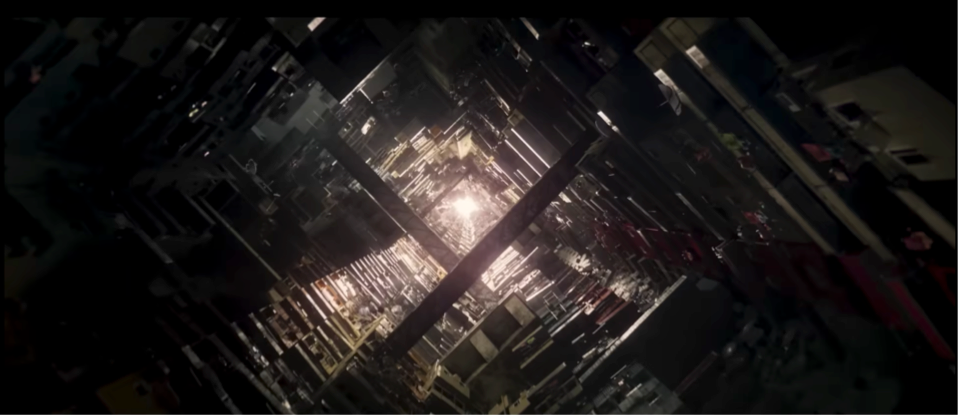
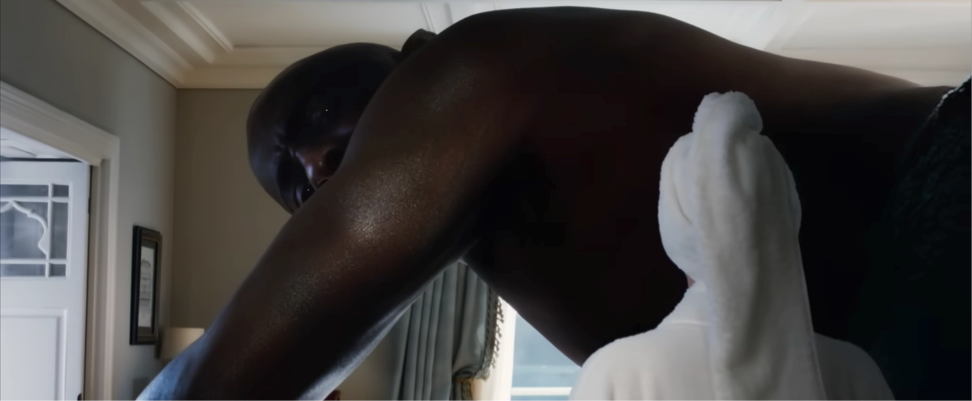
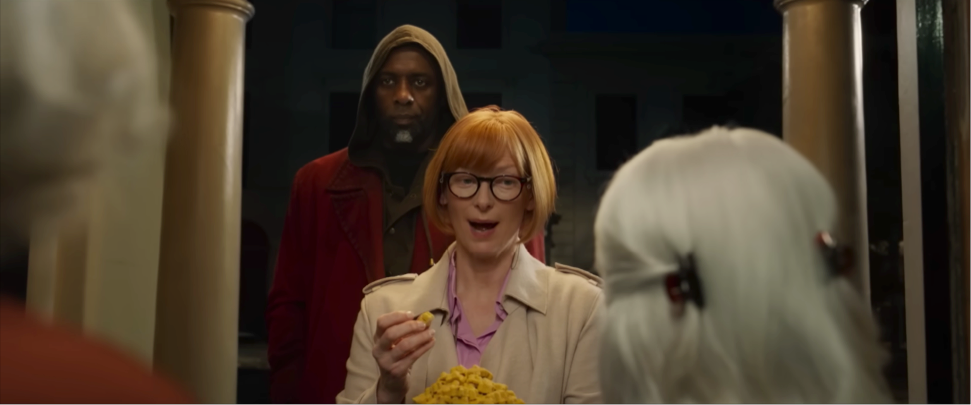
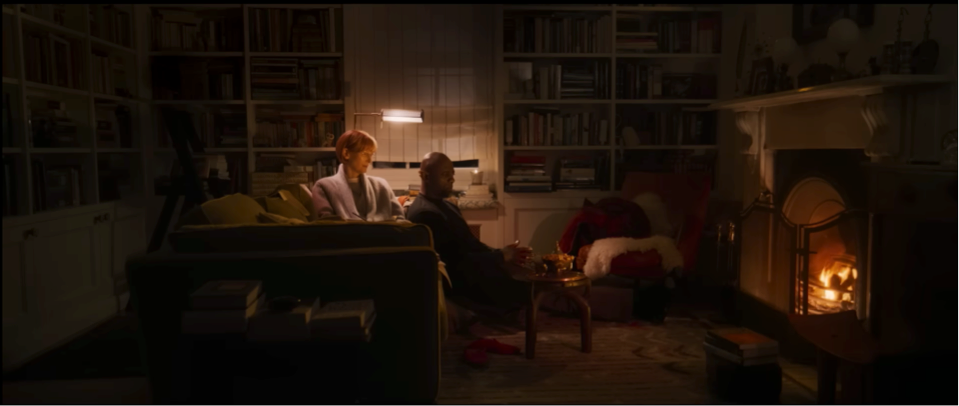
“Absence of desire means enlightenment…” said the stoic narratologist, Alithea (Tilda Swinton), to the trapped Djinn (Idris Elba) who needs to grant her three wishes for him to finally be free. How ironic that an all powerful Djinn meets a new master whose heart does not desire. The Djinn then resorts to regaling stories of old of his past experiences of previous masters to prove his sincerity to Alithea, that he is not out to jinx her with his wishes. This leads to a lengthy anthology of stories, depicted with amazing visuals and set-design. The guiding narration by the Djinn during his flashbacks make it seem like those crime reenactment documentaries - it can feel distracting at times when you want to fully concentrate on appreciating the film in itself.

Film still from Three Thousand Years of Longing

In the trusted hands of George Miller, one would not be disappointed with these visually stunning flashbacks. However, with the disjointed approach to this segment that is taking place in both the present with Alithea and the Djinn as well as the Djinn’s past experiences, it would feel that the plot is stagnant for everything important that has already happened. The uneven pacing of the film would make one think that the film is coming to a close whenever a scene fades to black. This creates a false sense of expectation that seems to tease the audience, creating a wave of grunts and chuckles in the cinema. Each scene feels like a short film by itself, with different themes and motivations that do not fit well with each other. 

Film still from Three Thousand Years of Longing 
The film is perhaps trying to find the relation between emotion and logic. Much like Friedrich Nietzsche’s 1872 book “The Birth of Tragedy” which tries to explore how Ancient Greek Theater showcases a certain tragic story as a performance that allows members of the audience to re-explore tragedies of their own as a cathartic experience. Nietzsche believed that this cathartic experience is possible because of how the dialogue of the play (logic) and its music (emotion) come together to deliver an effective tragedy, rather than only having one without the other. 
It must be said here that the book has been criticized by multiple scholars because of its lack of evidence and misleading concepts, but he does bring up an interesting point. 

Film still from Three Thous  and Years of Longing
Alithea is the logical one, a scholar at heart. Whereas, the Djinn is the emotional one, always allowing his own feelings to sabotage his own freedom. Slowly, they both realize how they are not so different. Along with all the stories of the Djinn, a lot of the characters’ downfall are because of this battle between emotion and logic. But it is this conflict that we become further intrigued by the human condition that does not change despite the stories being set thousands of years apart. Indeed, the only way Alithea and the Djinn can be happy is by being together in a relationship, allowing the co-existence of both their views to balance out each other’s. 

Film still from Three Thousand Years of Longing
Overall, the film is hard to put into words, for its visual metaphors prove to be a much stronger medium. Despite the abundance of rich storytelling, therein still lies a blank canvas for the audience to draw a myriad of interpretations. What do you think the film really means? Find out for yourself on the big screen. 

——————————————————————————-

This review is published as part of *SCAPE’s Film Critics Lab: A Writing Mentorship Programme, organized by The Filmic Eye with support from Singapore Film Society and Sinema.
About the Author: Donovan Wan studied Film at the School of Art, Design and Media. He spends his free time freelancing on shoots and doing voice overs for commercials. He is an aspiring cinematographer and hopes to continue making short films or perhaps a feature someday.
About the Movie: Directed by: George Miller Country: United States / Australia Year: 2022 Duration: 108min Language: English

Recent Posts

By Elena Goh June 12, 2026
Commentary: Fiction and Vulnerability in Drive My Car (2021) [SPOILER ALERT] This review contains spoilers for the film Drive My Car (2021). 
By Yong Xiang June 9, 2026
City of Small Blessings (2024) “A Certain Degree of Impermanence”: An Interview with Filmmaker Wong Chen-Hsi
By Lixin Foo June 9, 2026
Primavera (2025) dir. Damiano Michieletto Operatic stage director Damiano Michieletto’s staunchly feminist portrait of a violinist and her mentor is a virtuosic feature film debut.
By Yiheng May 29, 2026
The Riskless Joyride of Marty Supreme
By Jun Sen May 22, 2026
Ikiru - To Live Or Not To Live? A narrative analysis by Jun Sen of Akira Kurosawa’s Ikiru (1952) – what it means to truly live.
By Pan Wenbo April 20, 2026
SCFF 2026 LINKA LINKA Review
By Amadeus Yeo April 17, 2026
Review: Palimpsest: the Story of a Name (dir. Mary Stephen)
By Victoria Khine April 17, 2026
SCFF 2026 Animated Shorts 动画短片集
By Rachel Xia 夏仲静 April 15, 2026
Film Review: Beyond Reconciliation: Living On in Life of Luosang 藏地的生命诗篇:《洛桑的家事》
Show More