(HKFGP) Film Review #80: TWELVE DAYS

Shirwen • September 19, 2023


Hong Kong Film Gala Presentation

Film Review #80: TWELVE DAYS


*This film review may contain plot spoilers, reader discretion is advised.*

If you've seen director Aubrey Lam's romance film Twelve Nights (2000), you may be familiar with the structure of its sequel, Twelve Days (2021).


In the same way, the film consists of twelve sequences in an intimate relationship, each of which begins with a sentence representing the heartfelt words of either the hero or the heroine. Twenty-one years on, the protagonists have changed from being a young man and a woman with separate partners to another couple who have been married for years.


If
Twelve Nights explores the plight of young couples in romantic relationships, then Twelve Days carries that dilemma over into the context of marriage. This time, Lam seems more interested in focusing on women's situation of being disciplined in marriage, especially in a patriarchal society. Women as individuals are prevented from pursuing their freedom in intimate relationships by the minutiae of daily life.

Bruce lee

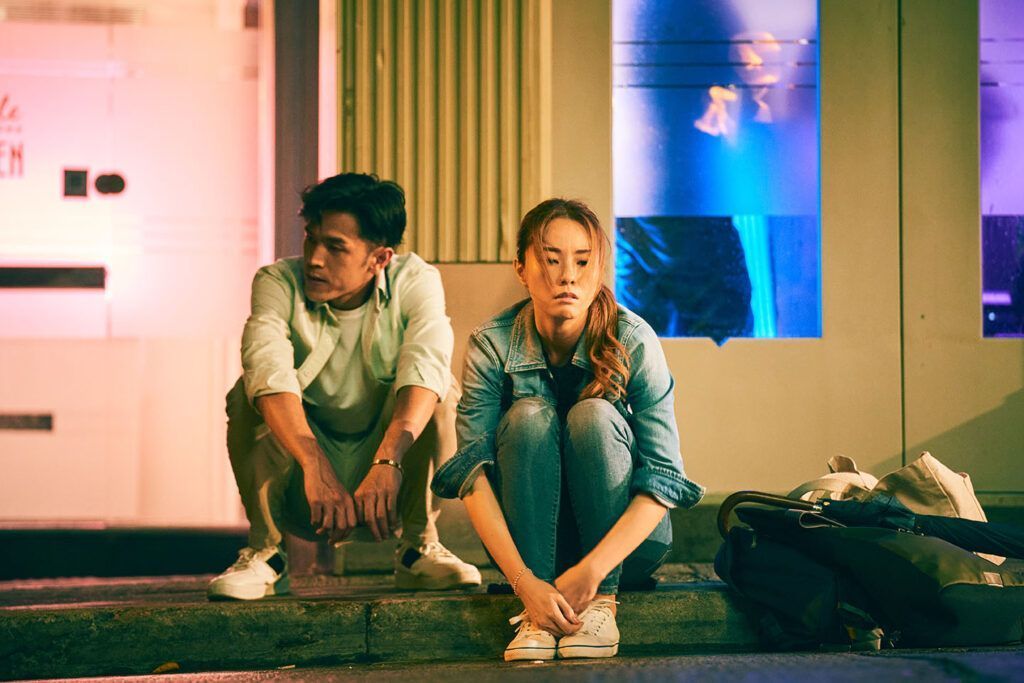
Film still from Twelve Days

Same as twenty-one years ago, Lam maintains her "pessimistic" attitude toward intimate relationships. She seems to favour the portrayal of men who are "emotionally inattentive" and women who place too much of their own value on close relationships.


In both films, the male characters agree that "life is mundane and bland." The female character, however, expects to find freshness in the relationship, trying not to equate LOVE with HABITATION.


In
Twelve Days, Simon and Jeannie's motivation for getting married was simply the need to form their own private space. Although the film's plot is presented in a more fragmented way, the seemingly everyday scenes are filled with metaphors for the relationship between this two.


An unpleasant incident at their wedding is a foreshadowing of the discord in their marriage. The bowling match between Jeannie and Simon alludes to the fact that they have become "rivals" rather than " partners" in marriage. When waiting for the New Year's countdown, they constantly look at each other across the streets in Central, representing both a physical and spiritual separation. (This shot also echoes a similar scene from Twelve Nights .

Film still from Twelve Days


Twelve Days is my first time seeing Stephy Tang as a contemporary woman struggling with intimacy since Table For Six(2022). She presents a compelling performance in her “HK modern women”area. Unlike the more dramatic approach to comedy, as the only female lead in a film that unfolds from the perspective of a female character, she controls the pace of the film with her powerful and natural performance. Outside of this, the fragmented pace  leads the film to omit some of the characters' motivations. The film concentrates more on showing the conflicts in the marriage of the two rather than the deeper reasons for these conflicts.


Rather than saying that the film discusses "whether marriage is a compromise," I prefer to think that the film presents "whether women need to compromise in marriage." Lam renders her less-than-optimistic answer to this question to the film's ending. The toxic relationship goes in circles, and the runaway "Nora" ends up back at "the doll's house." The story of Romeo and Juliet is a classic simply because the script doesn't have the plot of them being married for years.


Overall, if you're interested in a film that discusses intimacy in contemporary Hong Kong, Twelve Days might be a choice for you.

——————————————————————————-


About the Author:  Shirwen has always been an English literature student, and is sometimes, a theatre kid trying to find out more about what she can do in film studies. She's also a Chick-flicks lover, so maybe you can find her fan fiction when surfing the Internet.


This review was written for Hong Kong Film Gala Presentation happening on 29 September - 1 October 2023.


Tickets are available here: https://shaw.onl/HKFG23 

BLOG

By Chinmaya January 28, 2026
Film Review #188: Bugonia
By Kaela Teh January 28, 2026
The Lost Youth and Digital Loneliness of All About Lily Chou-Chou
By Jing January 17, 2026
Seeing from a Distance: Modern Life through Edward Yang’s Lens in Yi Yi
By Rachel Xia January 17, 2026
Is the Person You Once Loved Still by Your Side? 那个曾经深爱的人还在你身边吗? A reflection on Once We Were Us 观《Once We Were Us》有感
By Han Yiheng January 16, 2026
Commentary: Agnès Varda’s Lessons in Humility
By Jun Sen January 15, 2026
Covert Operations, the Liberation of Truth and the Need to Remember – The Universal Rebellion  Seen in The Secret Agent
By Stephanie December 31, 2025
Feeling Death: Review of Kiarostami’s Taste of Cherry (1997)
By Ivan Chin December 31, 2025
Film Review #182: YI YI
By Jing December 16, 2025
The Music of Memory: Form, Intimacy, and Musicality in Joachim Trier’s Sentimental Value
By Jarrett Yang December 16, 2025
SGIFF Film Review - Amoeba (2025) 
More Posts