Cannes Film Festival: Coward

Sylvia Loh • July 22, 2026

Share this article

Cannes Film Festival: Coward


By Sylvia Loh

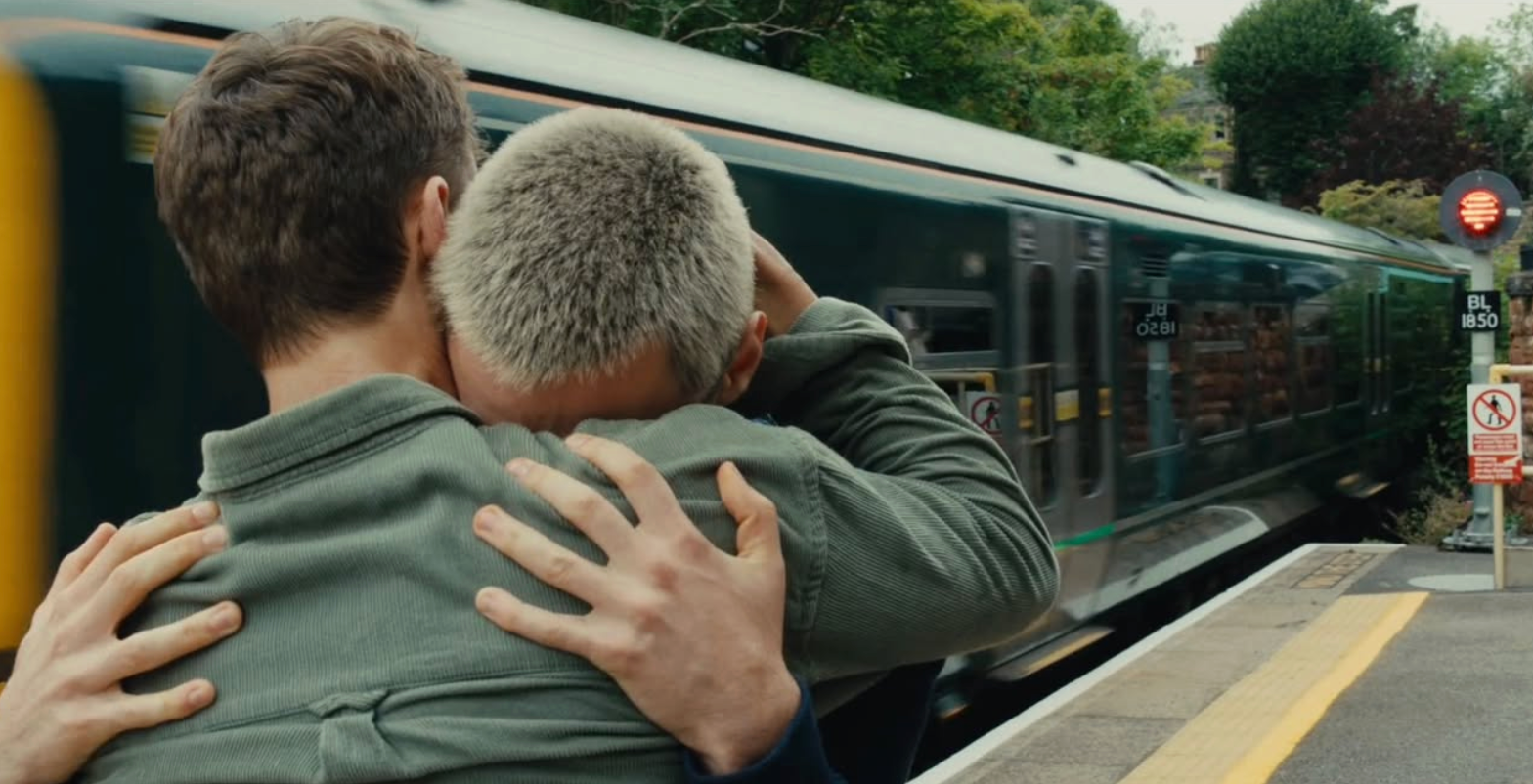
Lukas Dhont’s Coward is set during the First World War, and follows the journey of a new recruit to the Belgian Army, Pierre. As keen as Pierre is to prove himself as a valuable member of the Army, he is quickly confronted with the brutal realities of war, and has to contend with his desires and the meaning of the word “coward”.


Coward
was not on my initial shortlist of films to watch at Cannes. In fact, war movies in general are not something I find myself gravitating to. Showcasing the grim scenes of war is a use of the medium I have not found compelling, especially when it serves as an overt vehicle for stories celebrating machismo and justifying imperialism. 

Credits: The Match Factory

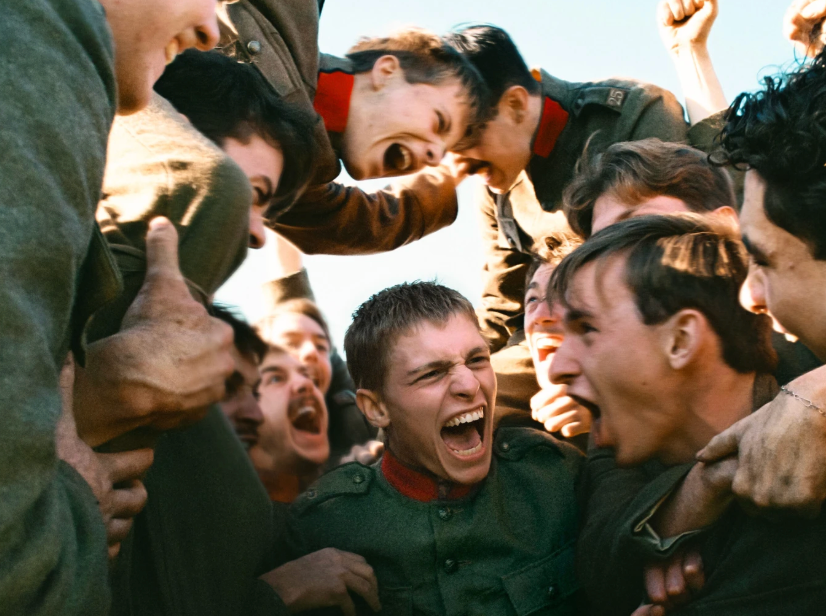
However, I was pleasantly surprised and moved by Coward. The film’s distinctiveness was twofold: Firstly, it provided an intimate look at the pockets of time behind the front lines as well as during ceasefire periods. 


Unlike many films centred on battle zones, where there are indulgent action sequences with rounds exchanged and where protagonists’ fighting qualities are demonstrated,
Coward does not spend much of its runtime in live-firing zones. Rather, it pulls back the curtain on the less “glamorous” aspects of war - like carrying corpses to mass graves, evacuating casualties during ceasefires, and transporting ammunition from storage sites. 


Secondly,
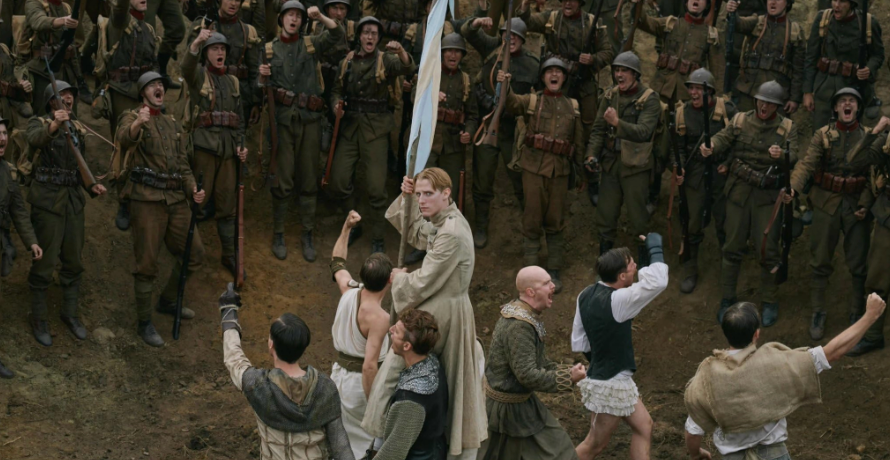
Coward does not showcase a special strike force or other attack squad. Much of the film’s duration is spent with one of the Belgian Army’s entertainment companies - the troupe responsible for raising troops’ morale through dance and drama performances. In contrast to the usual combat units, the entertainment company may usually be associated with soldiers who are unfit for active duty, for physical or other reasons, and this stigma is present in the film. Over the course of the film, the entertainment company grows from an impromptu gathering of talented soldiers providing ad hoc skits for their peers in camp, to a well-funded department, touring the Army’s various bases and even performing for generals. 


The combination of these choices has allowed the audience to perceive the Great War and the Belgian Army as a temporary autonomous zone (“TAZ”), which provides the backdrop for its characters to explore their masculinity and queerness. A TAZ refers to a fleeting, self-managed space that temporarily escapes the domination of state or corporate authority. The idea of war creating a TAZ is exemplified by one of the film’s protagonists telling another: “I wish the war would last forever... we are free to do whatever we want here", in reference to participating in the exploits of the entertainment company. The fact that the Army is a space that is infamous for strict regimentation makes the exploration of this concept in a “war movie” doubly subversive. 

Credits: The Match Factory

In particular, Pierre, our main protagonist, first encounters the entertainment company when they put on a skit to cheer up his fellow recruit, whose enlistment has resulted in him missing the birth of his child. Thereafter, Pierre is enticed to assist the entertainment company with their next performance through the promise of booze (a wartime luxury) and later, the companionship of the entertainment company’s de facto director, Francis. 


During his time with the entertainment company, Pierre is afforded the latitude to express himself and encounter various forms of masculinity. Instead of the burly hooligans who populate the rest of Pierre’s recruit batch (and the Army in general), the entertainment company is filled with a more tender crew, who are comfortable with cross-dressing, dancing, and singing in falsetto. This allows him to interrogate his self-image, sexuality, and role in the Army, as well as decide his priorities in the course of the Great War.


Ultimately, Dhont’s Coward is far from another battle-frenzied war epic, and instead provides a fresh take on the genre. It spends most of its runtime showcasing TAZs in interstitial spaces between frontlines, and the profound effects of such areas of freedom on its shell-shocked constituents. If you are partial to intimate stories of transformation, love amidst violence, and contemplation on the concepts of masculinity and courage, this film is one to watch. 


¹ According to my preliminary research, the Belgian Army did not have a formal centralised entertainment company during WW1.

² Coined by anarchist writer and poet Hakim Beywho.

³ Disclaimer: any discrepancies in the phrasing are due to the writer’s imperfect recollection and variations in translation.


About the author:  Sylvia believes that art is an important medium for change and is on the hunt for films (and art in general) that move and inspire. 

Outside the cinema, she may be found engaging in other "C"s — climbing, crafting, and concocting plans with friends to escape the corporate rat race.


Instagram: @sylvia_loh 

Letterboxd: SVL99


Recent Posts

By Pearlin July 22, 2026
Commentary: How Hamlet Keeps Hamnet Alive 
By Sylvia Loh July 22, 2026
Cannes Film Festival: All of a Sudden By Sylvia Loh
By Sylvia Loh July 22, 2026
Cannes Film Festival: Elephants in the Fog By Sylvia Loh
By Sylvia Loh July 22, 2026
3 Days in Cannes Reflection By Sylvia Loh
By Yong Xiang July 15, 2026
Balang Araw and The Loneliness of Motherhood
By Shree July 9, 2026
Inside the Film Critics Lab at Singapore Youth Film Festival 2026, conversations with organisers, industry voices and fellow critics offer a glimpse into learning the language of cinema and how stories travel far beyond the places they are made.
By Zhuo Chengsheng July 6, 2026
Disclosure Day: A Defence and Autobiographical Reading 
By Shree July 3, 2026
Tinā (2024): How Music, Culture, and Community Help People Rebuild After Tragedy Written by: Shree
By Ivan Chin July 2, 2026
The Furious: A Marriage of Styles
Show More