
Commentary: How Hamlet Keeps Hamnet Alive
Commentary: How Hamlet Keeps Hamnet Alive
“What do you call a twin whose other has passed?” The question, posed in Maggie O’Farrell’s 2020 novel ‘Hamnet’, has no answer. There’s a word for a child who loses parents, and for a spouse who loses a partner. But for the bereaved parent, for the surviving twin, there is only absence. Some losses are so colossal, so fundamentally unnatural, that society has never dared to name them. This failure of language sits at the heart of the film Hamnet (2025), directed by Chloé Zhao. The film is preoccupied with that absence; with grief not as a plot point to be resolved, but as something lived: carried in the body, settled into the daily crevices of life, and kept alive through the act of making something that can hold what language cannot, art.
Zhao’s film doesn’t arrive into a vacuum. It enters a cultural ecosystem in which Shakespeare is less a writer than a canonized cultural apparatus, endlessly recycled through retellings like Tom Stoppard’s
Rosencrantz and Guildenstern Are Dead, the brazen confection of
Shakespeare in Love, and countless theatrical adaptations transposed across cultures and times.
Hamlet, in particular, sits on the highest shelf of Western culture, varnished by centuries of performance tradition and academic sanctification. It’s deemed unimpeachable not because it resists critique, but by consensus, called reverence. In fact, Shakespearean culture has long oscillated between two modes: reverential fidelity or clever recontextualization.
Hamnet offers neither. Instead, it traces back to the unglamorous domesticity of life and loss that might have spurred Shakespeare to carve out
Hamlet.
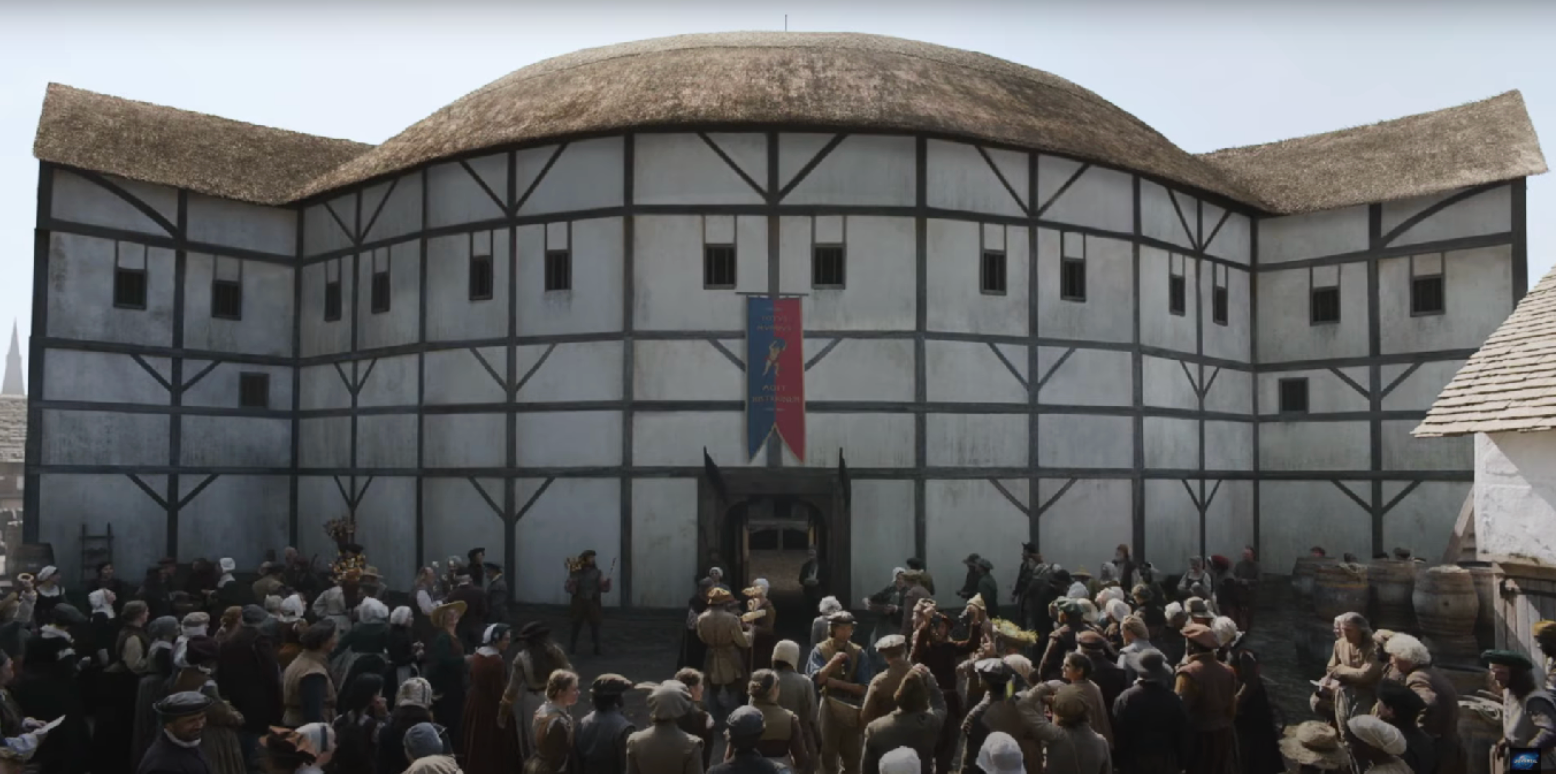
If the film has a governing thesis, it’s to humanize the icon. Hamnet portrays a slice-of-life, fallible Shakespeare alongside the great women behind him, no longer relegated to “supporting” status, but re-centered as the film’s primary consciousness. It makes the story accessible in an innately human way, connecting on the basis of grief, loss and love rather than the fanciful jargon Shakespeare is often made to hide behind, both in his language and in the cultural reverence that has grown around it. Hamnet also arrives in the advent of adaptation culture, saturated with “based on the beloved novel” projects, where the most interesting adaptations are less concerned with fidelity as a checklist than with tone; translating sensibility rather than transcribing plot. Zhao co-wrote the screenplay with O’Farrell, and the result feels like interior life externalized through image and performance rather than explanatory dialogue, belonging to a shifting style of period filmmaking. Prestige historical drama used to announce itself through opulent splendor of the choreographed courts and carriages, but Zhao pushes in the opposite direction: cramped rooms, half-timbered Tudor architecture pressed against a bustling thoroughfare. You can feel the film’s attention to the “theatre of the everyday” in its technical elements of cinematography, blocking of bodies around a table, the naturalism of household tasks, until, in Zhao’s hands, the domestic becomes dramaturgy, and the ordinary turns deeply symbolic.
The humanizing project starts with a refusal to treat Shakespeare as a brand. He is simply “Will”, his legendary status withheld so cultural capital can’t do the film’s work for it. That restraint clears space for the real center of gravity: Agnes, Anne Hathaway reimagined and re-centered in the narrative. Jessie Buckley plays her as an earthy, sensate force, a figure whose intelligence is rooted in the body and the natural world rather than formalised knowledge. She is not “the wife of.” She is the protagonist. The performance carried Buckley through an awards-season sweep of the major Best Actress honours.
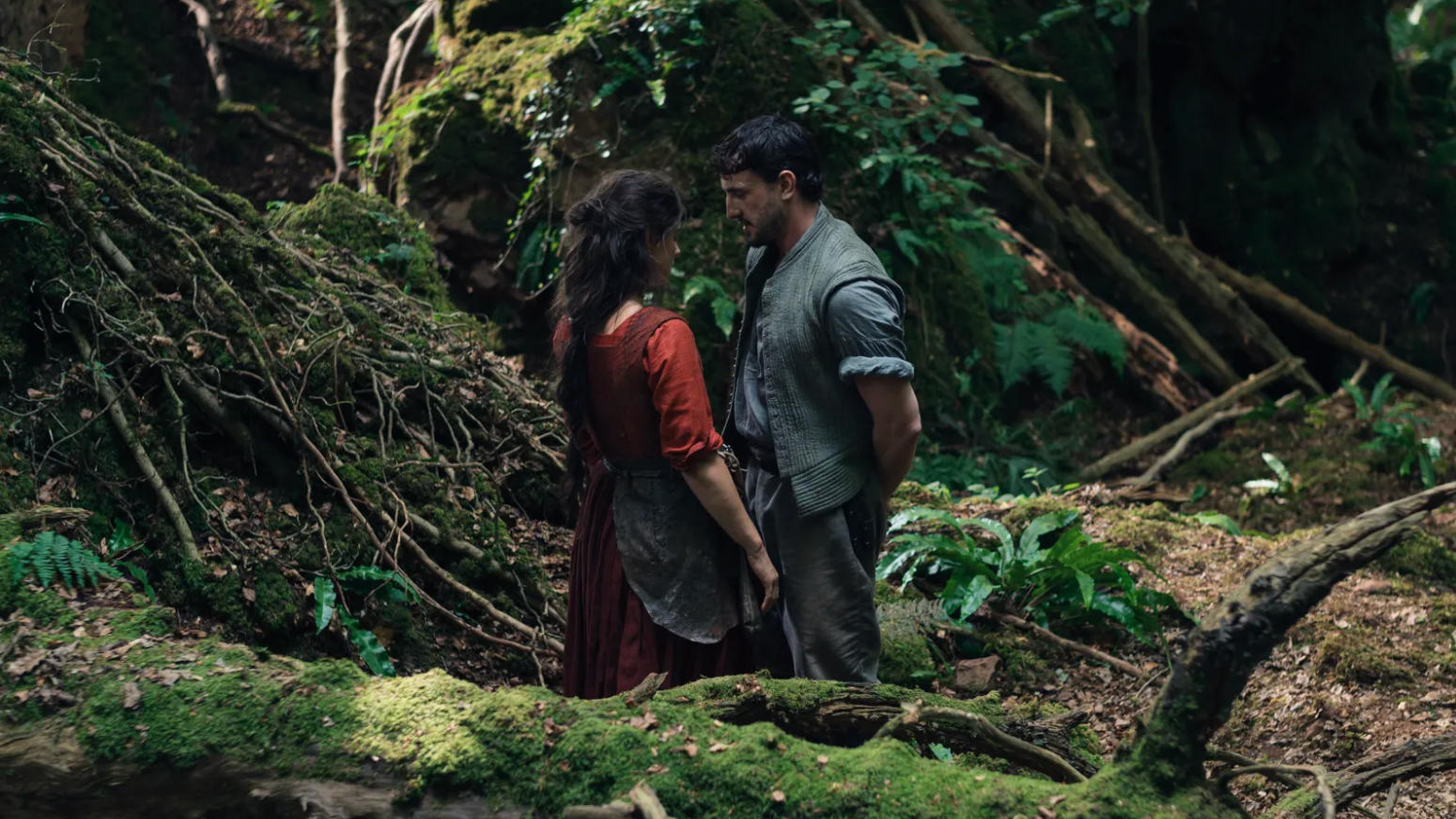
This is the film’s quiet corrective to the tired Hathaway myth of the shrewish provincial older wife who “trapped” him into marriage and whom he fled for London, a story less grounded in evidence than in inherited misogyny. Zhao and O’Farrell dismantle the premise that she exists only in relation to the genius, and the film's form follows suit: Agnes is visually prioritised. At the level of palette and emphasis, Agnes is visually centered through the colour of coursing life and blood: red, which keeps returning around her like a thematic thread stitched into the mise-en-scène.
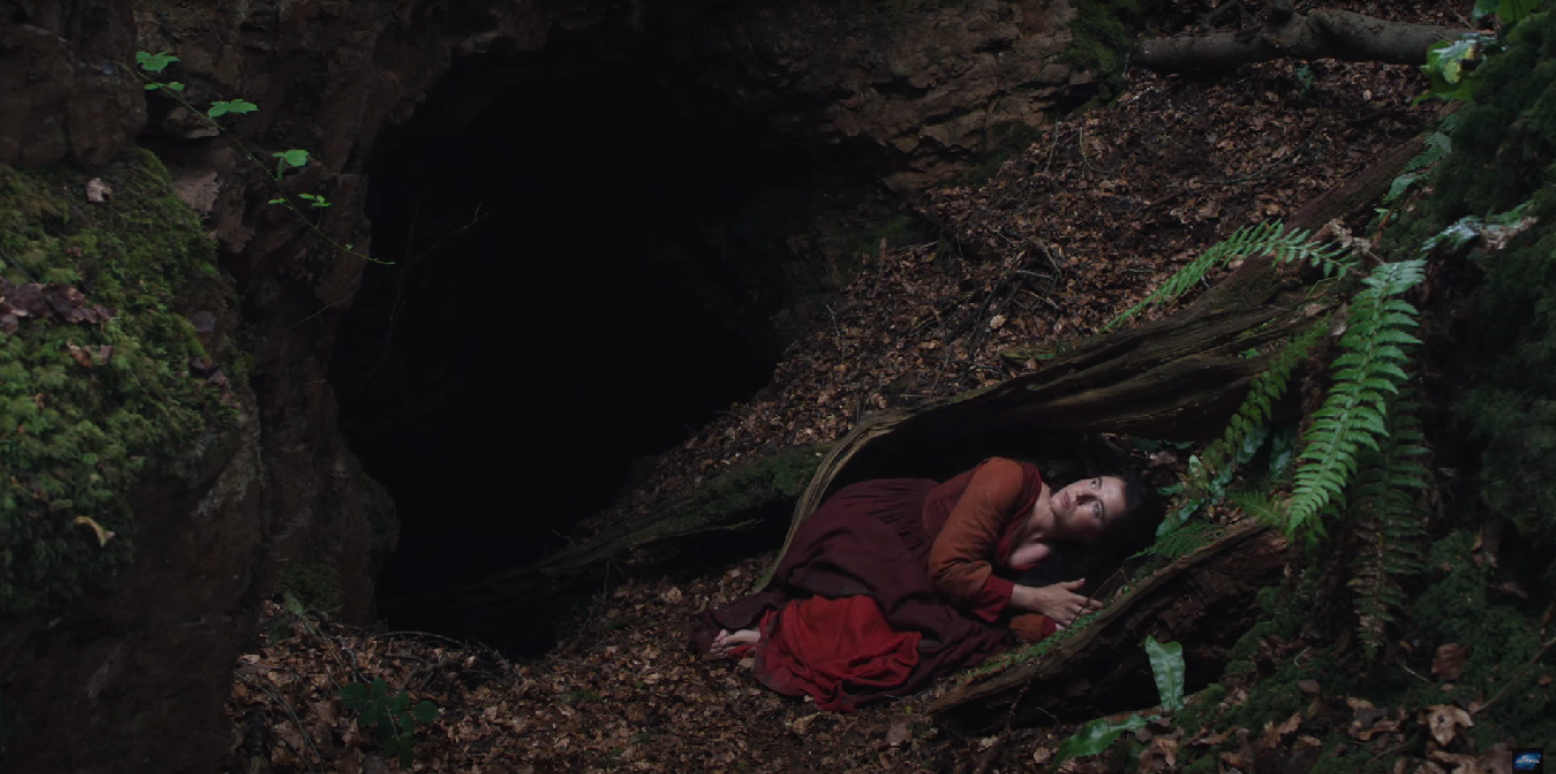
Just as importantly, Agnes becomes the conduit for the film’s blend of mysticism and naturalism. She moves through forests with hawk and herb-lore, touch and scent, a pre-modern way of knowing that treats life and death as cycles and the invisible as near. Zhao stages this spirituality with restraint; it’s less storybook witchcraft than knowledge learned through touch, scent, and practice.
This emphasis situates Hamnet within a strand of period cinema that treats the “minor” spaces of history as primary. Through its feminist lens, the film privileges kitchens, sickrooms, birthing rooms and insists they are where history actually happens with birth and death staged as communal processes. Women manage the core human work of keeping life going in a world where mortality is ambient.
Interestingly, there is a productive tension between O’Farrell’s novel and Zhao’s film, and it’s worth lingering on because the differences aren’t just narrative but rather, they’re tonal. O’Farrell begins with the title subject - Hamnet - so dread is immediate, the story already haunted by what we know will come. That dread is braided through the love story of Will and Agnes; the past keeps contextualizing the present. Zhao, by contrast, pulls us into observation. We start earlier, in a quieter temporality, less narrated than witnessed, where the camera’s patient attention makes you feel time passing rather than simply being told it has.
But the film also departs from the book in ways worth interrogating. O’Farrell’s novel makes a refusal to ever name William Shakespeare as “Shakespeare,” stripping away the connotations and forcing you to meet “Will” as a man rather than a monument. Zhao’s film largely shares that impulse, holding him as “Will” for much of its runtime, but eventually name-drops him, and the spell breaks a little. The film is also more eager to foreground ‘Hamlet’ itself, insisting on parallels through rehearsal scenes and Paul Mescal delivering “To be or not to be” by the Thames.
At its best, this isn’t a canonical flex so much as a crisis of trust: trust in the future, in meaning, in whether endurance is coherent once the worst thing has happened. It sharpens the film’s central question, how do you live with impermanence when love is precisely what makes loss unbearable? The drawback is that the “To be or not to be” moment can feel abrupt, arriving like a signpost that is just a touch too deliberate in its bid to connect the dots. It’s one of the film’s few overtly emphatic moments, and because Zhao’s direction is usually more restrained, the emphasis stands out.
SPOILER WARNING: From here on, this review breaks down the ending of the film. Read at your own risk.
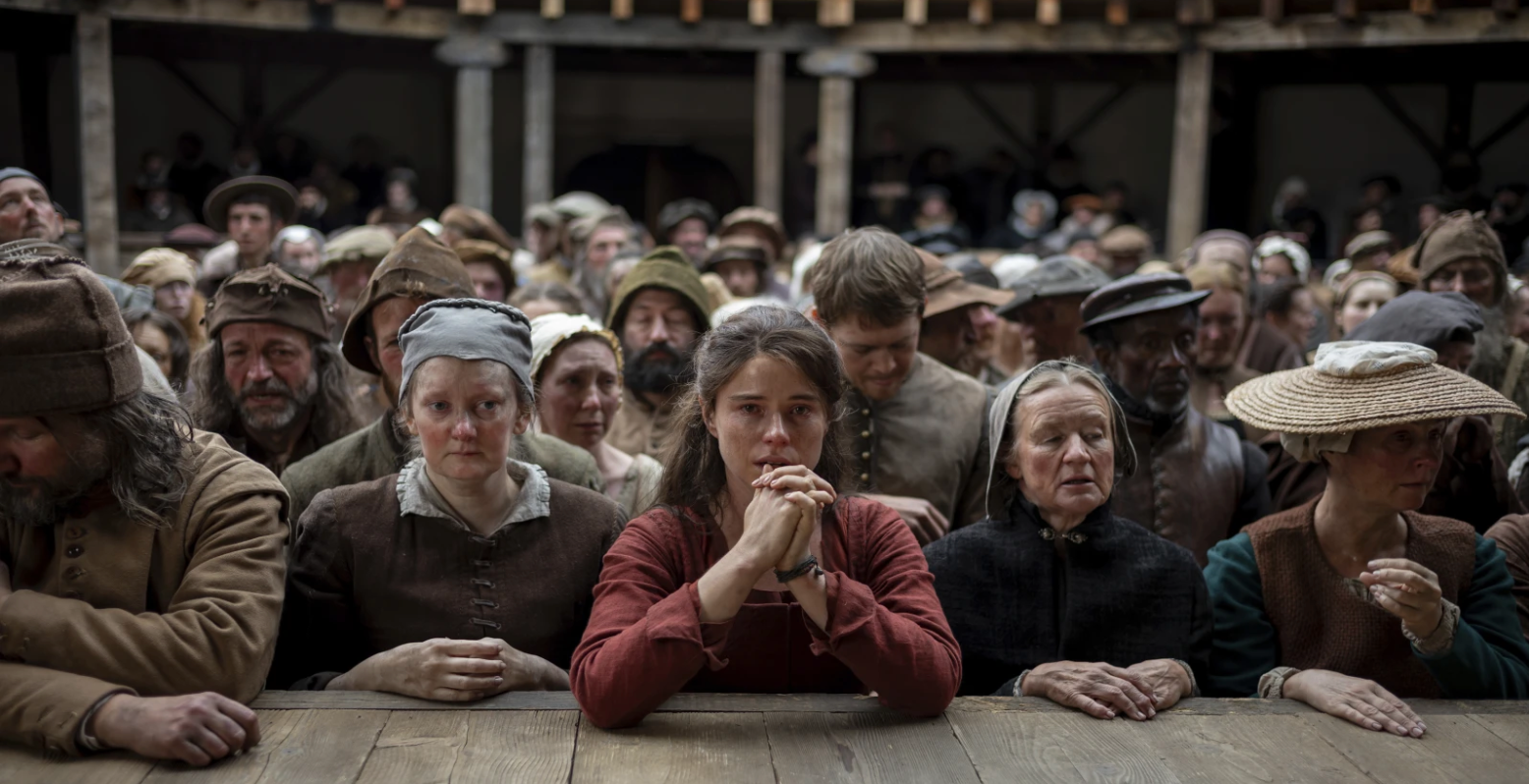
Then, at the Globe, the film consolidates its thematic and formal strands into a present-facing meditation on Shakespeare. Agnes arrives furious: Will has taken their son’s name and turned it into spectacle, which Zhao treats as an ethical question: What right does art have to do this? The answer the film offers is careful and unsentimental. As the play unfolds, Agnes’s spectatorship shifts toward recognition. She begins to understand that Will’s grief, though utterly different from hers, is no less real. His earlier confession that he cannot communicate with people but can communicate through stories finally lands as the play is not exploitation; it is his only available language. Agnes’s anger finally dissipates as she understands that, in his own way, Shakespeare is grieving, wanting to trade his life for his son, wanting to speak where speech has failed him to understand who he is without his son. Moreover, the meta-textual directorial choice of the actor playing Hamlet is young Hamnet’s brother, granting Agnes an unbearable glimpse of what her son could have looked like grown.
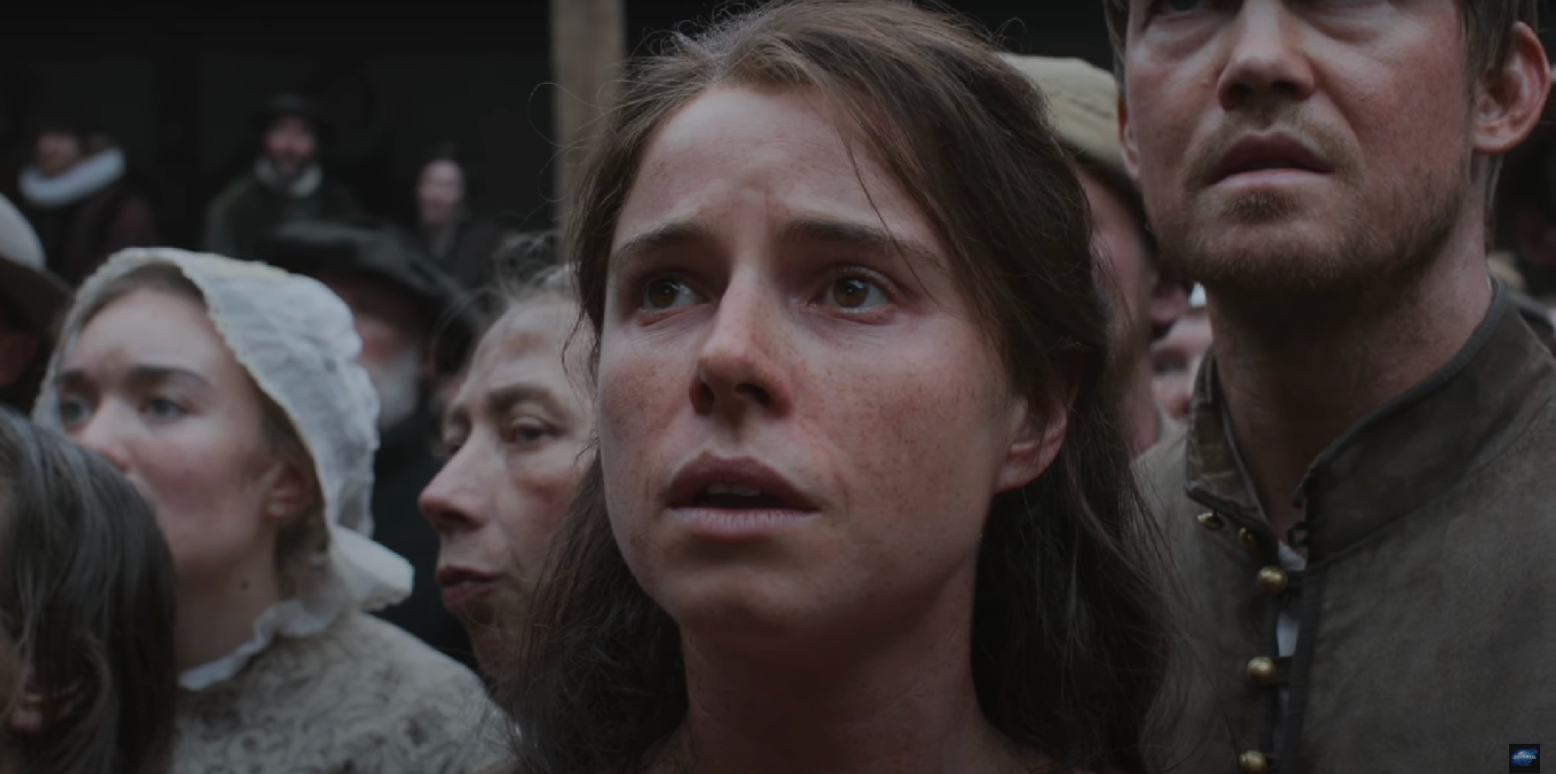
What changes here is not loss but memory. Agnes’s fear that he will be forgotten finds its answer in every telling, every performance, every future encounter with Hamlet, keeping Hamnet alive. This poignantly exemplifies that art does not undo grief; it redistributes the burden of remembering. Where the audience inside the film mourns him; the audience watching the film mourns him; and by extension, every reader, viewer, or performer who encounters Hamlet is implicated in that act of remembrance. With the crowd participating in a collective act of mourning amplifying how Theatre becomes a space where loss is held communally. Zhao frames this moment as an ethical exchange: the audience receives the story, and in doing so, assumes responsibility for carrying it forward.
Here, Hamnet quietly aligns itself with Shakespeare’s own faith in art’s defiance of death. Long before the play, the poet articulated this belief with startling clarity:
When in eternal lines to time thou grow’st:
So long as men can breathe or eyes can see,
So long lives this, and this gives life to thee.
What Hamnet does is return those “eternal lines” to their human cost. It reminds us that immortality in art is not abstract triumph, it is forged out of love and loss, out of bodies that disappear too soon.
In that way, Hamnet in its feelings and totality shapes how we might learn to live beside the impermanence of it all, together.
As Hamnet walks back into the shadows at the end of the film, he does not vanish nor is alone. He is kept alive by the act of storytelling, of art, that in the communal experience of watching a film in a cinema, a play in the theatre, as long as we listen and tell the story - of Hamlet, of Hamnet - we keep him from being alone in the shadows. And in doing so, we keep something else alive too: our own capacity to endure, to witness, to heal, not by naming what cannot be named, but by making forms that can hold it.
About the author: Have you ever mid-cry thought, this would make a great scene? Pearlin shamelessly has. With a slightly obsessive tendency to view life through a cinematic lens, she moves between acting on stage and in film, writing about film, and aspiring to direct films of her own. Guided by the belief that specificity holds the deepest emotional truths, she is drawn to stories that are personal, precise, and just self-aware enough, like herself, to know when a good cry is less a crisis and more a cinematic opportunity ;)
Recent Posts