

Film Review #169: THE WILD ROBOT

Mark Tan • March 20, 2025

The Wild Robot (2024)
A Sight to Behold


In a tumultuous Animation industry, The Wild Robot (2024) stands tall as a resounding triumph demonstrating what big studio filmmaking can achieve when grounded by a deeply personal story.

Director Chris Sanders brought his decades of experience in animated filmmaking to the table when he set out to adapt Peter Brown’s endearing series of children’s novels. Sanders is no stranger to being at the helm of mammoth film productions, both in Animation and Live-action, having forged a singular legacy as the visionary behind such Animation hallmarks as Lilo and Stitch (2002) and How To Train Your Dragon (2010), not to mention his contributions to classics like Disney’s Aladdin (1992), Mulan (1998) and The Lion King (1994).


Utilising the latest advancements in 3D Non-Photorealistic Rendering (NPR), the animators at DreamWorks Animation (DWA) were able to mimic the organic qualities of traditional brushstrokes, oil paint and gouache techniques. Known more colloquially as “Hybrid Animation”, these technological revolutions have been pioneered in such titles as
Into The Spider-Verse (2018), and Arcane (2021-2024), and have raised the bar for what audiences expect when they tune in to animated media.

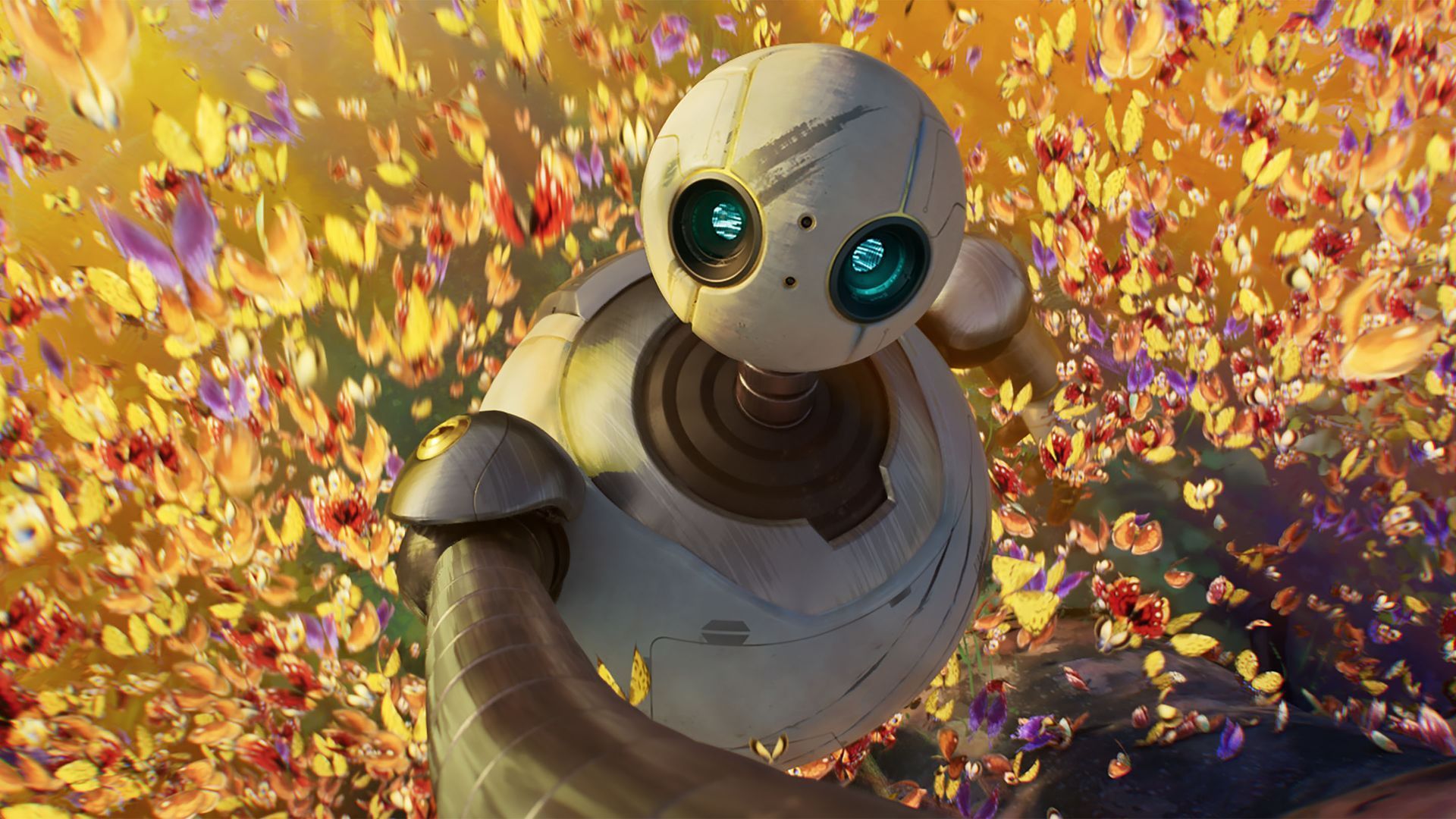
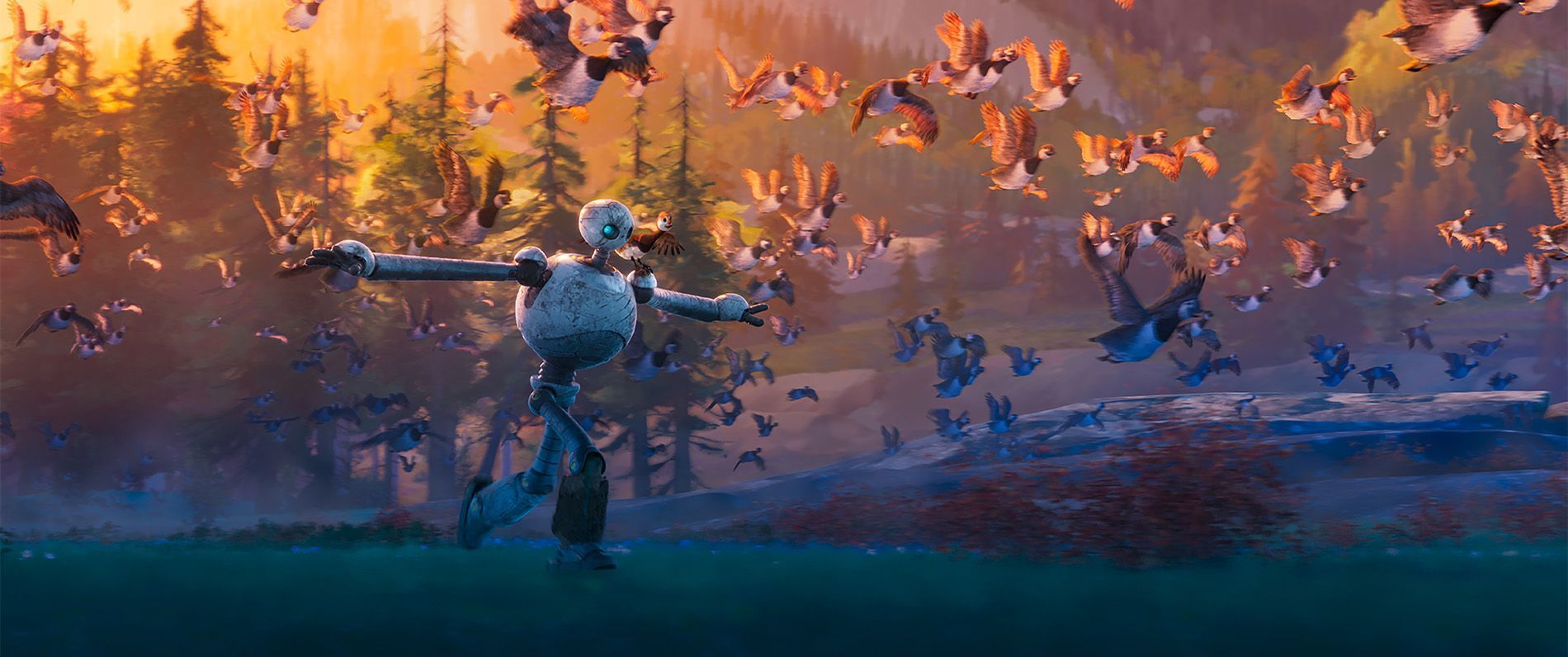
In that respect, The Wild Robot does nothing but excel. The unmistakable artistry of traditional painting is presented with new challenges as the animators unshackle the camera and drive it into the space, spinning and twisting around immaculate digital foliage and energetic wildlife. 

For those who pine for the renaissance artistry of the original Disney animated classics, those disciplines have been restored to their place in the Animated medium of today, albeit with a new level of complexity. 3-Dimensional locations are constructed by hand, down to every bespoke blade of grass, out of textured brushstrokes evocative of acrylics and watercolour. These environments are not only beholden to the standards of traditional media, but must now hold up to the scrutiny of a dynamic, moving camera. These are not simply flat paintings placed in a 3D environment, instead they are meticulously designed to look good from every conceivable angle, allowing the movie to partake in more than its fair share of long, continuous shots. 


But this film is not merely eye candy for the interested observer – Sanders infuses his adaptation of Peter Brown’s original material with layers of thematic richness deserving of a full-length feature film, grounding it in the experiences and emotions of a parent coming to grips with love that exceeds one’s own comprehension. 


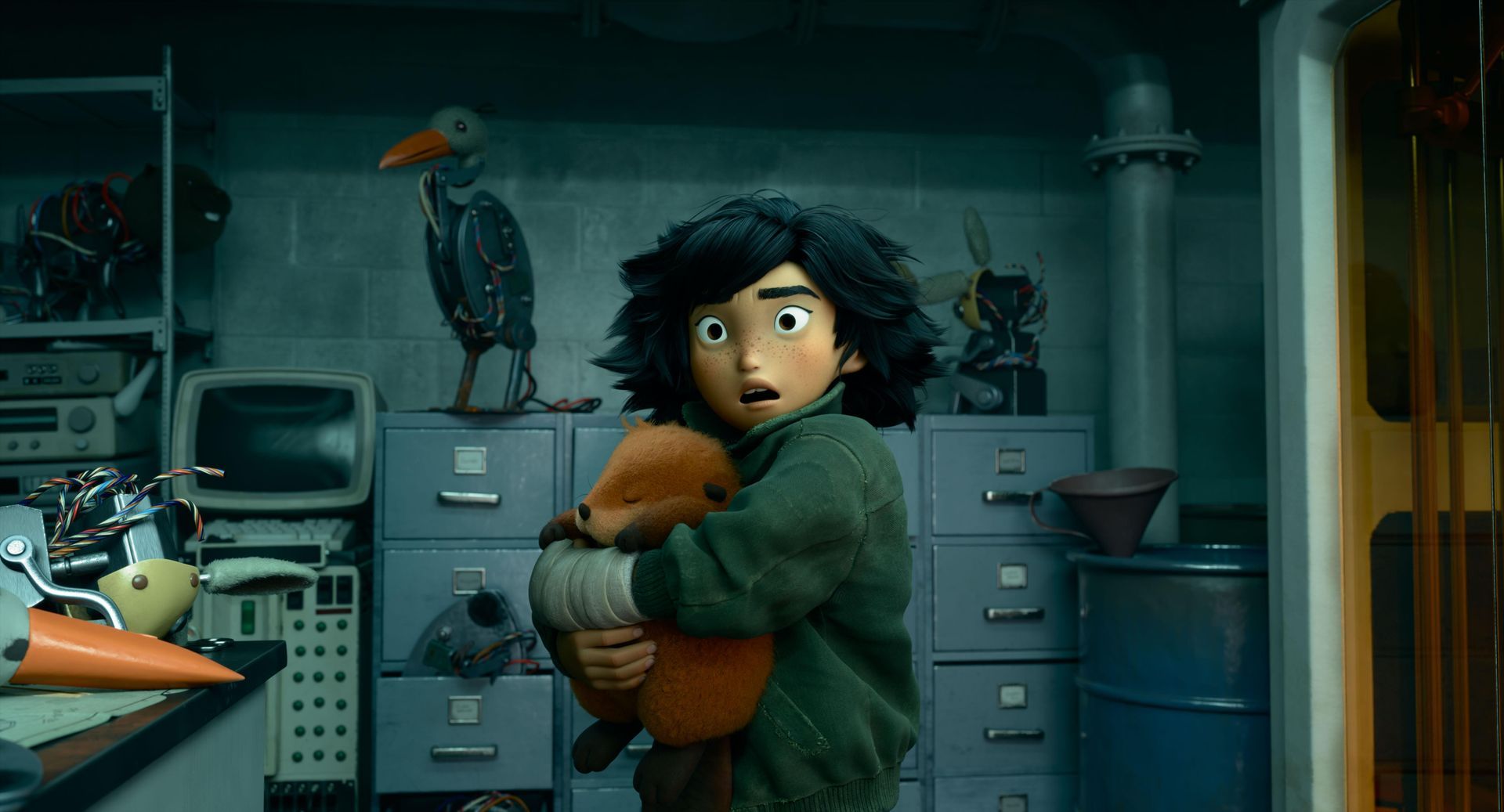
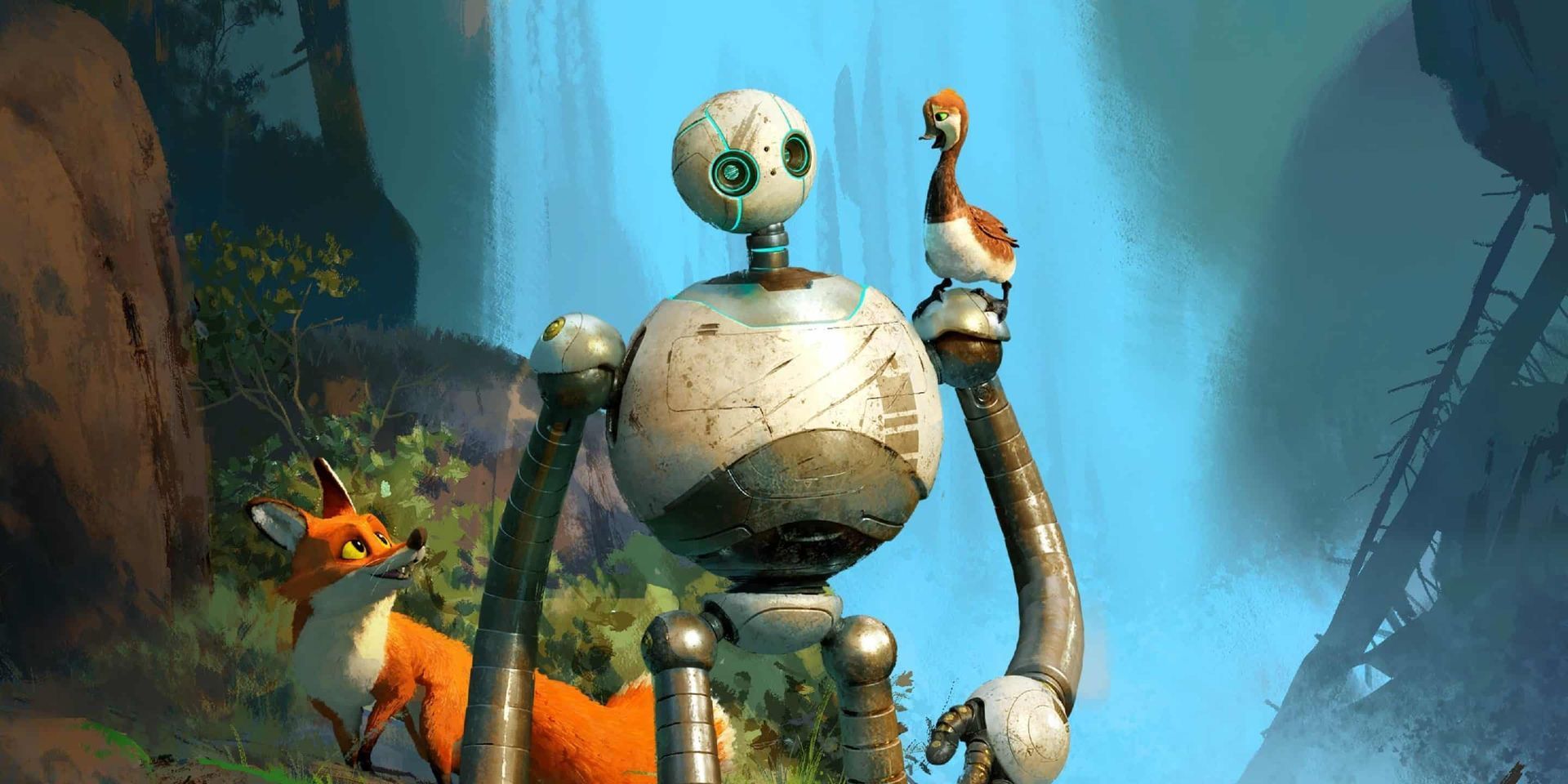
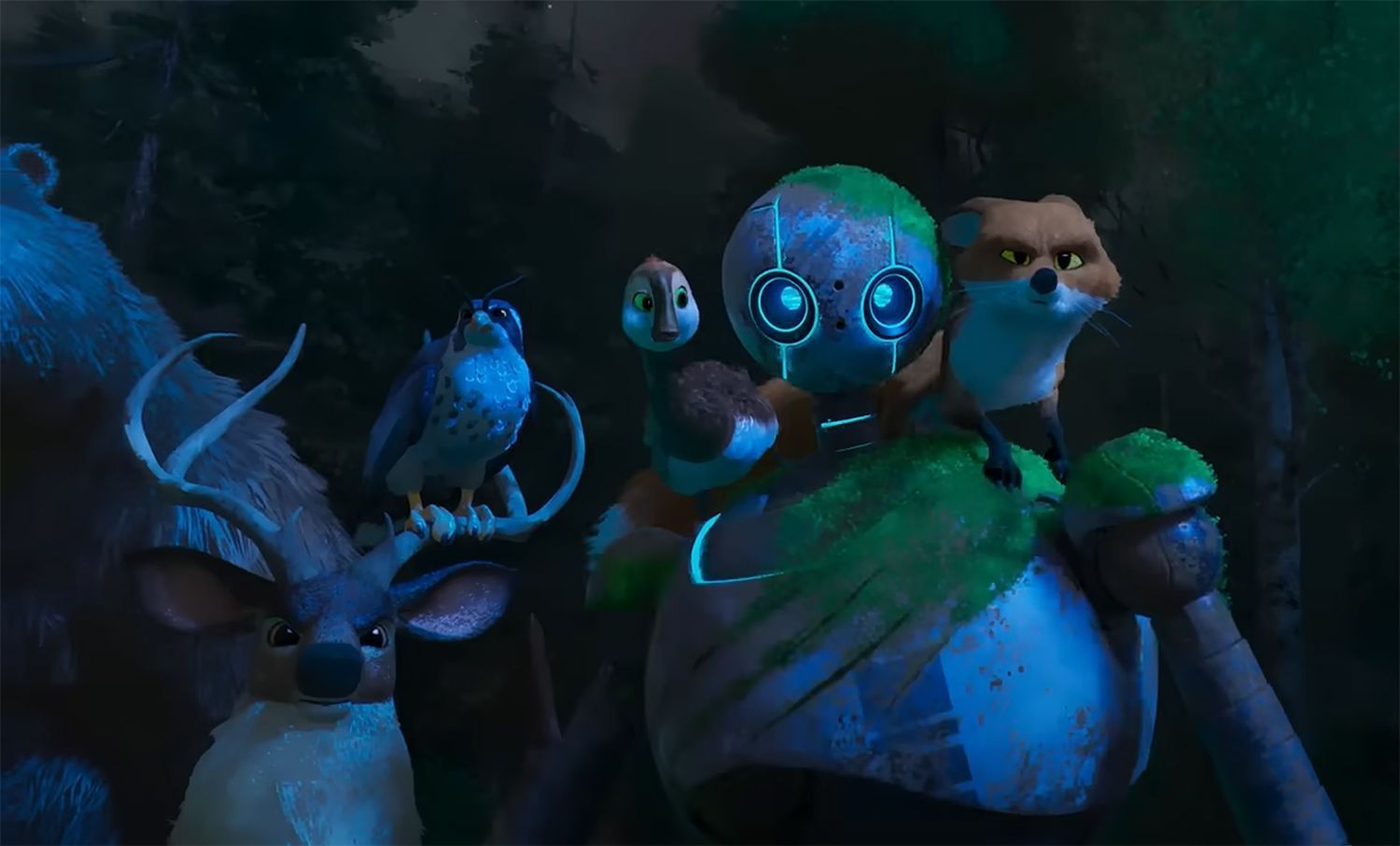
The film centres around Roz, a misplaced home assistant robot who finds her programming perpetually at odds with the forces of nature on the island she’s stranded on. The film explores her journey as she unwittingly adopts the duty of raising Brightbill, an unusually small orphan goose. Along the way, she finds herself growing beyond the parameters of her manufacturer’s intentions, and developing deep, emotional bonds with the animals on the island.

Rather than a straightforward hero’s journey, Sanders takes us through what feels like an emotional vignette, a series of memories that carry the patina of many weathered years, strung together to give us some sense of the colossal commitment of raising a child while coming to terms with your own identity.


And keeping with breaking convention, the film breaks from established “safe” territory by routinely confronting questions of mortality and fate. No scene better demonstrates this than the climatic Winter migration, where Brightbill is taken aside by a wise, older goose and informed that he was born the runt of the litter, and was never expected to survive in the unforgiving wilderness. His being orphaned, and subsequent adoption by Roz, is what gave him the chance to embark on migration at all. 


“The accident that killed your family, saved you.”


Delivered in glorious baritone by the great Bill Nighy, those words colour the otherwise-triumphant scene with a potent dose of melancholy, as the young Brightbill is hit with the magnitude of his ill-fated destiny and Roz’s parental achievement. As Nighy puts it more succinctly, “funny how life works.”

What follows is a sight to behold. The scene reaches a crescendo as geese across the forest take flight in vast numbers, the eyewatering images elevated by a mighty, resounding score from Kris Bowers, who commands a delightfully tear-jerking orchestral palette soaring to heights rivalling that of DWA’s veteran composer and Head of Film Music - Hans Zimmer. The film’s sonic quality and visual splendor are certainly reasons to see it in the most immersive environment you can.


For those of us who grew up with the Animation of the 90’s-early 2000’s, this film will feel instantly familiar - bearing many of the same sensibilities as some of our childhood favourites. In many ways, it feels like a callback to the freedom and quality of that era, scratching an itch that many of us have not quite been able to fully satisfy for some time. Delightful, comforting, entertaining, and contemplative,
The Wild Robot is worth the watch.

---------------------


About the author: About the author: Mark’s earliest memories revolve around the television set where, unbeknownst to him, he was beginning a lifelong obsession with Cinema. Hooked on the thrill of watching time and space warped before his eyes, he is committed to showing up at the movies, in whatever form it may be.


This review is published as part of *SCAPE’s Film Critics Lab: A Writing Mentorship Programme, with support from Singapore Film Society.

BLOG

By Jing January 31, 2026
Film Review #189: Withered Blossoms
By Chinmaya January 28, 2026
Film Review #188: Bugonia
By Kaela Teh January 28, 2026
The Lost Youth and Digital Loneliness of All About Lily Chou-Chou
By Jing January 17, 2026
Seeing from a Distance: Modern Life through Edward Yang’s Lens in Yi Yi
By Rachel Xia January 17, 2026
Is the Person You Once Loved Still by Your Side? 那个曾经深爱的人还在你身边吗? A reflection on Once We Were Us 观《Once We Were Us》有感
By Han Yiheng January 16, 2026
Commentary: Agnès Varda’s Lessons in Humility
By Jun Sen January 15, 2026
Covert Operations, the Liberation of Truth and the Need to Remember – The Universal Rebellion  Seen in The Secret Agent
By Stephanie December 31, 2025
Feeling Death: Review of Kiarostami’s Taste of Cherry (1997)
By Ivan Chin December 31, 2025
Film Review #182: YI YI
By Jing December 16, 2025
The Music of Memory: Form, Intimacy, and Musicality in Joachim Trier’s Sentimental Value
More Posts