

Film Review #153: HAPPYEND (SGIFF)

Jarrett Yang • December 23, 2024

SGIFF Film Review - Happyend (2024)

Often, we learn important lessons about ourselves, about the world and about life itself through studying history. Can we do the same by examining an imagined future? Director Neo Sora answers confidently, "yes!"

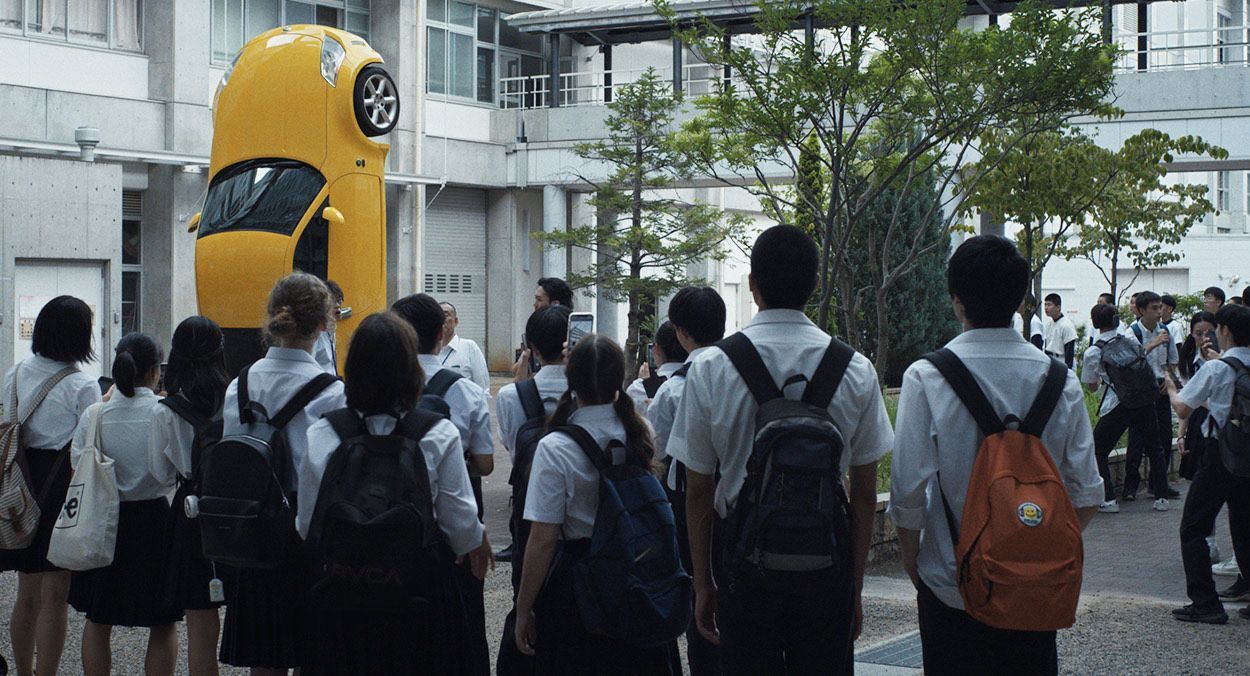
Titled Happyend, Sora's second feature film, and his first narrative directorial debut, offers a peek into Japan in the near future where natural disasters, particularly earthquakes, threaten to cripple society, and where the authorities seize the moment to enact and enforce draconian orders which disadvantage some segments more than others, thus attracting protests. Confrontational as it seems, Happyend turns out to be a tender tale about friendship.


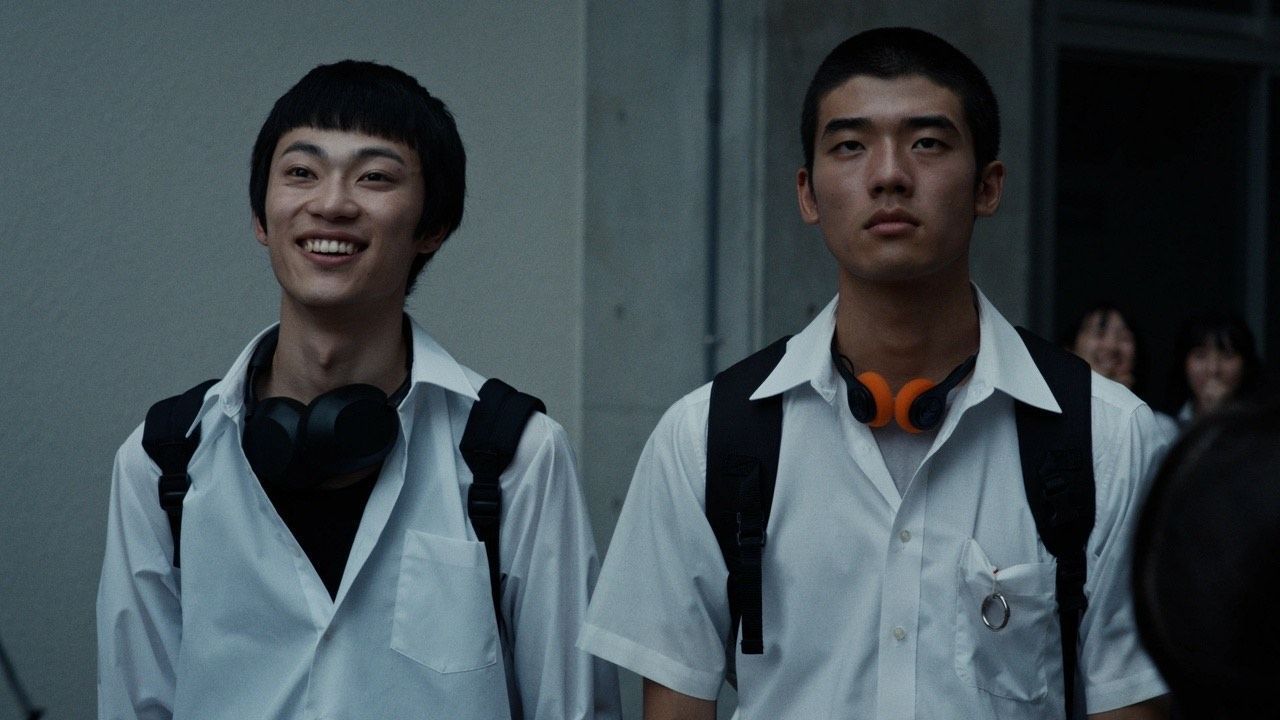
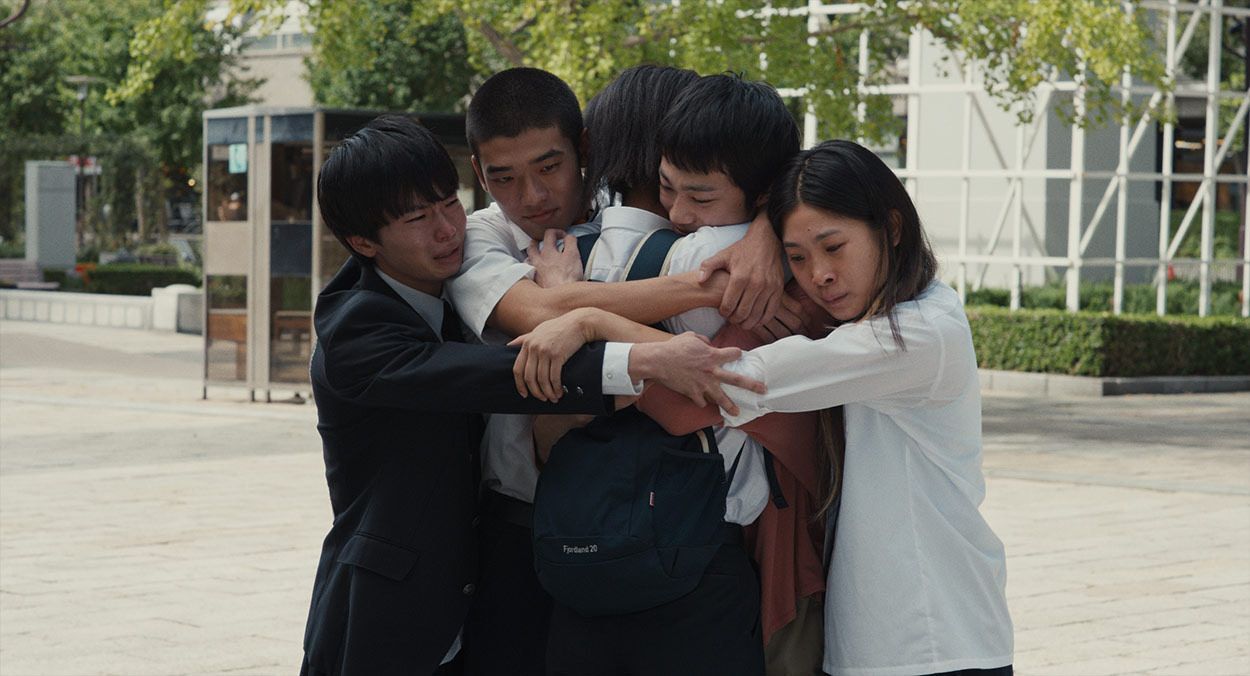
Told from a high-schooler quintet's point of view, the film draws us in through the eyes of best friends Kou and Yuta, played by newcomers Yukito Hidaka and Hayato Kurihara respectively, as they grapple with a clamp on their desire to express themselves and their love for music, and their weakening relationship as they navigate diverging ways from adolescence to adulthood. Hidaka's Kou further portrays the identity crisis of second-generation immigrants in Japan (he and his family are Koreans).

Integrating music seamlessly into the storytelling, Sora's work does not give the slightest hint that this is a debut. Composer Lia Ouyang Rusli's score illustrates a macrocosmic view of the modern world in the near future, including that of a society where information and technology make for a more sophisticated people to rebel against authoritarian regimes. The techno genre that our protagonists are deeply passionate about is contrasted by the symphonic score of the film, yet amounts to no contradiction whatsoever. Sora and Rusli worked wonders here.


Rusli's score might even remind some of Hou Hsiao-Hsien's magnum opus,
A City of Sadness (1989). Interestingly, in a post-screening Q&A, Sora also acknowledged and paid homage to the majestic score by Naoki Tachikawa.


Sora certainly understands the potential of both film and music in inspiring minds and perhaps initiating deeper critical thinking, but whether that evolved thinking translates to any kind of action or reaction is up to each individual. Typically, dysphoria gathers like-minded people, or people who share similar misfortunes. Kou and Yuta, together with their closest friends, might just represent an entire generation of youths whose aspirations are challenged or suppressed. It is through their trust for one another and companionship that Happyend strikes a chord with viewers. Not to mention the diversity of these five characters, their natural chemistry dilutes what might otherwise appear as being diverse for diversity’s sake. This is sublime writing, casting, ensemble acting and directing.


However, the best thing about Happyend, in my opinion, is its balance. Sora does just enough across every aspect of filmmaking, and displays incredible restraint. While this film tells the struggles of the oppressed and ostracised, it also frees us viewers from the very confrontations that could make this film overly melodramatic. In trying to picture what catastrophes might be ahead of us, Sora successfully pushes us to think hard of our actions now, and more importantly, to cherish those we hold dear in our lives, because they are all we have if and when the future takes everything else away from us.


Happyend is co-produced in association with Giraffe Pictures who also distributes it in Singapore. Stay tuned for its theatrical release.


----------------------


About the author: Jarrett is a devoted cinephile for over half of his life. Apart from movies, coffee keeps him awake and music keeps him alive. Having studied theatre and performed as an actor before, he's also a sucker for great performances.


Connect with Jarrett here: https://linktr.ee/jarrettandfilm


BLOG

By Han Yiheng February 23, 2026
Trust the Process: Giselle Lin on Children’s Day, Shooting on 16 millimeter, and Teaching Film
By Kyle Pillai February 23, 2026
Film Review #194: 100 Metres
By Lixin Foo February 14, 2026
#FilmFest Guide: TIFF 50
By Benjamin Choo February 13, 2026
“Why does she have so many pictures of herself?” – Piecing together Following (1998)
By Ivan Chin February 13, 2026
Film Review #192: RENTAL FAMILY
By Chinmaya February 13, 2026
Film Review #191: Kaantha
By Rachel Xia February 13, 2026
Night King: When the Neon Lights of Old Hong Kong Glow Again 《夜王》:当老港片里的霓虹灯,再次亮起
By Jing January 31, 2026
Film Review #189: Withered Blossoms
By Chinmaya January 28, 2026
Film Review #188: Bugonia
By Kaela Teh January 28, 2026
The Lost Youth and Digital Loneliness of All About Lily Chou-Chou
More Posts