Balang Araw and The Loneliness of Motherhood

Yong Xiang • July 15, 2026

Share this article

Balang Araw and The Loneliness of Motherhood


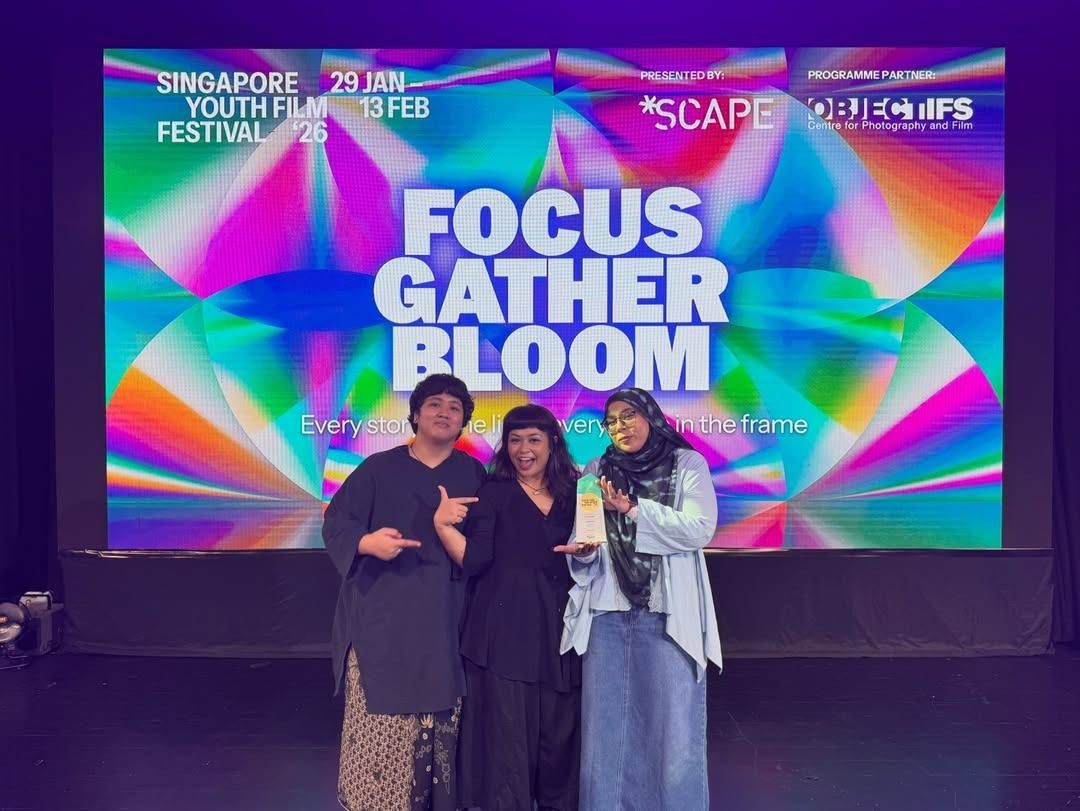
Christal Gallyot’s Balang Araw is powerful in its restraint. Screened as part of the Singapore Youth Film Festival 2026 (SYFF’26), the short film follows Filipino domestic worker Martika as she reckons with news of the war on drugs back home. What becomes distressingly clear is that her son, Marcel, has gotten swept up in the extrajudicial killings.


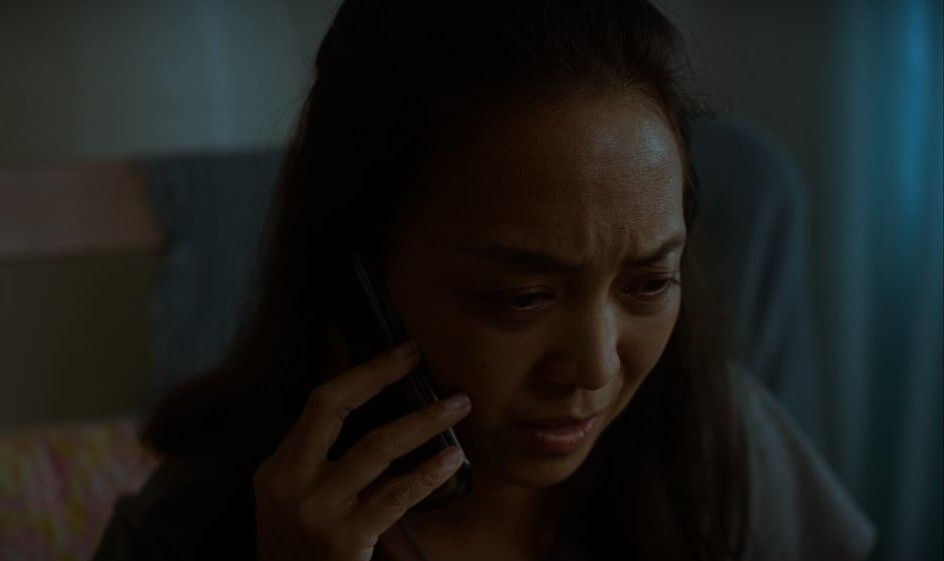
Rather than the spectacle of violence, however, the film lingers in the unsettling sense of distance between Martika and Marcel. Tellingly, all of Martika’s knowledge of Marcel is received through faulty technology: the grainy broadcast of Duterte on her employers’ TV, the abruptly cut phone call where her mother pleads for her return. Their physical separation complicates Martika’s emotional response, such that she is at once helpless and guilty about her helplessness.


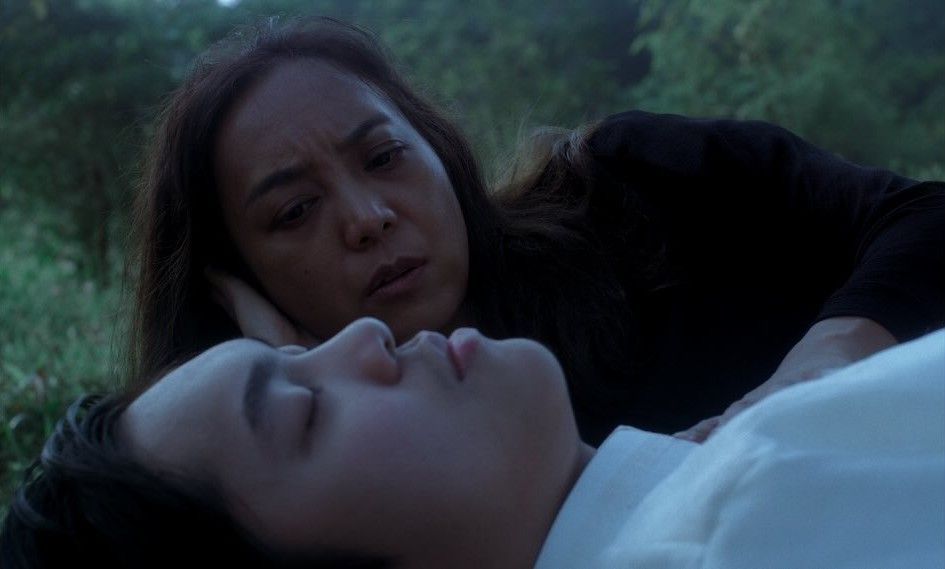
Unable to connect with Marcel, Martika resorts to dreams. Interspersed throughout the film, these surreal dream sequences contain Martika and Marcel’s most intimate interactions. Yet, even these dreams are periodically interrupted by bright flashes of light, much like that of a camera. Not only do the flashes remind us forcefully of the artifice of these dreams, they also perhaps suggest that Marcel increasingly exists for Martika as a technologically mediated entity. Even in her dreams of him, she cannot shake the camera flash off.


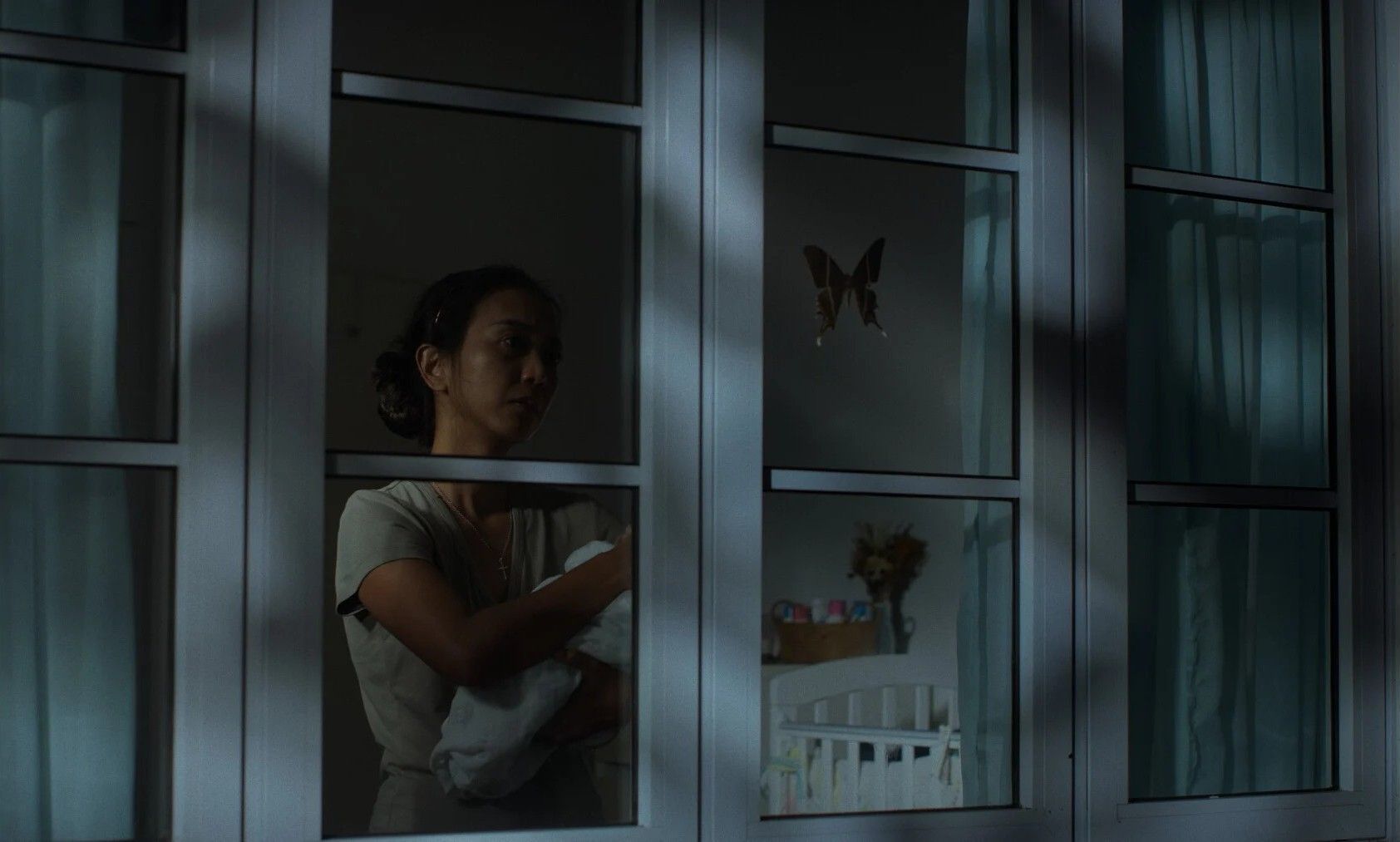
Still from Balang Araw


Quite cleverly, the film chooses to set these dream sequences in an indistinct field that is neither identifiably Filipino nor Singaporean. By eschewing nostalgic flashbacks, the film makes the employers’ house the only “real” place Martika, and the viewer, have access to. The effect is an even greater feeling of insularity: Martika is trapped in the house. Indeed, making contact with the outside world — looking out the window or drying laundry in the courtyard — only triggers more dreams, pushing her deeper into her own head.


Inside the house, though, all is not well. Martika grows restless. She sews Marcel’s old clothes. She observes a moth on the window, seemingly a messenger from Marcel. She becomes overzealous in taking care of her employers’ newborn, Omar, as if he were a substitute for her own son. Even the two children’s names encourage this projection, as if the first three letters of Marcel’s name have been revived in the second half of Omar’s.


Eventually, Martika’s excessive attention to Omar frustrates her employer, a young and wealthy Chinese woman who feels that her role as Omar’s mother is being threatened. While the two women seem to be in conflict, the film invites us to ask if they are not acting from the same urge to protect their children. Indeed, they are all doing their best at the lonely task of motherhood, the singular responsibility to be there for your child. We recall Martika’s own mother, too, whose desperation over the phone points to its own kind of isolation, of trying and failing to protect the family back home.


Still from Balang Araw


But, of course, it is Martika’s loneliness we experience most keenly. What the film tells us is that the loneliness of motherhood is not evenly felt; it falls most heavily on women on the margins. After all, there is a very different set of options available to Martika and her employer. It is a privilege that the employer can decide the terms on which she interacts with her child: she leaves for social appointments when she wishes, she plays with Omar when she wishes, she dictates to Martika about how Omar is to be cared for. 


As a migrant worker, none of these things is available to Martika. Instead, the closest she gets to reconnecting with her son is in the last dream of the film. Back in the field, he forgives her for not being with him in the Philippines. But we have seen this before, and we are acutely aware that this is only a dream. Has Martika really been forgiven, or is she simply comforting herself? 


Still from Balang Araw

In the end, the answer does not matter. After being fired for breastfeeding Omar, Martika storms out of the house. Yellow streetlights run across her body as she hurries down the road. We see, on her shoulder, that she has taken Omar with her. Swaddled in cloth, his figure is eerily reminiscent of Martika’s dream of Marcel’s shrouded corpse. With the burden still on her shoulder, she walks into the night.


Fittingly, then, the director explained in a Q&A session that the title is meant to be ironic — “balang araw”, which means “someday” in Tagalog, is twisted from its hopeful connotation to imply a wish that may never arrive.


Taken together, these elements form
Balang Araw’s quiet charge. Never heavy-handed in its approach, the film works by a gradual accumulation of metaphors, motifs and parallels. In doing so, it confidently draws us into its unnerving yet hypnotic atmosphere. Underlying the craft, however, is a sincere desire to present the stories of those who have been disempowered or oppressed. The result is a sensitive, subtle and politically conscious work. The film, which was Gallyot’s graduating project in the LASALLE film programme, fully deserves its SYFF’26 Student Best Short Film award. I am excited to see what this young director makes next.

About the author:  Yong Xiang is an undergraduate. Recently, he has enjoyed running, playing Fast Food Simulator and reading Garielle Lutz's short stories.


Recent Posts

By Shree July 9, 2026
Inside the Film Critics Lab at Singapore Youth Film Festival 2026, conversations with organisers, industry voices and fellow critics offer a glimpse into learning the language of cinema and how stories travel far beyond the places they are made.
By Zhuo Chengsheng July 6, 2026
Disclosure Day: A Defence and Autobiographical Reading 
By Shree July 3, 2026
Tinā (2024): How Music, Culture, and Community Help People Rebuild After Tragedy Written by: Shree
By Ivan Chin July 2, 2026
The Furious: A Marriage of Styles
By Kyle Pillai June 29, 2026
SYFF: Mountain Mountain 
By Lixin Foo June 23, 2026
Interview with The Creators Behind ‘Mountain Mountain’ By Lixin Foo 
By Yu Jing Lim June 23, 2026
Are We Finally Back?: Backrooms, Obsession, Theatre-going, and the State of the Industry
By Chinmaya June 18, 2026
The Beast in the Woods 
By Elena Goh June 12, 2026
Commentary: Fiction and Vulnerability in Drive My Car (2021) [SPOILER ALERT] This review contains spoilers for the film Drive My Car (2021). 
Show More