
Commentary: Fiction and Vulnerability in Drive My Car (2021)
Commentary: Fiction and Vulnerability in Drive My Car (2021)
[SPOILER ALERT] This review contains spoilers for the film Drive My Car (2021).
“She died two years ago.”
There is a pause as Misaki takes in Kafuku’s words. And the fact that, for the past week, she has been listening to hour-long recordings of his dead wife’s voice.
“Does the tape creep you out now?” he asks.
“No. In fact-”
A frisbee lands behind Misaki, interrupting their conversation. She takes a moment to return it.
Then she turns around. “I like your car,” she declares. “I can tell it’s treated with care, so I also want to drive it with care.” She picks up her hat. “Let’s go.”
She never finishes her sentence. There is the intrusion of real life, of arbitrary accidents. But because of how sincerely she treats the space hosting Kafuku’s grief, she never needs to explain herself.

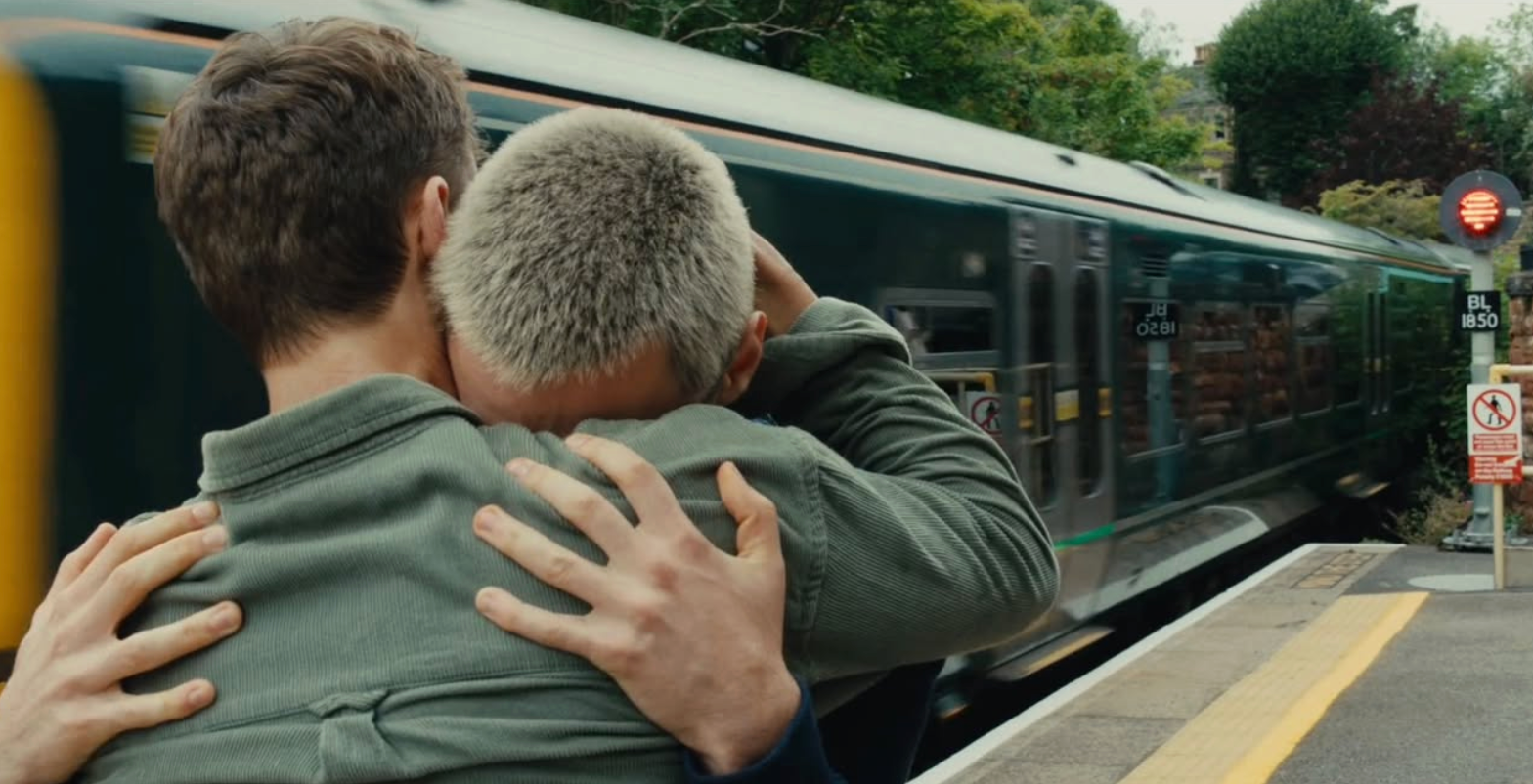
Fig 1: Drive My Car (2021)
This unfinished sentence lies at the heart of Ryusuke Hamaguchi’s Drive My Car (2021). In the wake of his wife’s death, theater director Yusuke Kafuku (Hidetoshi Nishijima) travels to Hiroshima to stage an adaptation of Uncle Vanya. There, he meets Misaki, the young woman appointed as his chauffeur. As the hours spent together in the car deepen their emotional bond, Kafuku is forced to confront lingering questions of grief, memory, and loss. While primarily inspired by Haruki Murakami’s short story of the same name, Hamaguchi weaves in elements from Murakami’s Scheherazade and Kino, while significantly elevating the thematic weight of Uncle Vanya.
What I personally loved most about
Drive My Car is how it manages to be deeply philosophical without succumbing to pretension. It’s a difficult feat to pull off, given the elements it combines: Murakami’s self-indulgent prose, a play-within-a-film structure, Chekhov, stretches of unbroken silence. Yet, it never feels artificial. With a restrained tenderness, the film reaches into the short story and brings its most sincere parts to the forefront — vulnerability, isolation, and the quiet tragedy of loving someone who has deeply wounded you, without ever understanding why they needed to hurt you.
Adaptation, Fiction, and Emotion
“Yield yourself and respond to the text,” Kafuku advises a young actor. “The text is questioning you. If you listen to it and respond, the same will happen to you.” In the context of the film, this line takes on an intensely meta-narrative subtext.

Fig 2: Takatsuki (Masaki Okada) and Kafuku (Hidetoshi Nishijima) at a bar
It is an inherently ambitious undertaking to collage four disparate works — three short stories and a play — into one story, then translate them into the medium of film. Yet Hamaguchi manages to use this framing to enrich the original story, weaving this process of adaptation and translation into the core of the film. Hamaguchi is adapting prose into the film, his characters are adapting Vanya for a multi-lingual play, and the play becomes a conduit for Kafuku to express his suppressed grief and anger. Layered over the original plot of Drive My Car, the three new narratives become a lens through which the viewer understands Kafuku’s story, allowing for a more effective exploration of its original themes and bringing them to a fuller conclusion.
In
Drive My Car, fiction exists as both mirror and translator, allowing characters to identify themselves within it and articulate feelings they are afraid or ashamed of. In the first half of the film, it is as though Kafuku’s only way of expressing his emotions is through reciting the lines of
Vanya.
In a manner bordering on pathetic fallacy, these lines are almost an exact mirror to his emotions, strategically scattered throughout the film to reflect inexpressible truths. It is little wonder, then, that he initially refuses to reprise his role as Vanya. “Chekhov is terrifying,” Kafuku says. “When you say his lines, it drags out the real you. I can’t bear that anymore.” After all, when we are introduced to him, it is almost exclusively through Vanya’s anger and misery that he can express his own. This begins to influence the other actors as well — in lieu of confrontation and confession, the play
Vanya acts as a psychological conduit through which the characters understand themselves and communicate with others. They are constantly speaking to each other in stories, in anecdotes, in repressed emotion. We tell stories, the film seems to argue, so that we can make sense of our place in reality, so we can scold, apologise, and love one another, even when we do not have the courage to do so ourselves.
Because the film is not limited to the short story’s first-person perspective — a perspective that has been recently criticised for its naval-gazing misogyny — the story can also expand beyond Kafuku’s rumination, giving other characters more depth and agency. This is most notable in the treatment of Misaki’s character. No longer reduced to a conduit for Kafuku’s development, the film removes any romantic tension between them and gives her a full backstory, framing her character development as a parallel journey to Kafuku’s. It then feels appropriate that she is the last character to appear in the ending: in a cast of characters battling inner demons, she ultimately emerges as a figure of hope, the youngest character with the most potential to overcome grief and move on in life.
Space, Silence, and Intimacy
Drive My Car
is not a stylistically complicated film. There is a consistent use of emptiness as meditation, both in terms of space and sound, and most of the scenes are framed conservatively. Wide angle shots to visually lengthen the characters’ emotional distance, medium shots to communicate their emotions. Nonetheless, it is effective in emphasizing the physical distance between characters and the smallness of their existence. For most of the film, Kafuku is unwilling to confront his grief or let others witness it — that includes the audience.
Even in climactic scenes, the characters are often shot with a wide angle lens, or their faces are obscured by shadow.

Fig 3: Kafuku (Hidetoshi Nishijima), Misaki (Toko Miura), and the titular car
For a film where dialogue primarily drives plot, Drive My Car is fundamentally anchored by silence. The soundtrack is largely minimalist, often reduced to nothing more than the hum of a traveling car. Yet within this quiet, the resonance of sound—whether it reaches the right person, whether it echoes back—is a vital motif. Because the use of space and sound is so sparse, every instance of physical touch carries immense narrative weight. In the car, Kafuku and Misaki share a specific intimacy, sitting side-by-side and staring straight ahead. No longer separated by the distance of the wide angle lens, their eventual crossing of physical borders to comfort one another feels like an act of immense courage. To accept another person’s truth and echo back with your own, the film suggests, is an act of radical vulnerability.
In
Drive My Car, communication is not simply a matter of understanding what the person is saying, but a test of one’s capacity to empathise with another person. The multilingual nature of their play actively highlights this struggle, utilizing the actors’ struggle to understand each other to reiterate why reaching out to one another is still worth it. Because some of the most moving scenes happen through silence and touch, it feels fitting that the final monologue is communicated through sign language. As the mute actress delivers Sonia’s monologue on enduring suffering, the intimacy of the scene is palpable: her posture and signed words seem to physically embrace him, cementing the arduous journey he has taken to reach this moment of vulnerability.

As a whole, the film is quiet but emotionally piercing. The ending feels more like a collage of various elements of the film, a symbolic resolution rather than a logical conclusion to the plot. Unlike what Thomas
states, I don’t think it is silly to interpret this film as one about healing, because
Drive My Car reflects how violent and tumultuous this process can be. “You have never known what happiness was, but wait, uncle Vanya.” Sonia promises. “We shall rest, we shall rest. We shall rest.” And as
Drive My Car
reflects, to accept this requires immense courage.
Fig 4: Kafuku (Hidetoshi Nishijima) and Yoo-na (Park Yu-rim) in Vanya
About the author: Elena Goh is a postgraduate student based in Singapore. She is currently pursuing a Master’s in Creative Writing at the University of Cambridge, and her fiction and film reviews have been featured in Twin Flame Literary, The Writer's Block and the UCL Film & TV Society Journal. Her work explores the intersections of intergenerational memory, cultural identity, and Classical mythology.
This review is published as part of *SCAPE’s Film Critics Lab: A Writing Mentorship Programme, with support from Singapore Film Society.
Recent Posts