Singapore Youth Film Festival 2026: How It’s Run — and Why It Matters
Inside the Film Critics Lab at Singapore Youth Film Festival 2026, conversations with organisers, industry voices and fellow critics offer a glimpse into learning the language of cinema and how stories travel far beyond the places they are made.
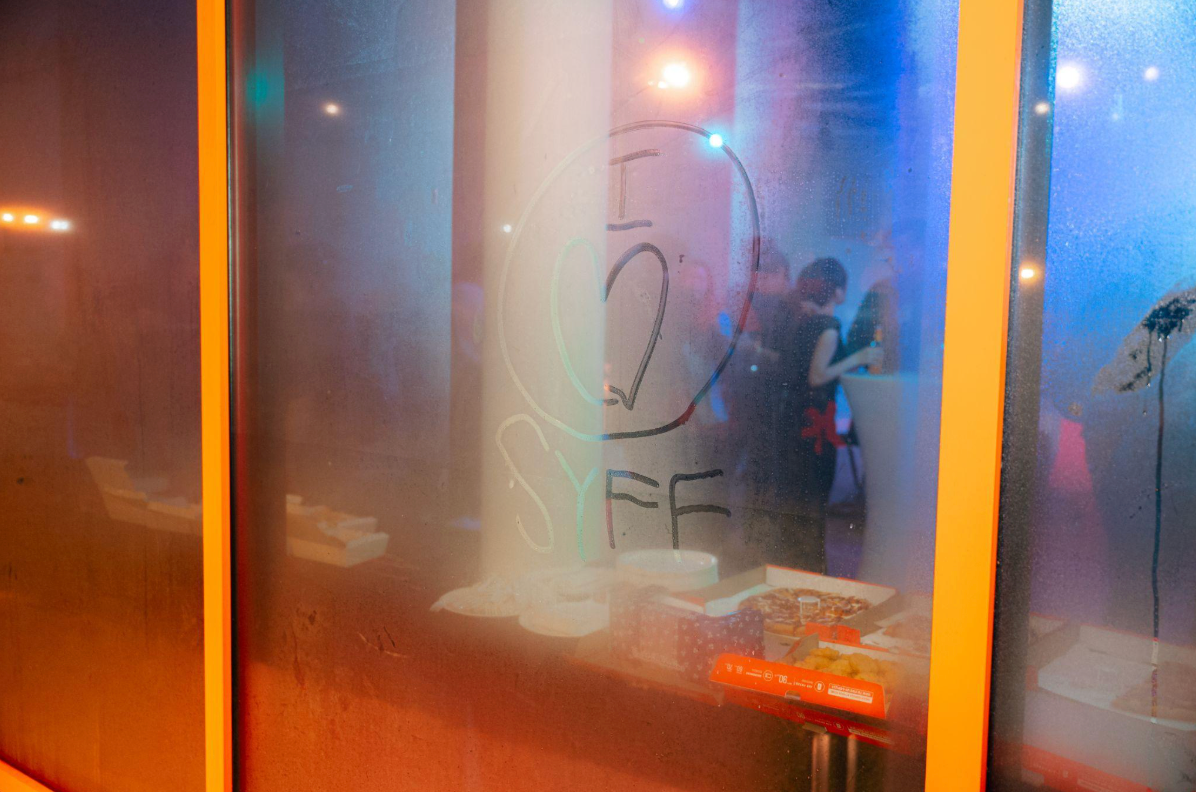
Girl, same. (PHOTO: Lawrence Lee Zhi Yu)
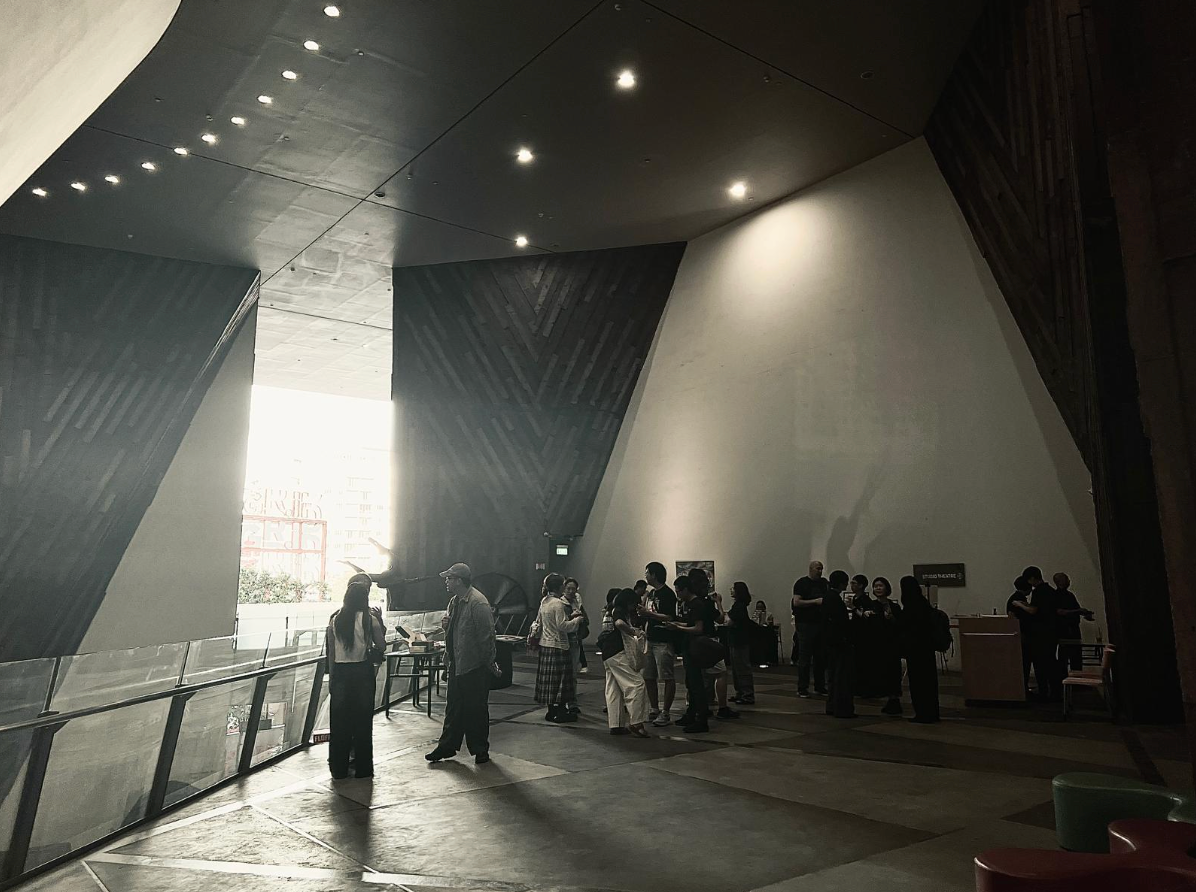
Post-panel discussion brings tea…break. (PHOTO: Shree)
When I found out I had been accepted into the Film Critics Lab (FCL), my first reaction was pure excitement!
Aside from someone’s shoe repeatedly tapping against mine on my right, whether by accident or stubborn habit, and half-heard murmurs drifting behind me and the woman seated on my left, the atmosphere inside SOTA’s Studio Theatre, where I attended several panels, felt unexpectedly intimate.
This might sound silly, but watching films as a critic meant noticing the details beyond the ones that music and journalism classes have drilled me to have. I’m naturally analytical and observant, but being given the official "Title" made me a little more self-conscious in the best way. It revealed how much work and heart happen behind the scenes to make those moments possible.
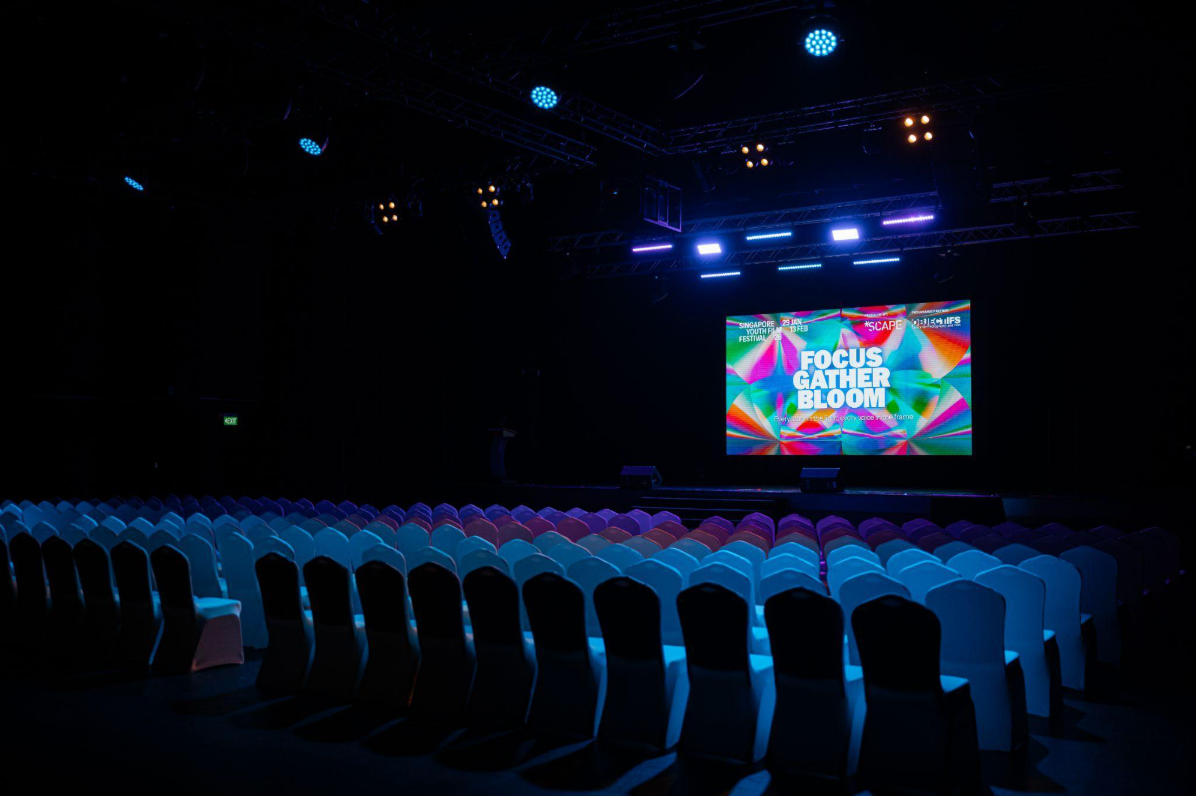
I love this photo, just the perfect amount of calm we need before the creative storm. (PHOTO: Lawrence Lee Zhi Yu)
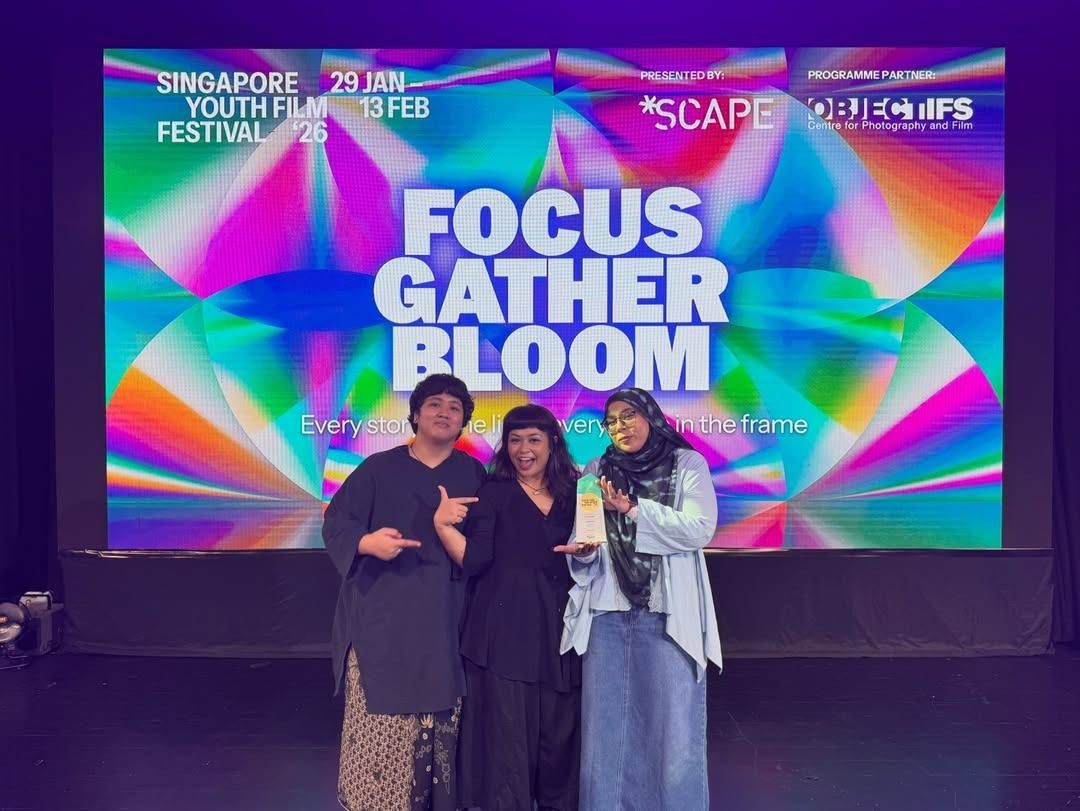
Held annually, the Singapore Youth Film Festival (SYFF), formerly known as the National Youth Film Awards, brings together art-lovers to celebrate emerging voices in cinema. The festival is run by *SCAPE Singapore and Objectifs Centre, a non-profit charity which places community at the heart of their cause. This year’s edition screened 44 films selected from over 260 submissions, featuring works shot in places as far as the mountainous highlands of South Cotabato in the Philippines and ditching conventional living for van life in the United Kingdom. It was complete with carefully planned sets, coordinated crew and specialised equipment, making it clear just how much effort went into bringing these stories to life.
Until then, I had assumed that a "local" film had to be shot close to home, somewhere tied to a filmmaker’s hometown. Seeing Singaporean stories unfold thousands of kilometres away challenged that assumption completely. It taught me that our identity is a distillation of important moments and the people in our lives.
A Trip to Paris
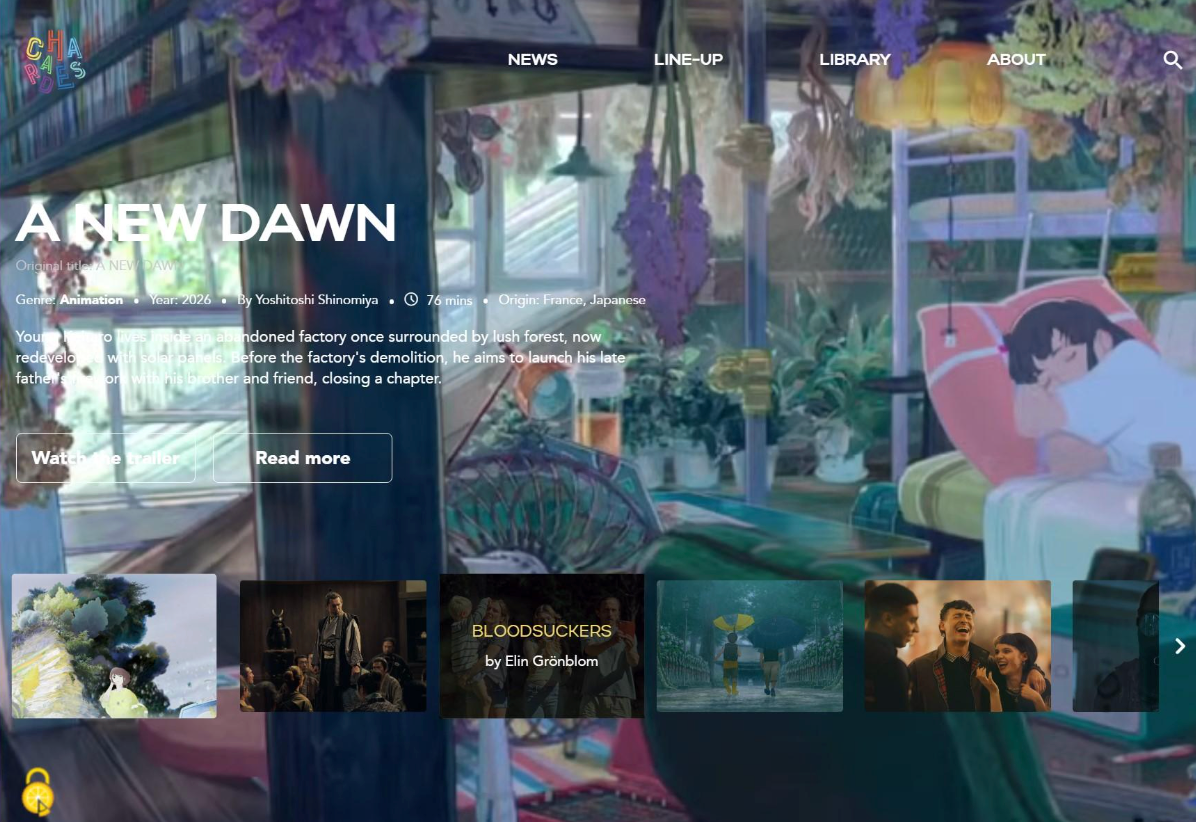
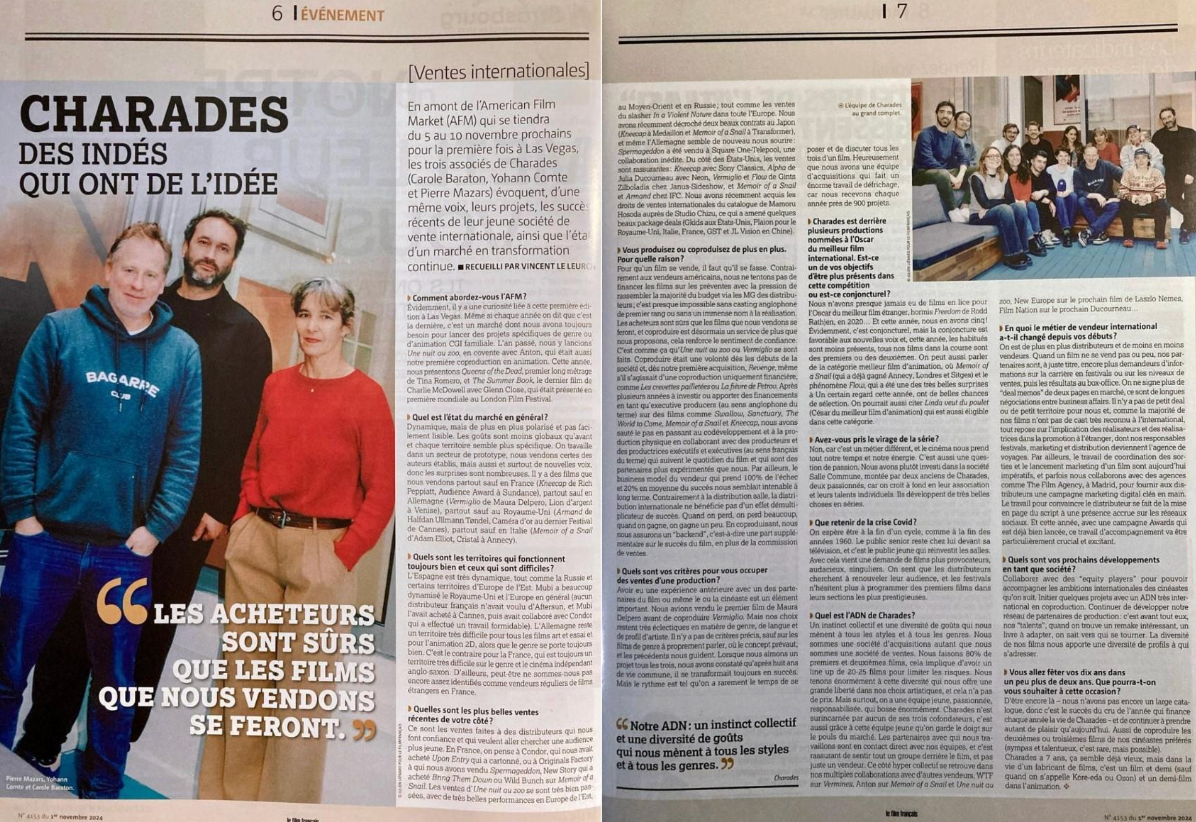
Learning the ropes of international film sales from my living room. (PHOTO: Yohann Comte’s Linkedin, Charades’s official website)
One of the most interesting parts of the week was speaking with Lucie Desquiens, who works for Paris-based International Sales and Production House, CHARADES. Her job is to help movies travel around the world so people in different countries can watch them, like a professional matchmaker. Even though the session moved fully online, I loved the vibe of being a critic from the comfort of my own home. It was cool to realise that technology allows us to meet someone across a massive time difference to have such a fruitful conversation about The Journey of a Film.
According to Desquiens, there is no secret formula and rules to make a movie that everyone loves. "It’s never systematic," she shared, noting that while we all speak different languages, we understand "universal feelings" like being happy, sad, or scared. This is something that can always travel across borders. She said based on her experience, this is especially true for comedies, where the best way to counteract them is through relatable and familiar scenes.
What stayed with me was her reminder that a sales agent's job isn't just about the "hits." While they represent Oscar contenders like
Flow, Lucie noted that they are often "most needed" when a film is struggling, acting as the strategic engine that ensures a story finds its right "window" and audience, regardless of where it was born.
The Team Running the Festival
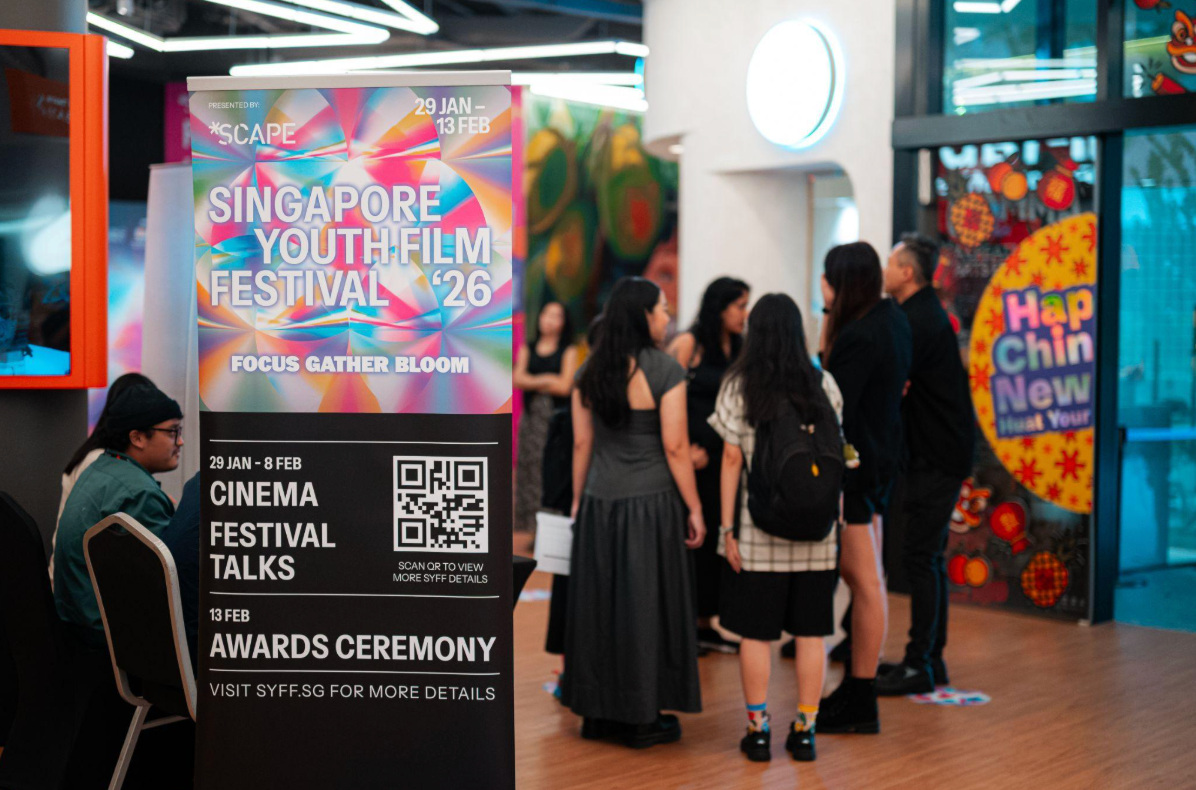
Behind the scenes with the hardworking festival team. (PHOTO: Lawrence Lee Zhi Yu)
Running a festival isn't just food and music. I got to hear more from the *SCAPE SYFF Team, who shared vulnerably that organising a festival can be "logistical madness”—where even programming decisions are influenced by venue availability, budget, and film ratings. Yet they do it anyway because their goal is to get more people in Singapore to watch local short films in an affordable and accessible manner. #Supportlocal.
Despite this, the team took immense pride in seeing SYFF cement its place in the local ecosystem this year. A milestone for them was securing international heavyweights like Kim Young-min (Exhuma) and Viet (Cyclo) for festival talks. "It’s something that should not be taken for granted," the team noted, emphasizing that these exchanges make the world of filmmaking feel a lot closer to home between student hobbyists and industry professionals. They just want more young people to “develop their personal style”, tell stories that “bring diversity in mediums and break boundaries.”
They definitely made their sleepless nights preparing for the festival worthwhile.
Learning to be Your Own Unique Critic
Beyond the films, I found a wonderful sense of community within our FCL batch. I chose to interview my fellow amazing young writers because I learn even more by listening to people with varied backgrounds in the same boat as me.
In our finale session, our mentor and SFS Vice-chairman, whom we know as ET, shared a really beautiful way to look at films. He so compassionately treats every film like his students, being the educator he is. He starts every film with a “B-plus,” much like a bell curve. Instead of looking for what’s wrong, he gives the film his full trust from the very first frame and waits to see where the story takes him. It’s such an inspiring takeaway because it teaches you to approach art with kindness. He also reminded us that it's okay to be a solitary viewer. ET likes to let a film “simmer” on his ride home, letting the noise of the world fade away so he can focus on how the movie actually made him feel. It is impossible to catch every single detail of the film all at once and there's no shame in that as the most important starting point for any writing is your own honest emotion.
Poet, editor and translator, Daryl Lim, added to this by showing us that cinema is a lot like poetry. "Just like a poet chooses the shape of a poem, a filmmaker chooses a colour palette" to tell a story without words. He shared that it is our duty to look out for "underhyped or overrated" works. In a world where social media tells us what to like based on algorithms, he reminded us that our job as critics is to find those hidden gems and give them the support they need to be seen.
A fellow writer, Jun Sen, told me he learned how to look at films more critically, realising that criticism isn’t about bashing films but understanding their craft positively. Even if a film wasn't his favourite, he tried to see the hard work behind the camera and sharpen his attention to details he used to overlook, while also picking up unexpected skills like transcribing interviews without losing the speaker’s meaning. He even started carrying a little notebook to jot notes in the dark!
Another fellow writer and environmental enthusiast, Kaela, said the lab made her more empathetic. This is especially for indie films and emerging filmmakers, as it may have considerable implications in smaller film communities. She realised that every filmmaker crafts their work with a deep level of care. Instead of just giving a low rating on your Letterboxd, she urges us to write in “good faith.” She said even if a movie seems "subpar" at first, its perspective can still be valuable, evading any conclusion on how good or bad it is.
Kaela also pointed out that it’s easier to be kind when you’re the same age range as the filmmakers. She knows how hard it is to fund a movie! She’s now focusing on writing “accessible reviews” instead of using “academic, dense language” that might make people feel left out.
Then there’s also
Fengyu, who gave us a familiar imagery. He shared about how people usually romanticise “the notion of a solitary writer cooped up in an office, furiously scribbling through the night.” But SYFF showed him that there’s so much beauty in
finding yourself within a community of fellow film lovers and critics.
Stories That Feel Like "Us"
There’s something uniquely relatable about these films that you just don't see in a Marvel flick. The film selections at the festival were so diverse! I hate to be honest but I used to be a bit of a skeptic when it came to local films. I think many of us assume local films might feel "cringey" or "unnatural" compared to the big-budget sets of Hollywood. However, SYFF 2026 completely changed my mind. I was shocked to see such aesthetic interiors and settings.
The films, Bobo in Bliss, Tilam and Tanjungg Jiwa, hit me right in the heart. It had a deeply personal, Asian vibe that reminded me of To All the Boys I’ve Loved Before, Atypical and Jane the Virgin. I was also surprised by the number of animated films this year. Usually, animation is a "hit or miss" for me, depending on the colors and textures, but films like Sync caught my attention. Special shoutouts to, Tindakake Timbalku and The Streetlight Flicker When I Blink, for not being spoken enough about! These films proved that while we might strive for certain "standards," our stories are unique to what we have lived through in this little red dot.
A writer from FCL, Lixin, loved an animation called Mountain Mountain that she said was “whimsical and nostalgic,” because it felt like a local version of a Ghibli movie. Jun Sen pointed out that SYFF films capture "self-esteem in an Asian context—the idea of saving face or comparison among peers," a nuance often lost in Hollywood blockbusters. He highlighted films like Neh Neh Pok which tackles body dysmorphia with a relatable humor, sharing his hopes for more short films to cover insecurities about other body parts. He also mentioned Sighnight, which if you “say it repeatedly, reads off like cyanide” noting scenes shockingly mirroring reality.
Why You Should Talk to Strangers
As the festival ends with a final ode to FCL, I realised how much we can learn from simply observing, listening, asking and reading. Without such platforms, many stories might never leave the editing room and without audiences willing to support them, even the most carefully crafted films risk remaining unseen.
If you had to sum up your SYFF/FCL experience using a movie quote, what would it be?
“This is the beginning of a beautiful friendship” – Casablanca. A beautiful friendship with my mentors and peers from FCL! says Jun Sen.
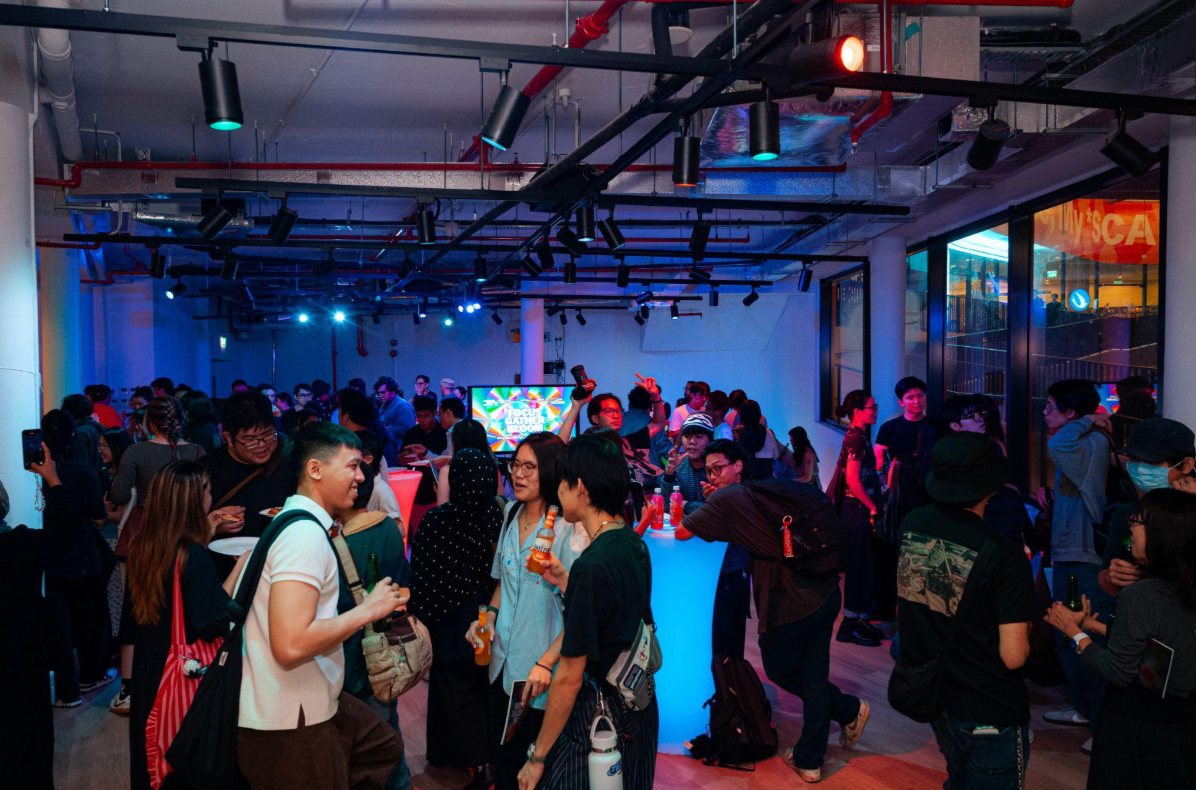
What a lively night at SYFF’s Bloc Party. (PHOTO: Lawrence Lee Zhi Yu)
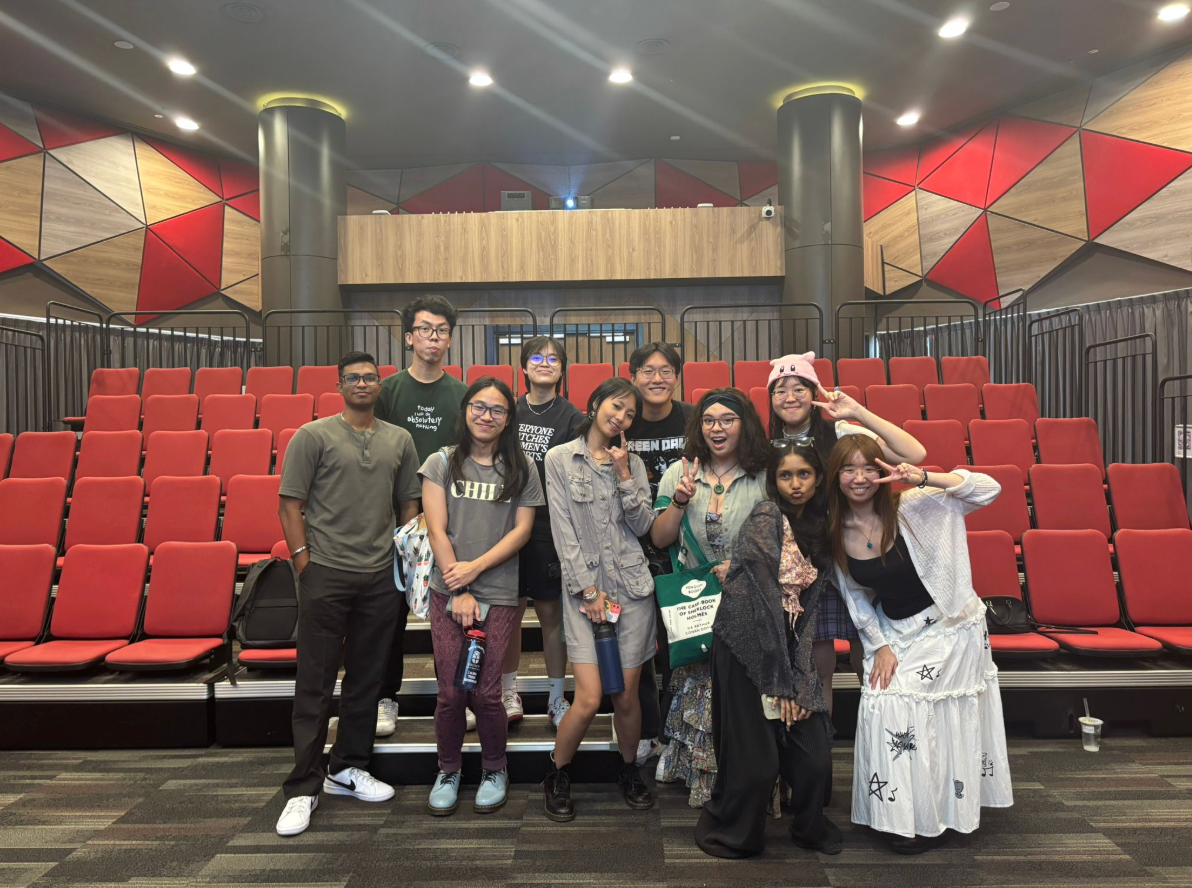
FCL’26. (PHOTO: Shree)
If you’re reading this and are dreaming of being a writer or film crew, here are some parting advice I‘ve heard:
- “Have lots and lots of fun with it okay!” ~ Priyanka
- “Start writing about what is most personal to you—that’s where your most authentic voice will be.” ~ Kaela
- “Write like how you’d talk to a friend who hasn't seen the film” - Matthaeus
- “Just write only. Trust. No one asked for it, but if you put it out in the world, you can look back at your writings and they reflect how you perceive the world around you.”
~ Jun Sen - “Start by being a regular audience member for as many events like these... and then start talking to the festival team to find out more about their experience!” ~*SCAPE Team
And to our mentors and SCAPE Team, we would like to thank you for being just as passionate about our work as we are, for your rigorous coaching and realistic feedback, and for creating this empowering space that served as the perfect starting point for us to explore our voices and grow together as writers.
To our FCL batch, it’s been a joy to read each other's pieces and how we each perceive film to be. Catch more films together in the future, and see the amazing things you do next! :)
With film festivals, it gives people a place to share their work, audiences a chance to discover new voices, and industry professionals an opportunity to nurture emerging talent.
Singapore’s cinema heart is trying, and after seeing all this talent, I hope we can stand shoulder-to-shoulder with big festivals like Cannes one day.
If you missed the festival, you can catch SYFF-nominated films as the opening short for the monthly Nightflix Somerset Screening at Somerset Youth Park every 1st Saturday of the month. Keep your eyes peeled for more information via SCAPE's Instagram.
About the author: Shree is a multifaceted, bubbly gal living her daydream of being a writer. She is drawn to films that address universal issues and traces how society is built, layer by layer. She hopes that by conducting this analysis, she can learn more about the world and encourage conversations about humanitarian rights. Mostly off social media, Shree believes in traditional ways of preserving memories through a junk journal. She cares deeply about the environment, and if you have spent enough time with her, there is a good chance the receipt from that day is tucked inside one of her pages.
This review is published as part of *SCAPE’s Film Critics Lab: A Writing Mentorship Programme, with support from Singapore Film Society.
Recent Posts