
“A Certain Degree of Impermanence”: An Interview with Filmmaker Wong Chen-Hsi
City of Small Blessings (2024)
“A Certain Degree of Impermanence”: An Interview with Filmmaker Wong Chen-Hsi
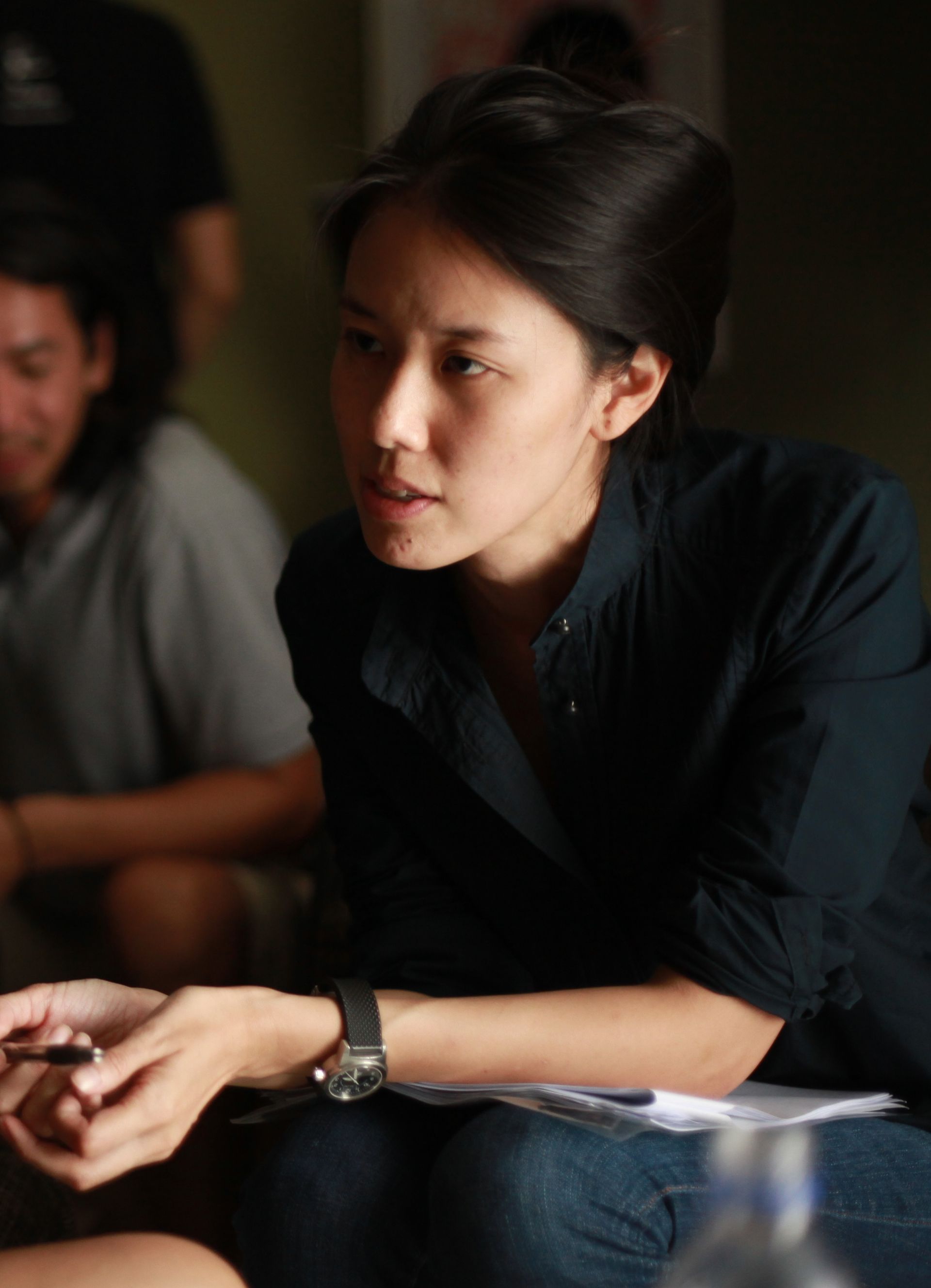
Director Wong Chen-Hsi
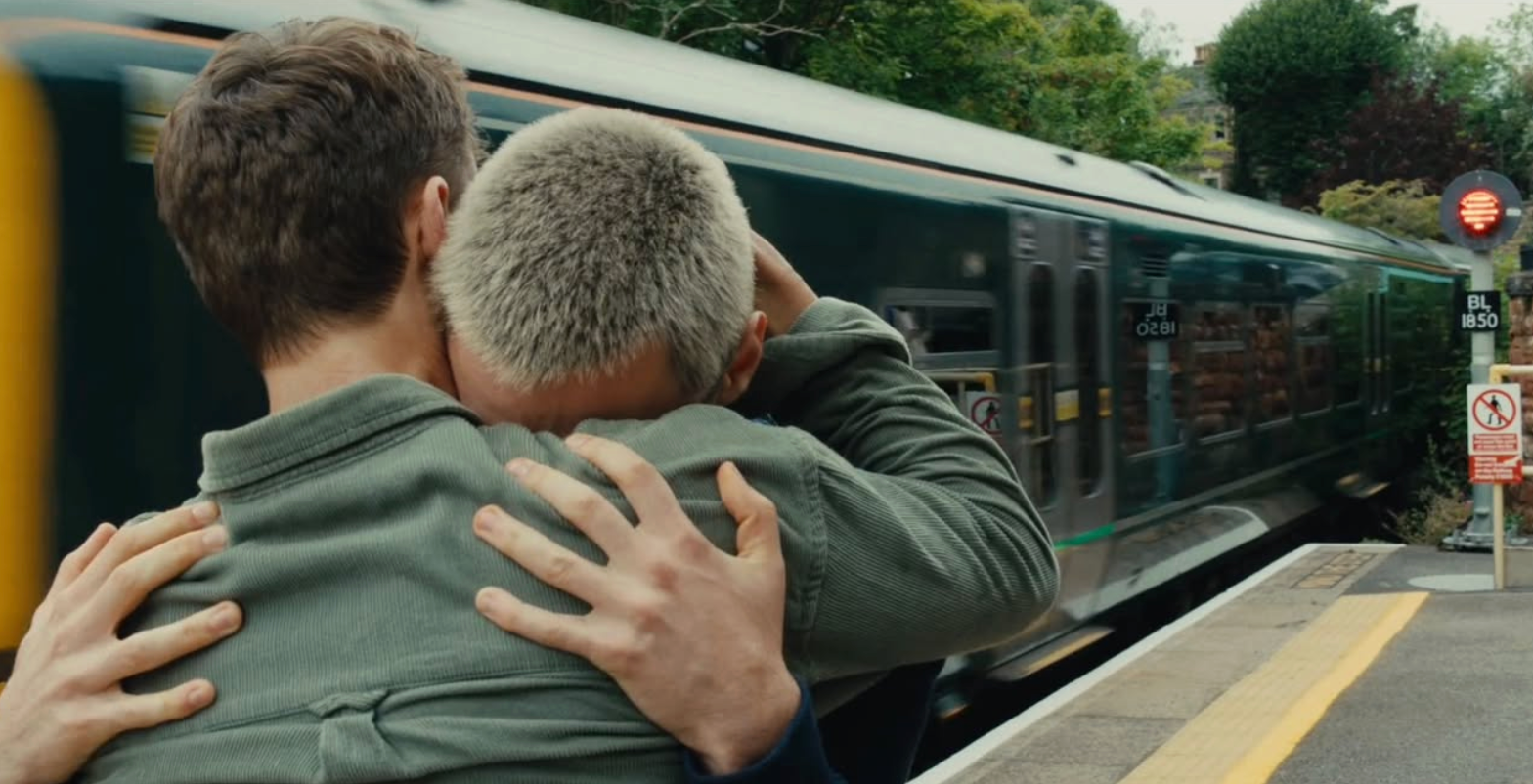
City of Small Blessings (2024) charts retired school principal Prakash’s (Victor Banerjee) desperate, self-righteous fight to keep his house from being demolished for a new MRT line. By turns funny and meditative, the film is a sustained character study of a man torn between self and country, pride and humility, past and future.
Adapted from Simon Tay’s novel of the same name, the film is Singaporean director Wong Chen-Hsi’s second feature after the self-produced Innocents (2012). Wong also sits on the advisory committee for the Singapore Film Commission and teaches film at Nanyang Technological University, where I had the privilege of taking one of her classes. I spoke to Wong about making City of Small Blessings, representing the civil service on screen, living in an ever-changing city and more.
Soh Yong Xiang (SYX): City of Small Blessings was developed all over the world: at Torino FilmLab, Cannes Cinefondation l'Atelier and Venice Production Bridge. How did this international collaboration shape your film?
Wong Chen-Hsi (WCH): The lab experience was a first for me. It was very enjoyable, because you get exposed to a lot of people who are working at the top of the film world, and it was great to meet all the other international filmmakers who were in residencies with me.
But if you’re asking about international collaboration, it’s really the production team that I worked with. I think what was particularly unique about it is that, even though it was made in Singapore and it is a Singaporean film, a lot of the key crew were not Singaporeans. So Fran [Borgia], the producer, is Spanish, and he’s lived in Singapore close to 20 years. Hide [Hideho Urata], the cinematographer, is Japanese. James [Page], the production designer, is from the UK, also has lived in Singapore many years. And of course, the lead actor, Victor Banerjee, he's Indian. So I think one of the things that made this interesting was that it was shaped by a lot of collaborators who were able to see Singapore with a little bit of distance. And I think that gave it additional layers and nuances that contributed to the film.
SYX: I’m curious about this “little bit of distance”. Was there a different way that your team saw Singapore that made it into the film?
WCH: I think it’s very hard for me to speak for them. But I myself spent more than 10 years in the U.S. So when I first came back, that sort of distance allows you to latch on to different things. For example, the Singapore civil service, which is featured quite prominently in this film, is not the sort of natural thing that you would want to make a film about. But Singapore as a sort of state organism… that is a very interesting thing.
There were also some other thematic elements in the film. This idea of generational discord, of a generation that wants something different out of life and has decided to move away. This sense of a very small world that is evaporating, which is also accelerated by globalization and change. I think maybe people who have lived between countries, between worlds, may understand these spaces and find a little bit more resonance.
SYX: That leads well into another question I had about the Singapore civil service and how it’s an unusual thing to make a film about. What inspired you for the character of Prakash? He is an elderly, English-educated civil servant, and that's not really the type of Singaporean character we see often.
WCH: That goes back to Simon’s book. I was very much drawn to the book because of the idea of questioning the nature of home, and the idea of discontented modernity. The fact that all the promises of modernity and progress don’t necessarily play out at the individual level the way they’re supposed to.
Also, I really liked his main character because he struck me as somebody who was extraordinarily flawed. And I really leaned into this idea of a very flawed protagonist: somebody who is very stubborn, who can be quite dogmatic, who really is not always the nicest person. But at the same time, I like that even though he sort of wants to be seen as a man astride the world, he’s actually just human like everybody else, right?
And of course, it was somebody who had lived his life in civil service. As I started to develop the film I realized that, if we’re representing the state and the nation, it’s not a blank wall. It's composed of a lot of individuals. I realised that this world of the civil service is also another niche or liminal aspect of Singapore. As with all my other films, I like liminal spaces.
SYX: What do you mean when you say that the civil service is a liminal aspect of Singapore?
WCH: Liminal in the sense that the civil service is very deeply intertwined with our constructions of the Singapore state, but we very seldom see it represented on screen. Of course, the civil service dominates Singapore. At the same time, when we do see it on screen, we have very stereotypical representations. But in reality, there are also a lot of little nuances — people who are hovering at the edges of it, people who are more entrenched in it, people who think they have access but actually don’t, and vice-versa. That nuance is maybe something that not everybody sees. It’s easier to just see it as a monolithic face.
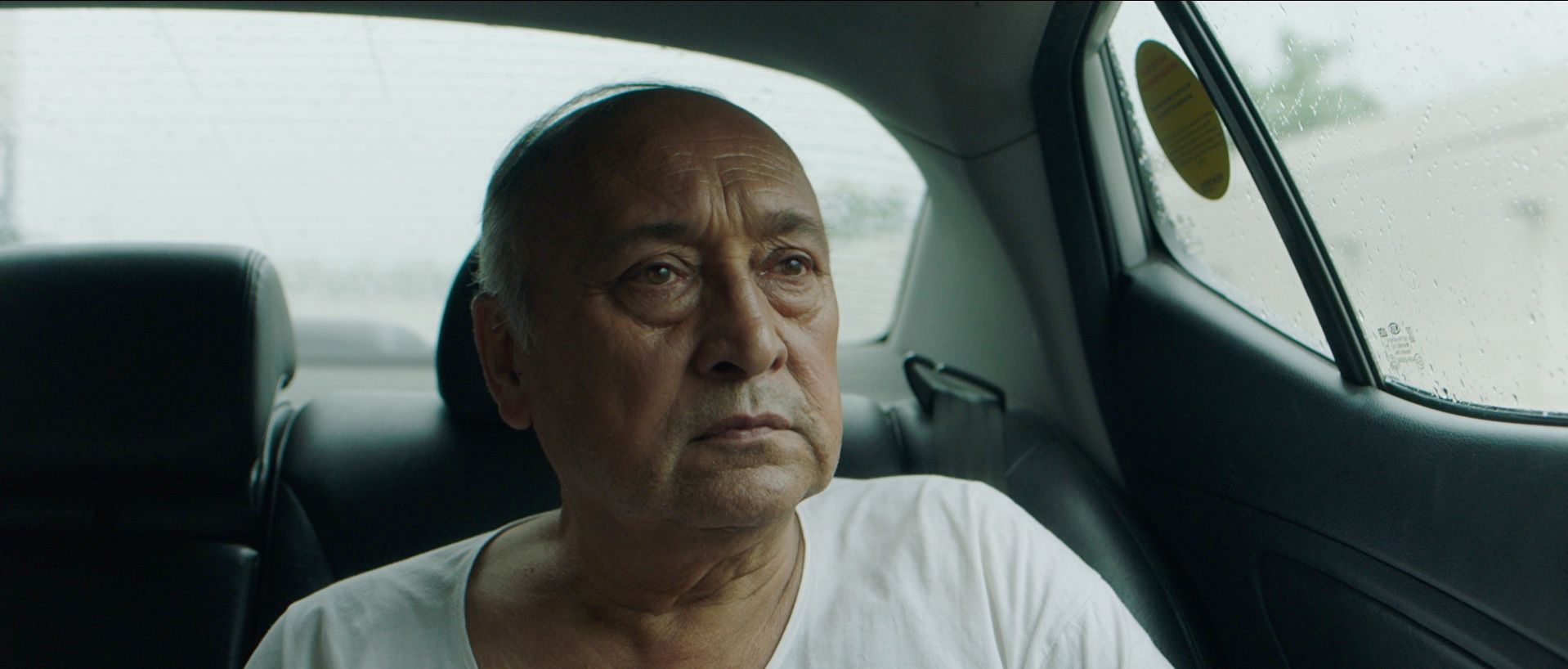
Prakash (Victor Banerjee) in City of Small Blessings (Credit: Akanga Film Asia)
SYX: This thing about trying to portray something in a more authentic way, rather than a stereotype, I think that also links to the language of the film. You mentioned in class that you intentionally chose to write it in English. I wonder if you could share about that?
WCH: I did intentionally write it in English. Very early on, I felt that I wanted a multi-racial character to the film.
There are quite a lot of representations of Singapore in our dialects, in non-English languages, and yet English is a dominant language. It’s not just a language of instruction or the language of government, which of course makes sense for the film, but also a lot of people really speak English, in varying degrees of Singaporean accents and Singlish. It is our first language. And I wish we could see that more often on film as an authentic representation of our culture.
But if I go back to this idea of representing this multiracial couple, it made sense to me that they would both be English-educated. Our English is also a sort of amalgam of a whole bunch of different influences. Catholic school English sounds very different from Anglo-Indian English, which also sounds quite different from a Chinese businessman’s English, which sounds radically different from Singlish. So for me that was a bit of a personal project, to get right the different ways in which English has come to us, and in a way represent the different communities that comprise Singapore.
SYX: I think you also mentioned that there was a specific accent that you wanted Victor Banerjee to have, like a schoolmaster you wanted him to emulate.
WCH: Victor Banerjee, he is really an iconic actor. And when Fran suggested approaching him, I said, good grief, there's no way somebody of his stature is going to agree to play this film. But I thought, okay, worth a shot. So I flew out to Calcutta with a script in hand, and we met up, and he took me to his club. And we chatted on the veranda and talked about the film and life and all sorts of things. And he agreed to do it, which was absolutely amazing.
I think part of it was that he connected with the character. India also has gone through an extraordinary amount of change, certainly within his lifetime as well. I assume that, at a certain point in life, you also start looking back on what you leave behind.
In terms of the preparation for the film, I went to one particular school and dug around in the archives, and they very kindly loaned me some speeches of ex-principals. I picked one or two people that I felt were really correct. Then I sent a copy over to Victor and I said, I want you to sound like this guy. And he said, Okay. And when he came back, he sounded like this guy.
SYX: Since we’re talking about Victor and his character, I wanted to ask about the portrayal of Prakash’s body. Especially this one shot that I found really interesting, where he argues with his wife and it cuts to him using toilet paper to wipe stains off the floor. I was wondering about the choice to portray him in this way — like it was taking him down a peg, but at the same time, you feel sympathetic to him.
WCH: I think that’s a good way of phrasing it. Because this man encapsulates hubris, and some people may find him very off-putting. But again, you know, he’s still human. In the end, the whole film really is about the deterioration of this man. It's a deterioration of his psyche, but it’s also physical deterioration.
He’s an old man, he cannot control himself very well. But also, I thought it was a good insight into how emotionally destabilised he is by his fight with his wife. While he seems like he’s being quite abusive towards her, he’s not unaffected by it.
SYX: I also wanted to ask about the house itself, which in a way becomes its own character within the film. One thing that struck me was that the house is full of unopened cardboard boxes. It seems really strange to me because this is a place that he's fighting so valiantly to keep, but it's also a place that’s not fully lived in.
WCH: You’re absolutely right, it’s not really his house. Psychologically he’s never committed to the finality of it. This is somebody who’s been living in between. He gave up his ancestral house, moved into this house, is about to have to move again. His son has moved away, doesn’t want to come back. So, you know, this is a family that somehow has come to live with a certain degree of impermanence.
And I guess for me also, this instability was maybe a sort of underlying motif in the film. In a way, I think him trying to get his son to come home is about wanting to find permanence. But the larger question is if there really is such a thing as permanence, right? In a world that’s evolving at the speed that it is, I don’t know if that’s really possible. And certainly, his son has embraced that. The son has embraced migration. The son has embraced movement.
SYX: It’s interesting that they’re a family that has a lot of privilege, yet in spite of that aren’t able to have that permanence. Do you think that there is a link there between their social position and the lack of permanence?
WCH: That’s a really interesting question. I guess very often “class” is considered a bit of a dirty word, or people are scared to go near it. What is unusual about this is that, yes, it’s a family that had a certain degree of privilege, but they’ve lost it. We’re talking about a family that has become downwardly mobile. I think that’s certainly also tied to why Prakash refuses to accept the circumstances that are soon to be visited upon him.
SYX:
Though the film deals with all these heavy topics, the humour is a really important part as well. Like the scenes where Prakash is sending the complaint emails to MPs — that got a big reaction from the audience in the theatre. I was wondering about the process for putting humor into the film, especially since those email scenes could easily become quite static.
WCH: The book was an epistolary novel, which was something that I really struggled with translating to the screen. In fact, in one of the early cuts, we had taken out 80% of the email scenes. But I felt like somehow that was creating this weird gap in the story, and the descent into madness didn’t feel organic. So we worked very hard to put back the e-mail scenes.
I was very hesitant about one of the craziest ones, where he’s talking about Dante’s Inferno. But one of the editors, Ivy [Chin], absolutely insisted that I keep it in. And she was right.
The funny thing is that there are quite a few people who have come up to me and said, Oh my God, we know somebody exactly like this. Or I have friends also who will say, you know, I have been on the receiving end of these emails, I get these people emailing me who cc the entire board of directors. It’s actually a very Singaporean thing to do, right? Complain to your MP.
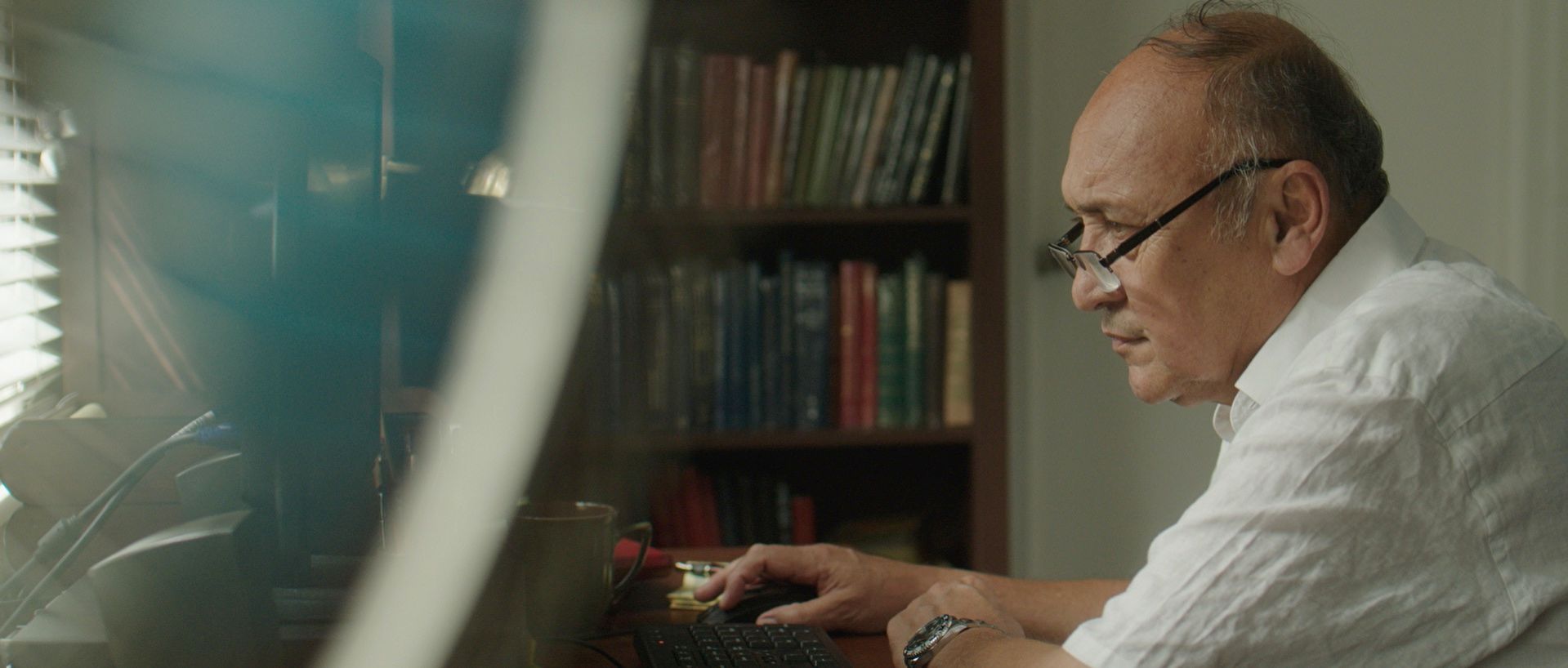
Prakash sending emails in City of Small Blessings (Credit: Akanga Film Asia)
SYX: I guess Prakash is just an uncle at the end of the day as well. He has that uncle impulse to complain. Now, I also want to ask about the way you portray the environment in the film. Specifically, there's that one part where he leaves the house and wanders around the city, to the condominium that has replaced his ancestral house. What was interesting to me was that the colours are very different. When he’s at home, it’s all very warm, then when he’s in the urban landscape it's all very cold and clinical. What made you choose to portray the environment in this way?
WCH: One of the decisions had been that the portrayal of the home should be quite golden. I mean, you want his home to feel like when it disappears, something precious is disappearing.
As for that particular sequence in the city, one part of it was due to production realities. It started raining, so it ran a little cooler. But we embraced the rain because this idea of rain was also a part of Singapore. And so sun/rain, sun/rain was a sort of rhythm that I thought was important. And I had also structured that scene as pushing a little bit into dusk; we tried to have a lot of the film pushed into dawn and dusk. For me, this idea of sun/rain and dawn/dusk was the way in which I sensed time kind of moving on. That was also an underlying idea in the film, that this man is not trying to stop time, but is very aware that time is passing.
SYX: The other thing regarding the way that the environment was filmed was this term that your cinematographer, Hideho Urata, mentioned, about the “tropical melancholy” of Singapore. And I was wondering if you had any thoughts on that specific idea, because it’s so poetic.
WCH: I think you have to ask Hide. That sounds like a very Apichatpong kind of term. What I can say is that I wanted to represent Singapore authentically. People have had lots of discussions about light — that our light is always very harsh, very directional, sometimes very blown out, and it’s not very cinematic on many levels. So how do you represent Singapore authentically, but in a way that’s also quite beautiful? But I think Hide did a beautiful job in terms of the quality of light he brought to the film. I don’t know whether that's tropical melancholy or not, but it felt like Singapore.
I think the other aspect that maybe is not picked up so much is the sound design. We spent a lot of time making sure that the sound felt very authentic. So maybe the lushness that people sense in the film is actually coming from the sound, not just visuals.
SYX: Can you tell me more about the sounds that you recorded? One of my friends in the environmental science program here in NTU mentioned that he picked up on very specific birds in the background of the film.
WCH: We recorded all the environments. Justin [Loh], the sound recordist, went off into the forest to record the ambient sounds, same with the cemetery. We were also very careful to get the crickets and cicadas correct, one is day, one is night. I was quite specific about where I wanted to hear the lizards, you know the ‘cicak’, and frogs, because you get frogs at night as well. There’s the koel, which only calls in the morning. So there were these very specific sounds that I was keen to put in as documents of a particular Singaporean landscape. Xander [Toh], the sound designer, he did a brilliant job of making sure that the perspectives and the layers came in just right. [Teo] Wei Yong also had a wonderful score, because one of the things that he likes to play with is found sounds; we had a lot of found sounds in the score. So the whole thing was quite cohesive in terms of all the different elements of sound.
SYX: That’s quite beautiful. The film leans so much into the inevitable passage of time, yet also serves as a time capsule capturing the sounds and the sights of Singapore. It’s a pity that, after premiering at the Singapore International Film Festival in 2024, the film hasn’t been more widely available. I was very lucky to have caught a screening as part of last year’s Singapore Writers Festival programming. I was wondering if there were any plans to distribute the film more widely.
WCH: I don’t know, obviously commercial distribution is very difficult right now. I think we will try to continue having the film come out in small screenings. I want the film to be seen and discussed, you know?
Actually, we did a private screening last year to civil service leadership. I have never screened any of my films in an environment like that. A very interesting screening, as you can imagine.
SYX: Thank you so much for your time and your honesty. I think I’ll end it here, but I’ll say that I’m really looking forward to what you make next.
WCH: Yes, thank you for coming to the screening. Take care.
City of Small Blessings premiered in competition at the Singapore International Film Festival 2024, and was produced by Akanga Film Asia.
About the author: Yong Xiang is an undergraduate. Recently, he has enjoyed running, playing Fast Food Simulator and reading Garielle Lutz's short stories.
This review is published as part of *SCAPE’s Film Critics Lab: A Writing Mentorship Programme, with support from Singapore Film Society.
Recent Posts