Film Review #20: AKIRA

Goh Kai En • March 27, 2023


Film Review #20: AKIRA

*This film review may contain plot spoilers, reader discretion is advised.*

A violent yet beautifully cerebral cyberpunk film, director Katsuhiro Otomo’s Akira has often been lauded as one of the greatest films ever made, with widespread impact on popular culture. Its attention to detail and cinematic quality surpassed anything like it in the 80s. Throughout its two-hour runtime, Akira proves itself to be an exciting and thoughtful piece that masterfully depicts themes prevalent in its time.

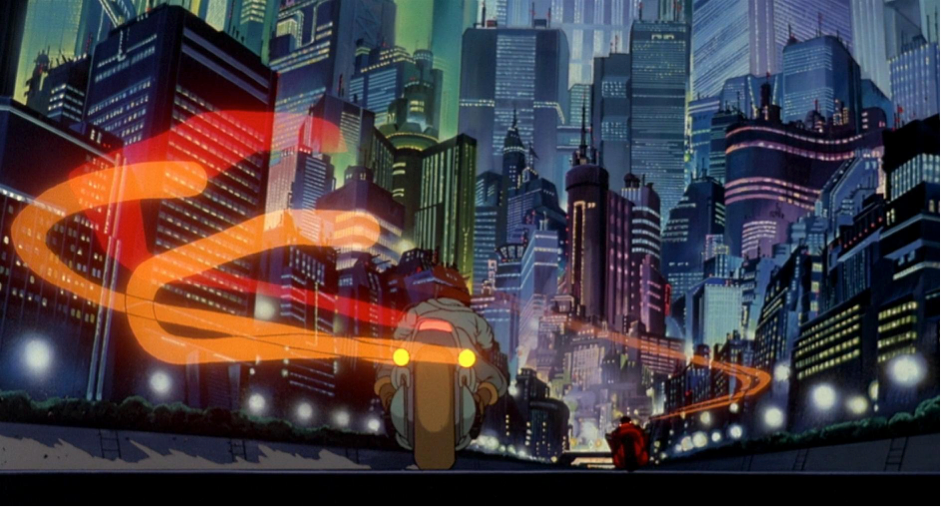
Akira opens with mass destruction, as the entire city of Tokyo is levelled. Following its downfall, we are introduced to a newer, more vibrant 2019 Neo-Tokyo. Kaneda, our protagonist, makes his first appearance alongside his iconic red motorcycle. We are immediately launched into a high-speed sequence that sets the tone of the film. As Kaneda and his biker gang go toe-to-toe with a rival gang, the film makes a brilliant display of intense, action-packed violence that isn’t afraid to be brutal. Through this riveting motorcycle chase, we also catch a glimpse of Neo-Tokyo. Akira juxtaposes the dazzling neon lights of a futuristic cityscape against the shady, run-down elements of a dystopian society, creating a Japan that looks equal parts stunning and disconcerting.


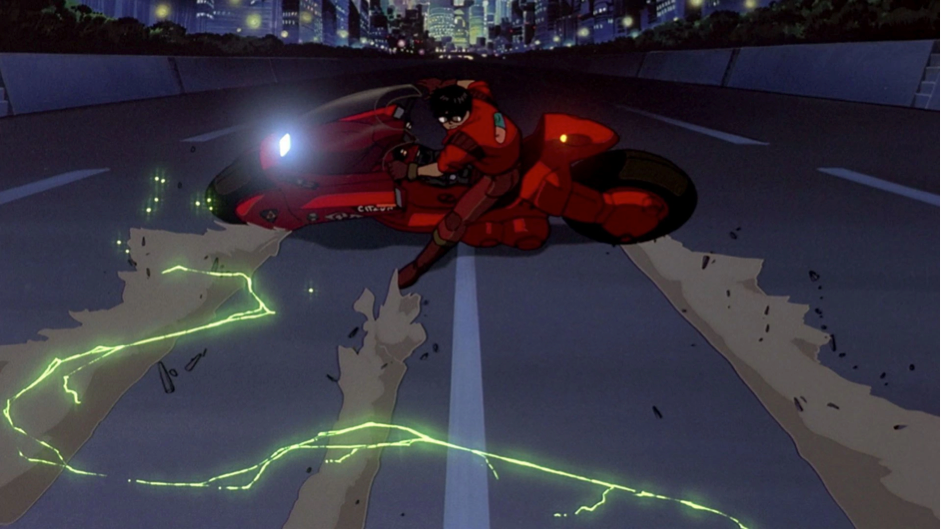
The animation shines in this sequence, with flashy arrays of light and fluid yet sharp action. It is here that we also get the iconic Akira slide, a dynamic and beautiful way to end off the motorcycle chase. As Kaneda’s gang rides off in pursuit of other members, his best friend, Tetsuo, crashes his motorcycle into a boy with telekinetic abilities, also known as an ESPer. As a result, Tetsuo soon finds himself possessing similar abilities, making him a target of the military. He also struggles with these newfound powers, leading to some captivating hallucinations. These scenes are mind-bending and surreal, and sticking to the film’s style, thoughtfully employs gore, destruction, and terror to engage our senses.


Bruce lee

The film’s second act sees Kaneda joining a resistance cell to rescue the ESPers from a government facility. This is where the movie takes a hit in its plot. It’s worth mentioning that Akira is also a six-volume manga, wherein the story is expanded upon much further. To cram over 2000 pages worth of exposition (some of which were written as the film was made) is a Herculean task. This unsurprisingly leads to exposition dumps littered throughout. Writing a story like Akira is a compromise, because for all that the story has to say, films don’t often offer the luxury of time. Despite that, the film manages to lay out enough information for a somewhat cohesive narrative, though it may be hard to digest at times.


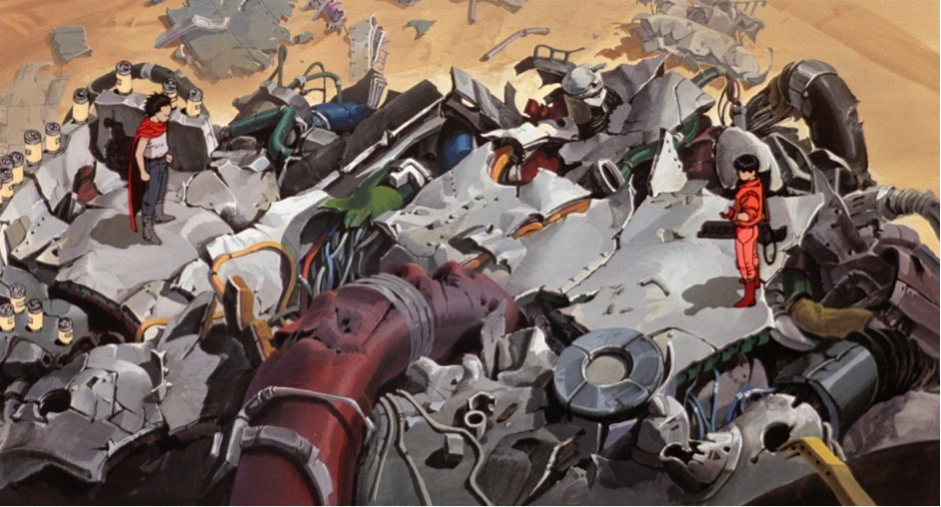
As we enter the movie’s climax, chaos breaks out across the city. On top of it all, the military (and Kaneda) find themselves battling Tetsuo, whose growing power threatens the city. Through all this destruction, Akira emphasises its strongest aspect - action. The film is jam-packed with it, and never is there a lull in the story. In this, Akira also exemplifies the ability to gradually up the stakes, always keeping you on edge. It goes from a simple biker gang rivalry to a giant kaiju-like battle, with the entire fate of Neo-Tokyo at hand. The two starkly different situations are seamlessly joined as part of the ever-intensifying plot of Akira.

In its final segment, the film famously crescendos to mass destruction comparable to that of the opening scene. The cathartic annihilation of Neo-Tokyo is shown in great detail, as buildings get ripped from their foundation into the looming black dome that swallows the city. However, Akira, for all its devastation, doesn’t end with destruction, but rather creation and the promise of it. As we glimpse at a flooded crater that was Neo-Tokyo, the idea of rebirth lingers in the air. The feeling of bewilderment and awe that the film leaves you with is a testament to its profound and hauntingly beautiful absurdity.

——————————————————————————-


This review is published as part of *SCAPE’s Film Critics Lab: A Writing Mentorship Programme, organized by The Filmic Eye with support from Singapore Film Society and Sinema.


About the Author: Goh Kai En is a student at Ngee Ann Polytechnic studying Film, Sound and Video. An avid fan of local and animated films (especially the works of Studio Ghibli), he loves all forms of creative writing, and aspires to be a screenwriter someday.

BLOG

By Jing January 31, 2026
Film Review #189: Withered Blossoms
By Chinmaya January 28, 2026
Film Review #188: Bugonia
By Kaela Teh January 28, 2026
The Lost Youth and Digital Loneliness of All About Lily Chou-Chou
By Jing January 17, 2026
Seeing from a Distance: Modern Life through Edward Yang’s Lens in Yi Yi
By Rachel Xia January 17, 2026
Is the Person You Once Loved Still by Your Side? 那个曾经深爱的人还在你身边吗? A reflection on Once We Were Us 观《Once We Were Us》有感
By Han Yiheng January 16, 2026
Commentary: Agnès Varda’s Lessons in Humility
By Jun Sen January 15, 2026
Covert Operations, the Liberation of Truth and the Need to Remember – The Universal Rebellion  Seen in The Secret Agent
By Stephanie December 31, 2025
Feeling Death: Review of Kiarostami’s Taste of Cherry (1997)
By Ivan Chin December 31, 2025
Film Review #182: YI YI
By Jing December 16, 2025
The Music of Memory: Form, Intimacy, and Musicality in Joachim Trier’s Sentimental Value
More Posts