Interview with Giselle Lin on Children’s Day
Trust the Process: Giselle Lin on Children’s Day,
Shooting on 16 millimeter, and Teaching Film
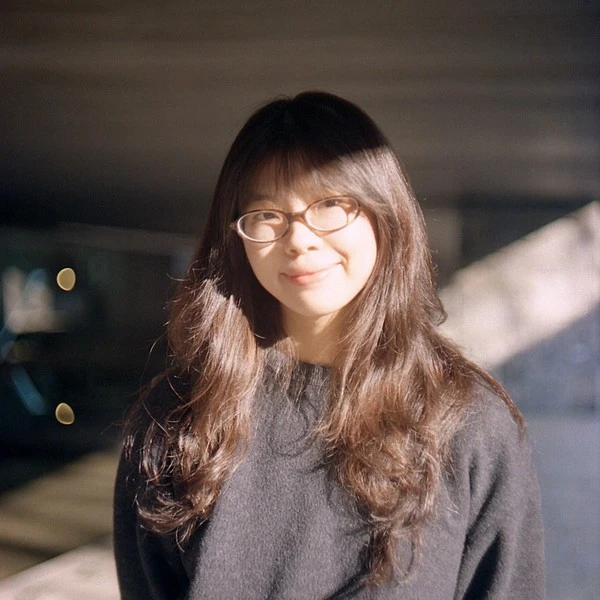
(Photograph credit: Giselle Lin)
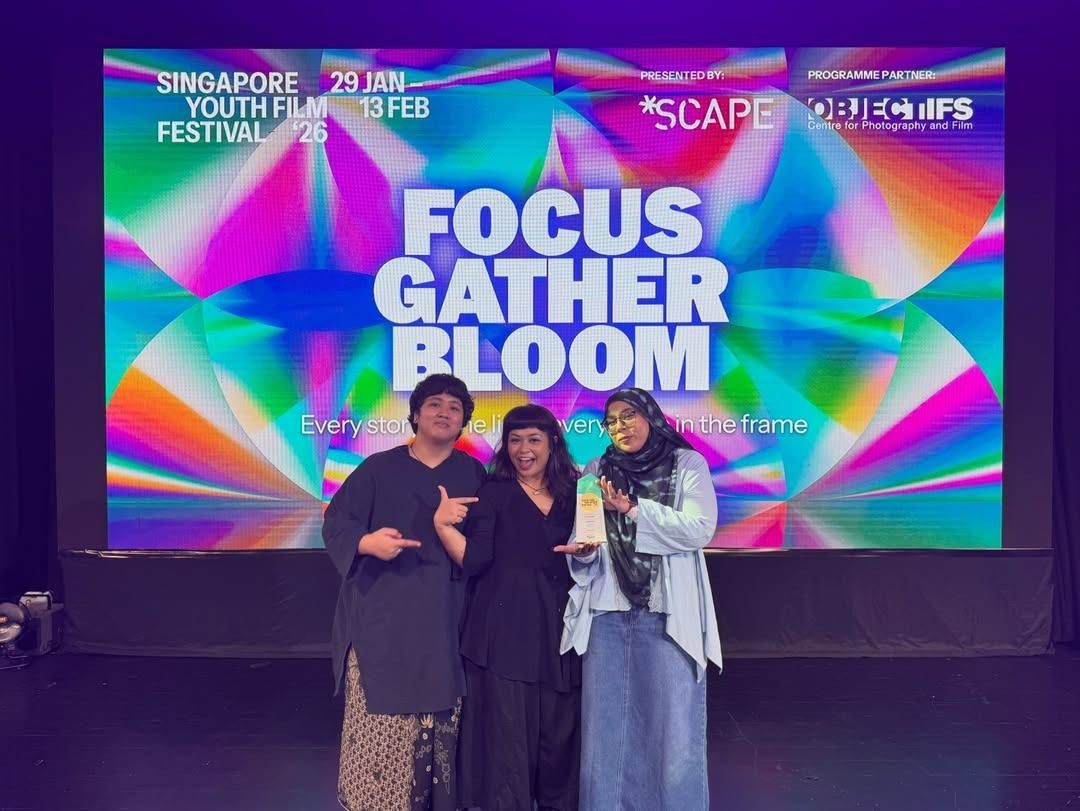
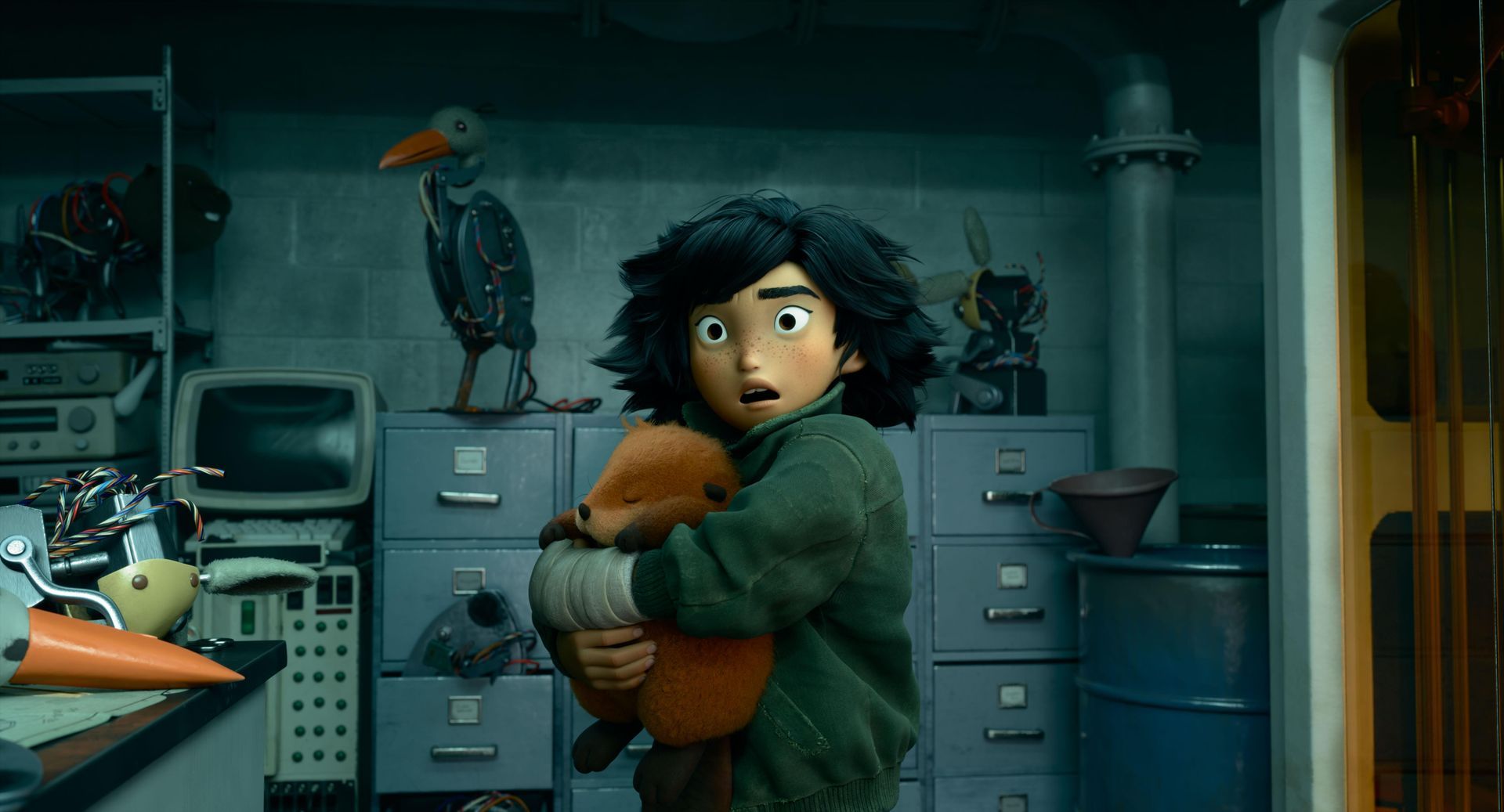
Over the past few years, Giselle Lin has quietly accumulated a body of work that has garnered the attention of local and international audiences. Children’s Day (2025), her latest narrative short, premiered internationally at the 75th Berlinale Film Festival before returning home to screen at the Singapore International Film Festival (SGIFF). The film was also part of this year’s Singapore Youth Film Festival (SYFF) programme, where she picked up the Youth Inspiration Award. Her previous documentary short I look into the mirror and repeat to myself (2023) won Best Singaporean Short Film at the SGIFF 2023.
Taken together, these milestones position her as one of the promising youth voices of the local film industry. Indeed, in a film ecosystem as small as Singapore’s, young filmmakers may be tempted to foreground careerism, seeking awards and recognition as a way to legitimise their artistic pursuit. But for Giselle Lin, film has never stopped being a sincere mode of personal expression. As I found out during my interview with her, reciting a list of her accolades and achievements does not paint even a fraction of her portrait as a filmmaker.
Initially, I planned for my interview to focus on her position as an accomplished young Singaporean filmmaker, a rarity in our industry: where she saw herself in the next few years, and how she would define this “new wave” of up-and-coming local film practitioners. As the interview unfolded, however, I understood that Giselle never looked at her body of work in the language of achievement and representation. In her own words: “I'm just making films, and they're just going places.”
Giselle exemplifies what it means to put trust in one’s storytelling instinct, collaborators, and passion for the medium. Her films are as personal as they come, but dodge the temptation to become confessional melodramas that tug forcefully at heartstrings. She exudes a pure and unadulterated love for filmmaking, which is what makes her work so refreshing.
Below is my interview with Giselle, where we focus on her film Children’s Day . It has been edited for clarity and brevity.
Interview
Yiheng: You’ve said in interviews for Children's Day that the film was made with the intention of preserving the sights and sounds of your childhood. Did making this film become a way of stepping outside of the memories that you portrayed in the film, or a way to treasure them?
Giselle: It was a mix of both. My sister and I wrote the film together. I started with the first draft before getting her help shaping the next iterations. Because it was my sister who was writing with me, we were drawing on experiences that were very rooted in memory. After a while, we kind of fell into a trap. I remember that while we were writing, the night before the shoot, I suggested a line for the mother during the scene in the bedroom. I just felt she had to say something. That’s where the line came from: “What’s it like to be eight? I forgot.”
And then my sister said something like, “But I don't think mummy would say that though.” And then it brought up a conversation of whether or not we're writing about our own parents… In the end, we realised it's filmmaking, so I think that helped us put some distance, you know.
Yiheng: Putting some distance… And you see that as a necessary process?
Giselle: Yeah, I think it's good. Personally, I don't really like to talk about my documentary ( Mirror ) anymore because I think some distance in film is good. And I think it's good that
Children's Day is not entirely factual or autobiographical like Mirror. It's more emotionally autobiographical…
Yiheng:
I definitely do feel that with Children's Day . From a production perspective, it wasn’t completely independently produced, right? Whereas for Mirror, it was mostly self-funded and made on your own. Did this switch have any impact on the technical or creative decisions you could make?
`: For Mirror, when you're making a film with no grants or anything, it can happen as fast as you want it to be, because you are the one putting in the money, you are planning the schedule yourself. I made Mirror because I was very tired of waiting for Children's Day to be made.
In fact, I wasn't going to make a documentary. Initially, it wasn't on my mind until… I was doing a residency in Venice, and then I was talking to my friends who did the residency with me about how tired I was of waiting to make a proof-of-concept kind of short. Then they were like, “Oh, just go and shoot something.” Eventually, I was convinced, you know… I don't need a lot, I can just go and shoot. And the only camera I have shoots Super 8mm film, which is what I shot
Mirror on. It's a medium that I really enjoy.
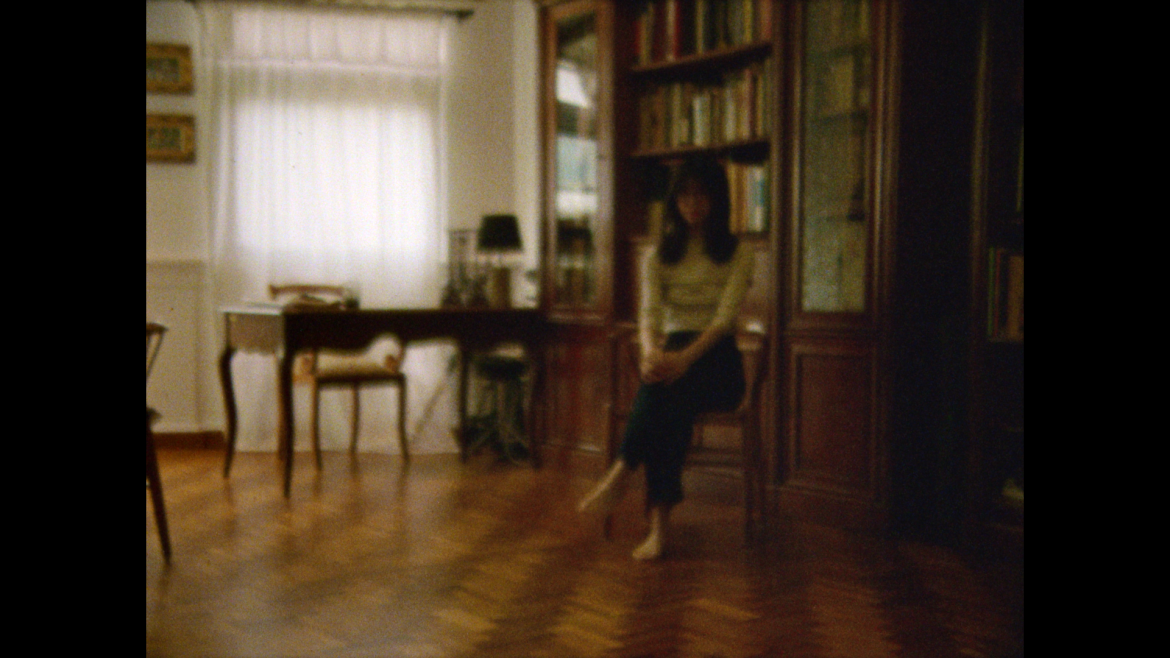
I took into the mirror and repeat to myself (Still credit: Giselle Lin)
Yiheng: And you shot Children’s Day on 16mm. You decided to keep shooting on Kodak film. Does film add a certain texture or effect to your films that shooting digital couldn't achieve?
Giselle: Before I did
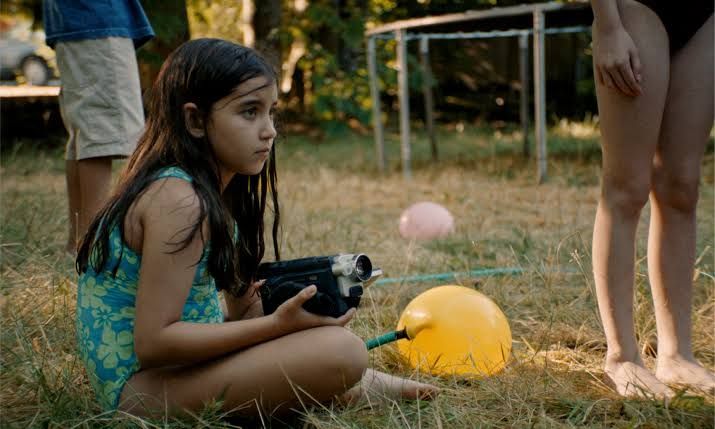
Children's Day, I had no experience shooting on a gauge bigger than 8mm. 8mm film is actually tiny, you know. Super 8, specifically, is called that because it’s fast. You can just pop a cartridge in and shoot. It's very easy. But when you shoot 16mm, it comes in reels, so you have to have a film loader to use it. It was tougher, but I enjoyed it a lot. On the first day on set, I wasn't used to it, because there's no clear view of the footage being filmed. Only 10% of the light that enters a film camera is fed into the eyepiece. So what you see is not exactly what the final footage will look like.
At first, I tried to follow it, but eventually, I didn't see a point. I didn’t want to stand at the monitor anymore, so my sister, who was the script supervisor, took over for me. There was a lot of trust involved with my Director of Photography (DP) as well. Sometimes I couldn’t see what was going on, so I would ask him if the shot was good. And if it was good enough for him, it was good enough for me.
I just sat under the camera, between the tripod legs. I wasn't glued to a monitor, and I could focus on the blocking and the performances. It was very tactile, and I enjoyed it because I was interacting more with the actors. It sounds like I'm romanticising it, but I really like that I can’t second-guess myself with film. Filmmakers always get stuck asking if they shot enough of this scene, or they would wish that they had done another take… On film, you have limited opportunities to shoot, which, to me, isn’t a limitation. I see it as an opportunity to shoot on something super precious, so I would do my best for every take.
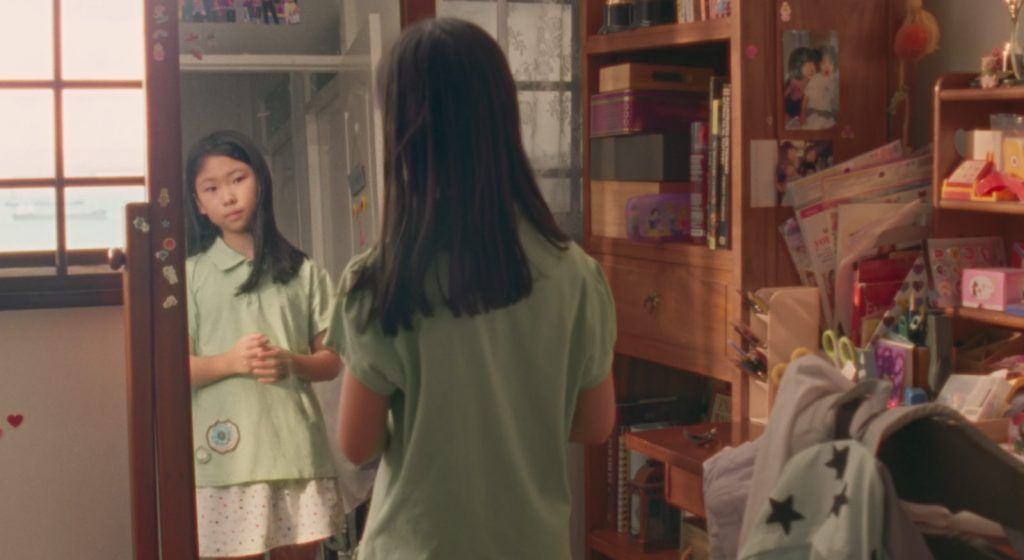
I took into the mirror and repeat to myself (Still credit: Giselle Lin)
Yiheng: Despite the differences in the making of the film, Mirror and Children’s Day were thematically similar in terms of your childhood and how you grew up. Is this subject matter one of your preoccupations when you're making films?
Giselle: It's not only my preoccupation when I'm making films… It's just my preoccupation. Period. I think about my past a lot and I'm inherently quite a nostalgic person. I can capture things from my past really well.
Yiheng: Children’s Day premiered internationally at the 75th Berlinale Film Festival. Given the unique Singaporean context in which the film was set, how did you feel screening it to such a large international audience? Did you feel any pride in representing Singapore in this small way?
Giselle:
I think the film covers a lot of themes that are quite universal, so the European audience could still find pieces of themselves in the film. But I don't like to think that way when I bring a film overseas because it's a lot of pressure. I don't think I represent Singapore. I'm proud to make films in a Singaporean context, but my films stem from my personal experience, so I don't want to speak for everybody. I don't think I can. And it's good because where I can’t, another filmmaker can cover that base.
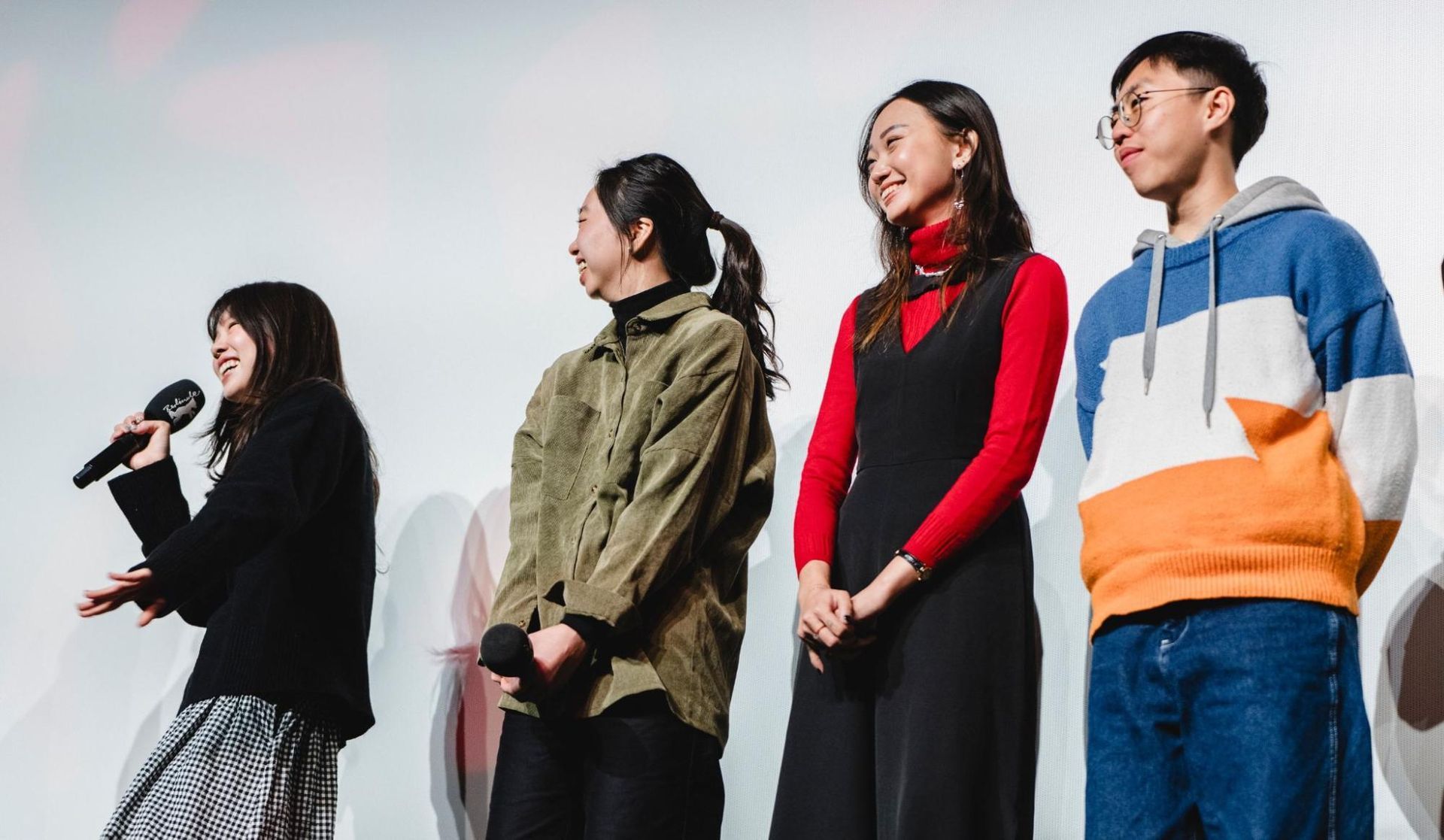
Giselle and the Children's Day team at Berlinale (Photograph credit: Berlinale)
Yiheng: To wrap up this interview, I want to talk more about your work outside of film. I read that you teach at Objectifs. Why teaching?
Giselle: In Objectifs, I teach holiday workshops for children. Recently, I also started teaching at Temasek Polytechnic. Both are filmmaking courses, but for Objectifs, the workshop is called “Young Youtubers”, you know… but it's basically filmmaking. I enjoy it a lot. I don't think I'm good at a lot of things, but when I'm teaching, I think I'm not bad.
For Temasek Polytechnic, teenagers scare me a bit. But then I thought it would be a good opportunity to see who might be the next filmmakers of Singapore. I remember in university, I had really life-changing interactions and experiences with my lecturers who taught me a lot about film. It wasn’t even necessarily in the classroom. Just talking to them and seeing how they see the world and what kind of films they like was enlightening. So I think if I can be that for a 17-year-old kid in Temasek, even for just a few weeks, it's great, you know?
Yiheng: Do you find it a challenge to balance teaching and filmmaking?
Giselle: I'm not a full-time staff member, so I don't need to commit to it full-time. I think in 2022, I had a full-time scriptwriting job and it completely drained me. I was so tired because I was writing from 10 to 6 every day, working on scripts I didn’t care about. I just didn’t want to write scripts anymore in my free time because I was writing scripts all day. So teaching is a better balance for me. I mean, it's still quite difficult to find time to write now, but I’ve been trying… I try.
About the author: Yiheng dedicates a significant portion of his time staring at screens. On theatre, laptop, and television screens, he can be found watching films of any kind. On his phone screen, he wages a life-long battle with his Letterboxd watchlist, perpetually trying (and failing) to clear it.
This review is published as part of *SCAPE’s Film Critics Lab: A Writing Mentorship Programme, with support from Singapore Film Society.
Recent Posts