Primavera (2025)

Yi Xin • June 9, 2026

Share this article

Primavera (2025)

dir. Damiano Michieletto

Operatic stage director Damiano Michieletto’s staunchly feminist portrait of a violinist and her mentor is a virtuosic feature film debut.

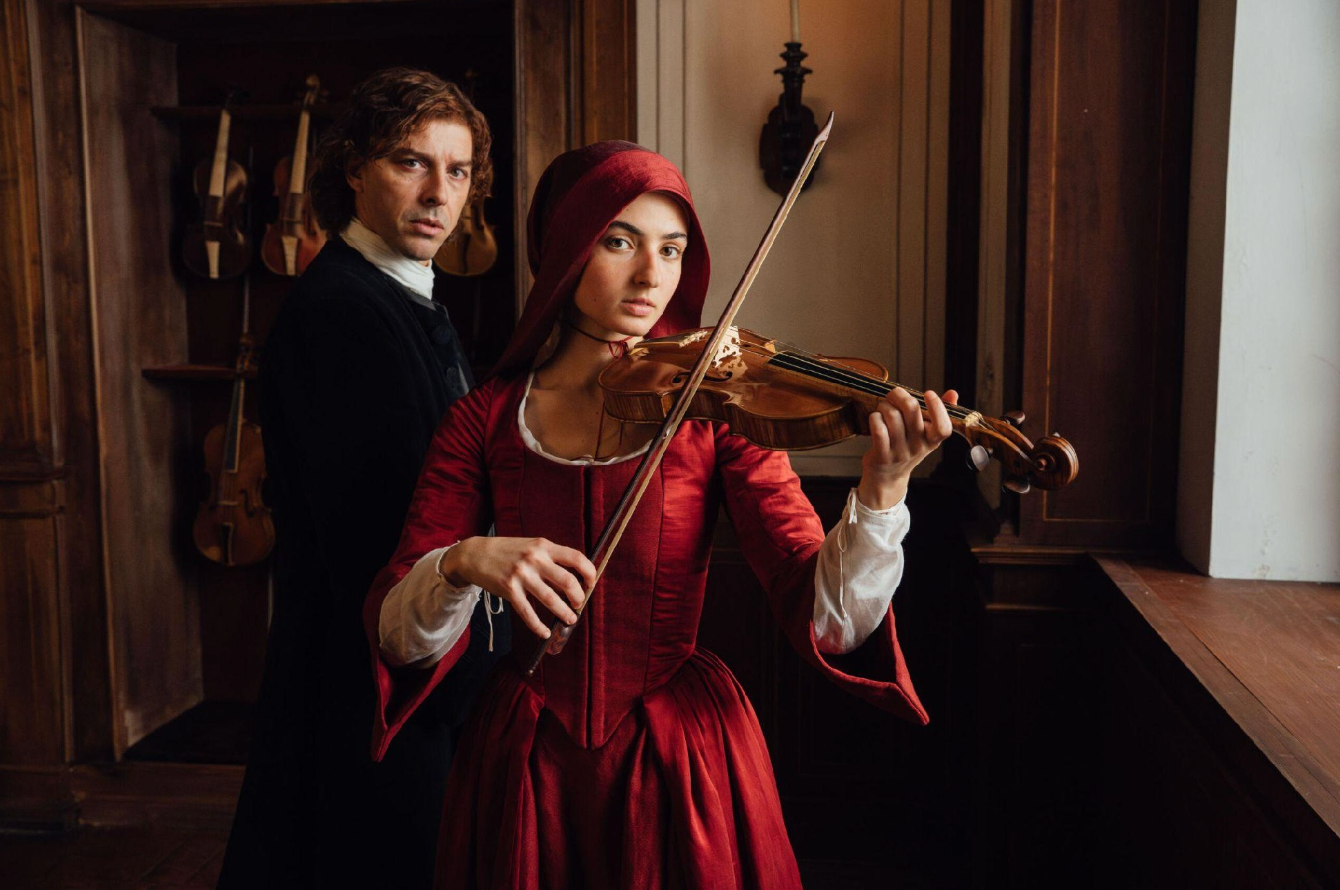
Michele Riondino (Vivaldi) and Tecla Insolia (Cecilia). Photo courtesy of Kimberley Ross.

I haven't been able to stop thinking about Primavera since it premiered at the 2025 Toronto International Film Festival, and it's not just because I accidentally sat next to the director at its second screening.


Set in 18th-century Venice, the film features a fictionalized portrayal of Baroque musician Antonio Vivaldi, whose iconic compositions such as “The Four Seasons” remain celebrated in the repertoire and popular culture. The film follows the chapter of his life where he was an instructor at the Ospedale della Pieta, a convent orphanage. 


Yet it is one of the orphans he mentors who forms the heart of the film. Tecla Insolia, returning to the convent girl archetype she received acclaim for in the queer limited series The Art of Joy, leads the film with a quiet resolve. Though some bursts of teenagerly rebelliousness emerge in her portrayal of young Cecilia, the character on the whole silently strains against the confines of the orphanage which is both sanctuary and cage. 


Serving in turns as mentor, lover, and foil to Cecilia is Michele Riondino’s melancholic Vivaldi. Though rooted in the historical facts of the life of the composer (who spent three decades teaching at the orphanage), the film invests little time in exploring his virtuosity. Outside of an early scene where the character works on a composition with feverish fervor, Vivaldi’s musical genius is told rather than shown. I suppose that the historical figure’s name must speak for itself. 


The relationship between Cecilia and Vivaldi is quite unlike anything I've seen before, in my admittedly limited foray into romantic drama. 


From the moment they are introduced to each other as teacher and student in a convent classroom, the disparity in power between the down-on-his-luck musician and the young violinist is clear. Vivaldi’s attention is caught at once by Cecilia, though she is not the best musician among her sisters since, unlike himself, “[she doesn't] play for praise”. Cecilia, on the other hand, is drawn by curiosity to the neurotic composer, who represents a window into the outside world of man. 


SPOILER WARNING: The following contains allusions to plot points which may be minor spoilers. Read at your own risk.


Primavera’s Vivaldi is a man made impotent by circumstance and character: born with a chronic respiratory illness, forced into priesthood, and cowardly to a fault. It is Cecilia who constantly challenges him and pushes the boundaries of their bond. Though the relationship between the main characters becomes implicitly romantic, their yearning is explicitly forbidden. When a moment of physical touch happens late into the film, it is significant as the singular instance of such intimacy. The orphanage’s money-mongering owner warns Vivaldi that anything beyond an emotional entanglement would bring ruin upon them both. Indeed, the composer’s desire for recognition should not allow him to destroy his own path back to renown. Further dangers in the form of Cecilia’s reluctant engagement to a war veteran - which would spell the end of her musical career - loom in the couple’s future. 

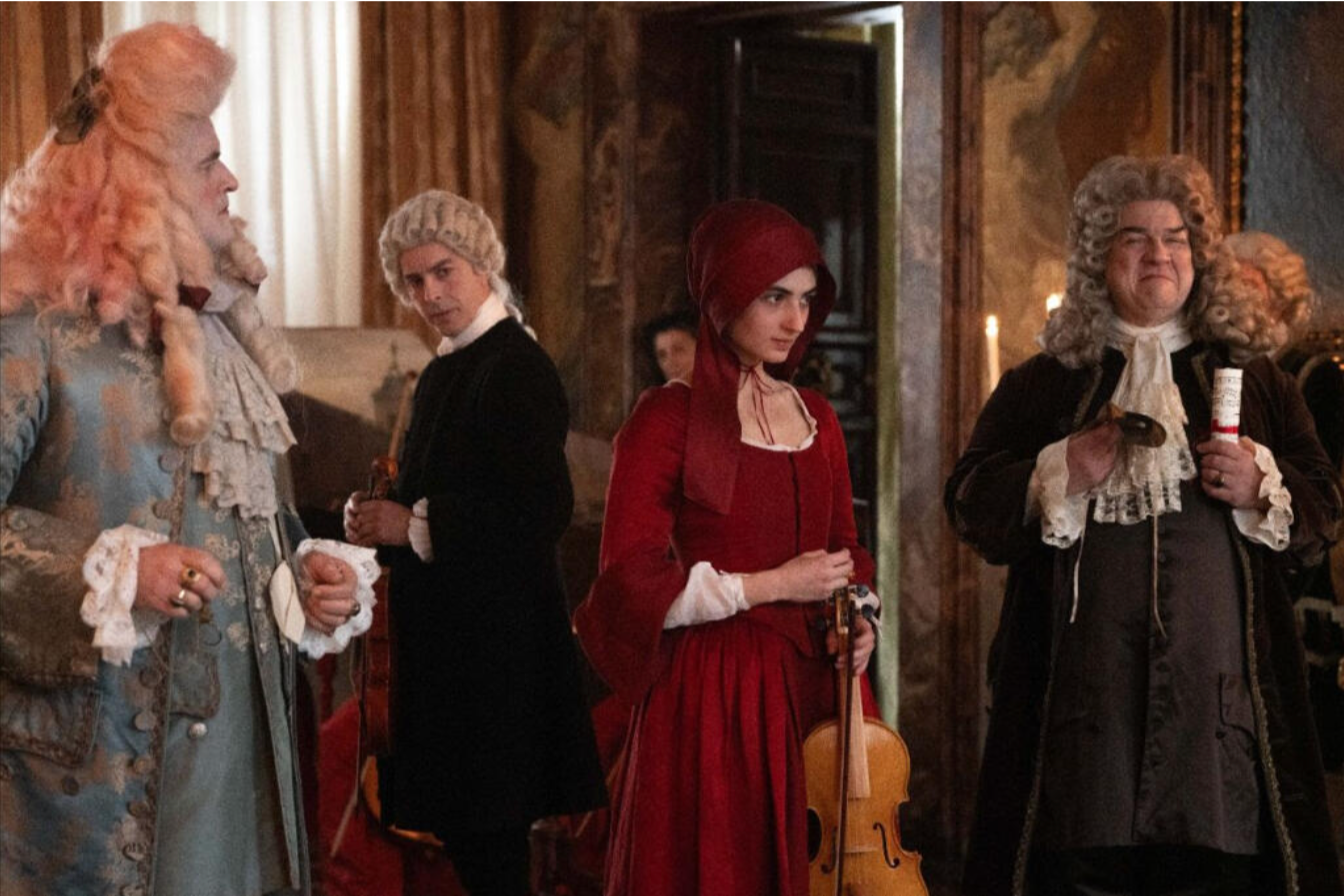
Photo courtesy of Andrea Pirrello.

Theirs is a bittersweet springtime, but the film makes it clear that it is only an interlude in Cecilia’s wonderfully independent life. The film begins and ends with the female lead’s continuing search for meaning in life, through an epistolary narration to the mother who left her at the orphanage’s door as a baby. 


It is also staunchly feminist - perhaps surprisingly so for the debut feature of a male director in his fifties. Then again, the gender of the creatives behind a film hardly dictate its tone. The late Jeff Baena’s star-studded The Little Hours, which was produced by his wife Aubrey Plaza, thrived on the sexualization of its nuns. Yet casting a character as an object of desire is not necessarily anti-feminist; the film has been viewed as a sexually empowering satire on historical women cloistered in repressed roles. 


In contrast, Primavera resolutely abstains from sexualizing its characters. No nudity is displayed, even in situations when showing skin would appear more logical. The convent girls scrub themselves through opaque nightgowns in their communal bath (a refuge for sisterly bonding away from their strict matron’s supervision). A scene where a male practitioner inspects a hymen is shot from the examined girl’s first-person perspective in a cold and uncomfortably clinical lens: we see her clenched fingers and the doctor looming over her.


The film does not, however, refrain from exploring sexuality in its various expressions. In their shared bedroom, the girls huddle together to share their experiences - and lack thereof - with each other frankly. The only sex scene is framed as a means to an end, recounted by the female instigator with an almost asexual narrative. When her loss of virginity is discovered, there is neither regret nor reprobation from her beloved. 


All of these pieces form an unflinching portrait of patriarchal Venice. The aristocrats and war heroes governing the city-state exchange their patronage of the orphanage for the right to wed the girls who are groomed to maturity within its cloistered walls. Conversely, the women are an equally uniform collective which can do little wrong. Even the convent’s stern matron and a powdered noblewoman who initially appears a negative archetype of her class eventually prove to be allies of the girls - to varying degrees of believability. While I appreciate that the film makes no excuses for the men’s harmful actions, I wonder if the women’s ultimately positive monolith isn’t an equally limiting portrayal. It would perhaps be more realistic if characters exhibited more moral nuances, regardless of their genders.


Primavera is an adaptation of the 2009 novel Stabat Mater, which won the prestigious literary Strega Prize in Italy. As no translation of the novel appears to be currently available, this review is by necessity an analysis of the film as a standalone medium. However, from “Stabat Mater”,  a Latin allusion to the passion of the Virgin Mary during Jesus’ crucifixion, to “Primavera”, Italian for “Spring”, an adaptational transfiguration seems implied: the thesis transforms from that of female suffering into a period of joy. Indeed, it is the historical Vivaldi’s “Spring” concerto which plays when the credits roll.


With its smooth pacing and concise scenes, Primavera is an impressively mature feature film debut. Even though I was somewhat disappointed by the forgettable score, considering the director's background in classical music, it is ultimately the vivid characterizations of the main leads which elevate this to a memorable period piece. 


Primavera (2025) premiered at the 50th Toronto International Film Festival, and was released in its native Italy on 25th December 2025. Filmhouse is screening its debut in Singapore on 12th June 2026, as part of its Italian Film Festival. 



About the author: Lixin is an incorrigible dreamer who will probably never stop imagining conversations between characters while commuting on the MRT. Outside of a corporate day job, her creative fiction can be found in various international literary magazines and anthologies.


This review is published as part of *SCAPE’s Film Critics Lab: A Writing Mentorship Programme, with support from Singapore Film Society.

Recent Posts

By Yong Xiang June 9, 2026
City of Small Blessings (2024) “A Certain Degree of Impermanence”: An Interview with Filmmaker Wong Chen-Hsi
By Yiheng May 29, 2026
The Riskless Joyride of Marty Supreme
By Jun Sen May 22, 2026
Ikiru - To Live Or Not To Live? A narrative analysis by Jun Sen of Akira Kurosawa’s Ikiru (1952) – what it means to truly live.
By Pan Wenbo April 20, 2026
SCFF 2026 LINKA LINKA Review
By Amadeus Yeo April 17, 2026
Review: Palimpsest: the Story of a Name (dir. Mary Stephen)
By Victoria Khine April 17, 2026
SCFF 2026 Animated Shorts 动画短片集
By Rachel Xia 夏仲静 April 15, 2026
Film Review: Beyond Reconciliation: Living On in Life of Luosang 藏地的生命诗篇:《洛桑的家事》
By Jarrett Yang April 13, 2026
SFS Review - NO OTHER CHOICE (2025)
By Jayden Lim Jie-En April 13, 2026
A Review of Poor Taxi 辽河的士 (2025)
Show More